

The Pickled Brussels Sprout Dish With A Name That Raises Eyebrows
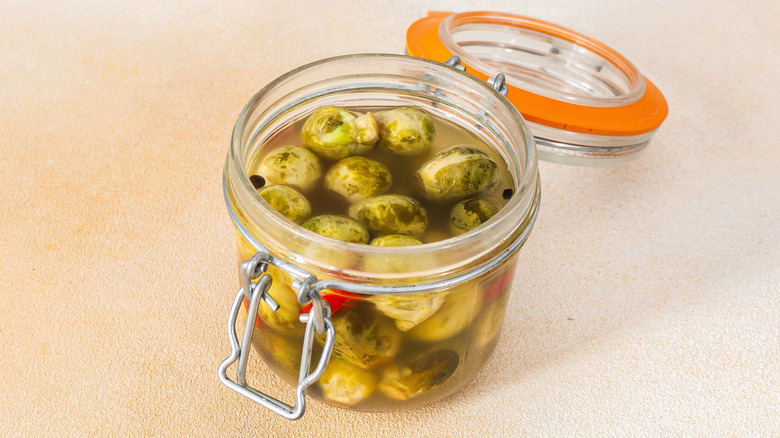
Brussels sprouts sure have come a long way. Before they became the revered veggie in American restaurants and kitchens — roughly in the 2010s — these miniature cabbage-shaped greens were known for being overboiled, smelly, and bitter. But once chefs began braising, roasting, and (most importantly) tossing them with bacon, millions saw them in a whole new light. These days, brussels seem to be everywhere, and in every shape: they're shaved for salads, sliced for stir-fries, quartered for gratins (which instantly upgrades the veggie), and even pickled whole.
One company, Black Sheep Gourmet Foods, which specializes in pickled vegetables, actually coined the term frog balls for their version of pickled brussels sprouts. According to its website, a young girl named Bonnie took one look at the fermented sprouts and said, "They're round like meatballs and green like frogs — these are frog balls!" It appears the nickname caught on because several recipes for pickled brussels refer to the name frog balls. Just like pickling other veggies, there are multiple methods you can use to preserve brussels, and several flavorings you can choose from.
Homemade 'frog balls' are incredibly easy
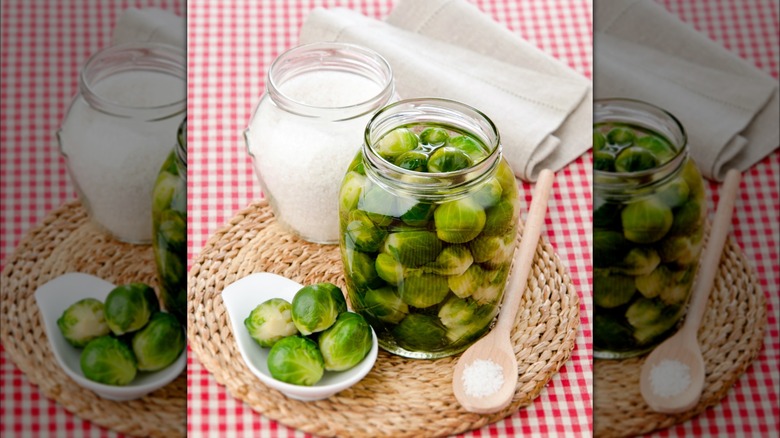
You can make a batch of frog balls in as little as a couple of hours. You'll need to clean and trim enough brussels sprouts to fit into a mason jar (cut very large brussels in half), blanch them, and make a simple vinegar-based brine to soak them in. Garlic cloves, fresh and dried herbs, shallots, chili peppers, or pickling spices can all be used to tailor your sprouts just how you want them. Place the jars in the refrigerator and snack on the frog balls, or use them in things like Bloody Mary's, kimchi mixes, charcuterie boards, and dips. They will last in the fridge for a couple of months.
If you want to make large batches of pickled brussels sprouts to store in the pantry, you can use a heat-canning technique. You'd prep your brussels the same way as described above, and make a brine. But you'll also need to properly sanitize and sterilize your jars to prevent bacteria growth. After your veggies are placed in jars and filled with brine, the jars are processed in boiling water until the lids seal.
Refrigerator-pickled frog balls will be crunchier and retain a more green color than those that are canned with boiled water, however, the latter will also absorb more of the pickling liquid flavor. Either version is tasty, as pickling these cruciferous spheres tames some of their bitterness.