

5 Differences Between Red & White Strawberries (Besides Color)
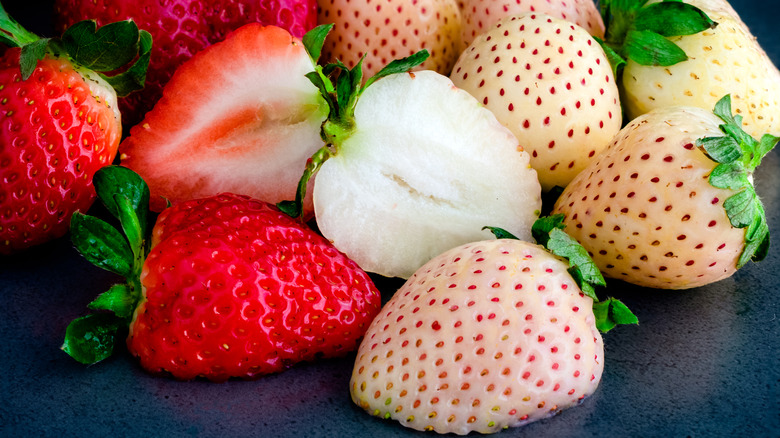
There's nothing quite like devouring a bowl of ripe strawberries in peak season. The juicy sweetness overwhelms your taste buds in the best way possible, leaving you eager and ready for more. Although red strawberries are typically the first to come to mind, there are almost a dozen hues to choose from if you're looking to plant your own bushes or shopping at a niche strawberry farmstand. Among them, white strawberries come in a range of varieties, including pineberries, white alpine, and white jewel.
Obviously, they differ from the standard red strawberries by their color, which is due to pigmentation — or a lack thereof. Red strawberries get their vibrant hue from anthocyanins, a flavonoid compound responsible for coloring numerous fruits and veggies (think, purple onions, blueberries, and black beans). On the flip side, white strawberries don't contain this compound, resulting in a creamy white color with red seeds dotting the exterior. Occasionally, they'll have a mild pink tinge, but they're distinctly white compared with the classic strawberries most people are familiar with.
Red and white strawberries don't just differ in their color, even though it's the most clear distinction between the two. They actually vary in flavor, size, growing requirements, nutrition, cost, and availability. If you're curious about expanding your strawberry consumption, here's what to know.
Flavor profile
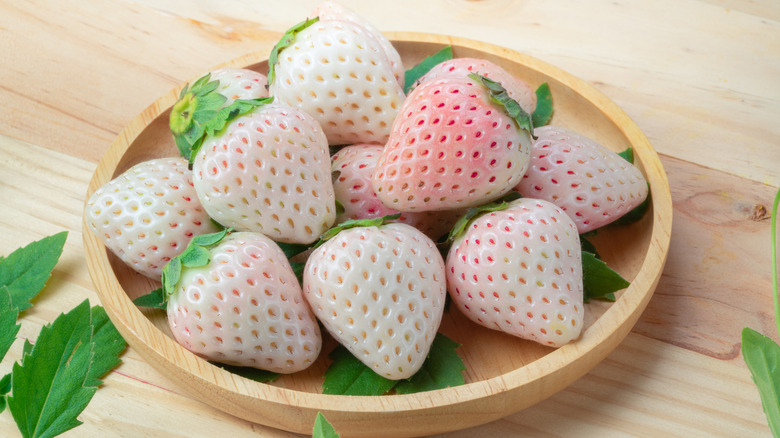
As a consumer, the most important question is whether red and white strawberries taste the same. If they did, it would be more of an aesthetic choice to try to source the white variety. For the sake of sensory interest, they thankfully have a different flavor profile, which makes it all the more exciting to try your first white berry. Although we often associate deeper colors as being sweeter and more flavorful, it turns out that white strawberries are decidedly sweet. More intriguingly, they have a notably tropical taste.
Many people compare the flavor to a cross between a strawberry and pineapple, though the latter flavor can be subtle to some. Other fruits like pear, apricot, and dragonfruit are often used to compare the flavor of the white berries once they reach full ripeness. As well as being sweeter than the red variety, white strawberries usually have a lower acidity, making the flavor slightly more nuanced.
Appearance and size
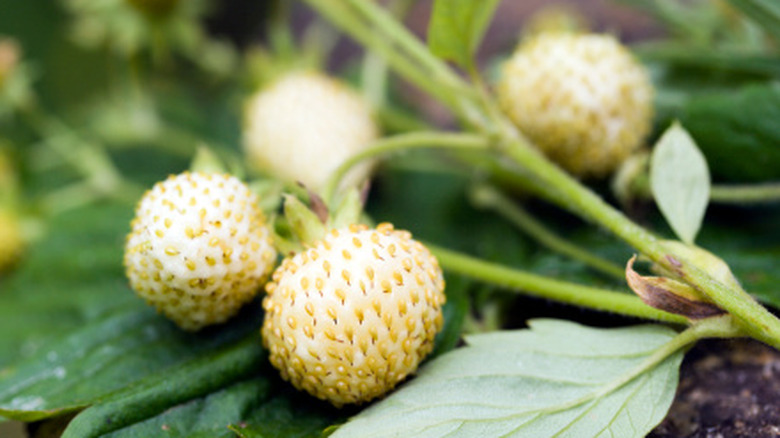
Clearly, white strawberries look different from the red varieties, but it goes beyond just color. For starters, the former tend to be softer and more tender compared to sturdier red strawberries, offering a juicier bite, yet potentially compromising their structural integrity. The white variant typically grows to a smaller size than the red ones, which considering its sweeter flavor, may provide a bit more balance. Though individual berries will vary, they are typically between the size of a dime and a quarter.
Considering there's a range of white varieties, these too can vary in size. For example, white alpine strawberries can be twice as big as wild strawberries, which are often the size of a blueberry. Meanwhile, the strawberries you'll commonly find in the supermarket are often bred for size, so they tend to get quite a bit larger than those grown without intervention. White strawberries can be bred to be bigger, too, such as Florida pearls, which are often comparable in size to standard red strawberries.
Growing conditions
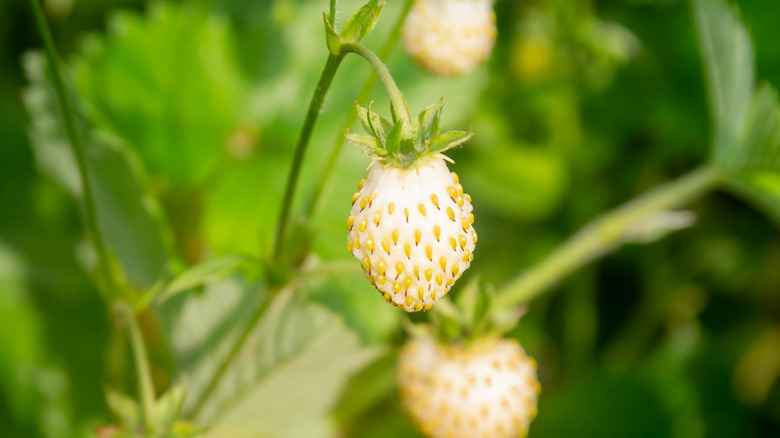
They're both strawberry plants, but the two varieties face some differences in the garden. Considering white strawberries can be hard to find depending on your location, growing them might be the only way to savor their sweet, tropical flavor. Both types of strawberries require sun for proper ripening, though white ones are commonly grown indoors to limit exposure, preventing anthocyanin development to ensure perfectly white fruit.
Meanwhile, it's not as easily obvious when the white ones are fully ripe. Depending on the variety, different clues can be used as an indication, such as the seeds on the surface changing from green to red. As the fruit gets riper and juicier it also grows, pushing the seeds further apart from one another on the exterior. As a last resort, pulling the fruit off its stem will offer more clues, too; if it's firmly connected then it's underripe.
If you've ever tried growing strawberries, you'll know that netting is key to preventing birds from consuming your hard-earned work. Since they're lacking in the bright red color that attracts birds and indicates the fruit has reached ripeness, white strawberries don't usually meet this fate. While you won't lose your crop to birds, the yields and fruit size are lower than if you were growing red varieties, which is worth taking into account when deciding how many to plant. Finally, to facilitate pollination and ensure they flower and fruit, your best bet is to get a second strawberry plant for cross-pollination.
Nutrition
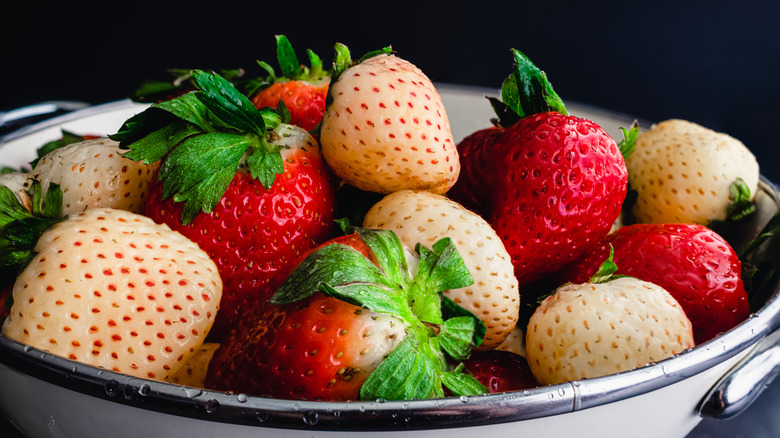
As fruit, both red and white strawberries are packed with numerous vitamins and minerals. Vitamin C is high on the list, offering immune support, along with vitamin K and vitamin E. Manganese and potassium are present, too, along with folate (vitamin B9) which is important for cell growth. Dietary fiber shows up similarly in the two varieties, making strawberries an excellent addition to a gut-healthy diet.
However, their most obviously notable difference — color — also affects their nutrition content. Anthocyanins are responsible for the bright color of red strawberries, whereas this flavonoid compound is absent in white strawberries. Aside from producing color, anthocyanins offer numerous health benefits, such as lowering the risk of heart disease, decreasing blood pressure, protecting against certain neurological diseases, and slowing cancer growth. Nevertheless, white strawberries are still super healthy and boast plenty of antioxidants, like ellagic acid and ellagitannins (which are also found in red varieties).
Cost and availability
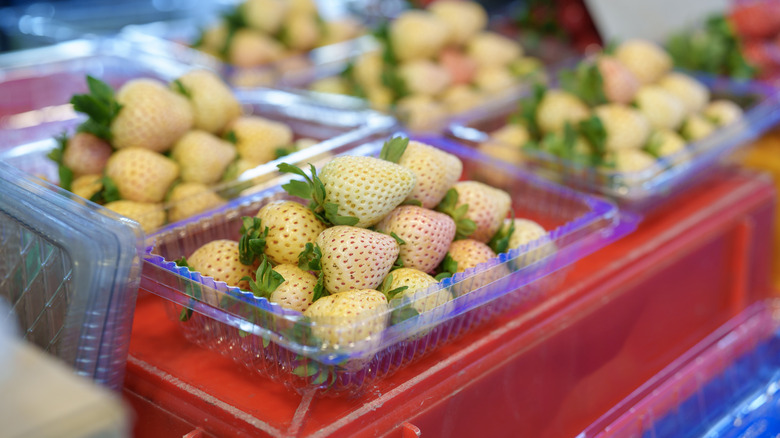
Walk into pretty much any supermarket and you'll be able to find red strawberries. If you visit a farmers' market at the right time, you'll be greeted with the sweet aromas of the fruit, too. On the other hand, white strawberries tend to be more elusive. Although they are becoming more popular, they're not a grocery store staple. Aldi has experimented with selling them with mixed results, and Trader Joe's has stocked the white strawberries, too.
Still, even if you shop at higher-end supermarkets with gourmet offerings, it may be tricky to track them down. The world of online shopping has vastly increased offerings, and importers like Regalis Foods in New York City simply ship them in from Japan when they're in season. Similarly, if your local farmers' market includes some dedicated farmers, they may experiment with growing white varieties.
As with anything with low supply and high demand (at least in some foodie circles), white strawberries can be pretty pricey. Considering their size and yields tend to be more limited than red varieties, it makes sense. Additionally, trickier growing conditions means more time and effort need to be put into growing the berries, further increasing the price.