

The Top Honey-Producing Country In The World Beats The Second By A Mile
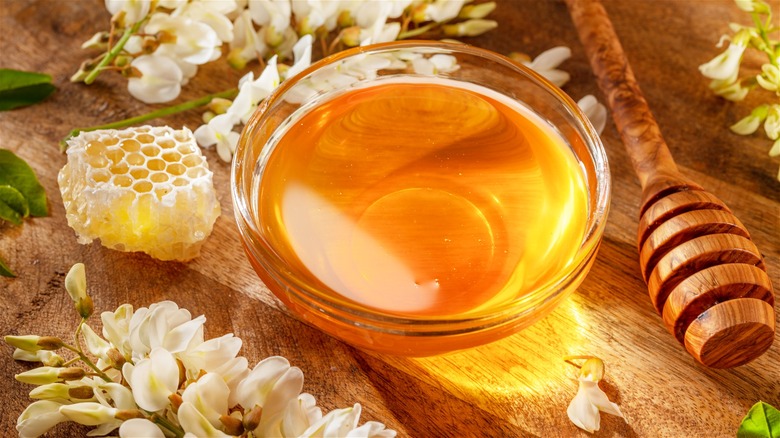
Honey is a much older food than many of us realized, and our demand for it has only grown over the millennia. In the U.S. alone, a record of 344,300 tons of honey was consumed in 2024 (via the National Honey Board). That staggering amount is far greater than the quantity the U.S. produces in a single year, so it begs the question: where does most of the world's honey come from?
According to the Food and Agriculture Organization of the United Nations (FAO), China was the world's largest producer of natural honey, with over 456,000 tons in 2024. The most impressive part of all this is that the next-largest producer was nowhere close to these figures — India came second that year, producing a distant 146,000 tons. Turkey was third overall with nearly 95,500 tons, while the United States was the world's ninth-largest producer of honey, with 60,960 tons.
In China, honey production operates on a massive scale. The Chinese Academy of Agricultural Sciences' Institute of Apicultural Research reported that the country reached a record 15 million bee colonies in 2024 (via the South China Morning Post). To put that into perspective, India had 3.5 million bee colonies that same year (via the India Honey Alliance). Data from the World Integrated Trade Solution indicates that China is also the world's largest exporter of honey, with an annual output of 187,000 tons in 2024. The country accounted for almost 22% of total global honey exports based on these figures.
Buying honey from the world's largest producer comes with some risk
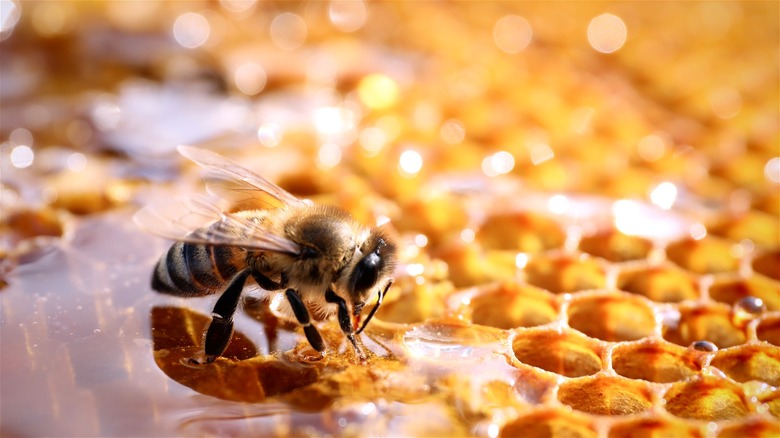
The catch with a honey industry as large as China's is an increased risk that the honey you buy is fake. In 2021, the Joint Research Centre of the European Union and the European Anti-Fraud Office conducted a study to determine how much of the region's imported honey failed to meet the classification standards for genuine honey. Of the 320 samples tested, 46% were flagged as suspicious, and 74% of those questionable samples originated from China.
Honey is one of the world's most faked foods. According to a 2026 report by the Food Authenticity Network, honey had the fifth-highest number of food fraud cases from 2015 to 2025. In most instances, pure honey is blended with other sweeteners such as rice syrup to stretch the product and drive costs down. Illegally importing adulterated honey is also a major problem. In one of the biggest cases of food fraud ever, a series of federal investigations found that massive quantities of Chinese honey had been illegally imported into the U.S. with its country of origin purposely mislabeled to avoid tens of millions of dollars in antidumping duties.
Outside of legal concerns, eating imitation foods like adulterated honey means you'll reap less of its natural health benefits, such as its purported anti-inflammatory properties. If you want the real stuff in your pantry, your best bet is to buy local honey directly from a beekeeper. There's less risk of it being adulterated, plus it may contain flavors that are unique to its environment.