

11 German Chocolates You Need To Try At Least Once
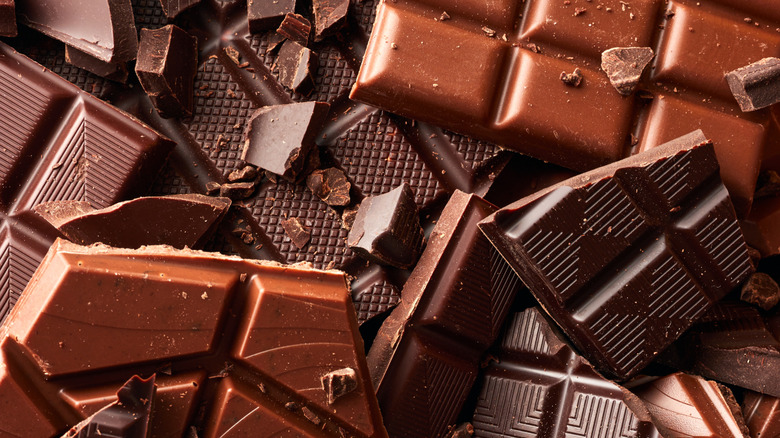
When you visit the candy aisle, it can feel like you see the same brands over and over, whether that's Cadbury chocolate, Hershey's, or Dove. After a while, nothing is new or exciting and you're left wondering what chocolate lovers are eating in other countries. There are some amazing German chocolates that we wish were more widely available outside of Europe.
They say the grass is always greener on the other side. Well, the chocolate is richer and more delicious, too. That's not to say there aren't some great brands from other parts of the world, but whatever you're used to gets old and boring after a while, leaving you ready for some fresh flavors.
From smaller producers to big name brands, we've done our research to find some of the best German chocolates you need to try at least once. As I'm based in the U.K., Germany is a short trip for me and I've spent a lot of time there. Not just eating chocolate, of course, but I'm always excited to try foods I can't get in the U.K. when I travel. Alongside my personal views, I've also done research into other people's favorite German chocolates to bring you the ultimate list below. Some of these you can access in the U.S., but others you'll need to go further to sample.
1. Vivani
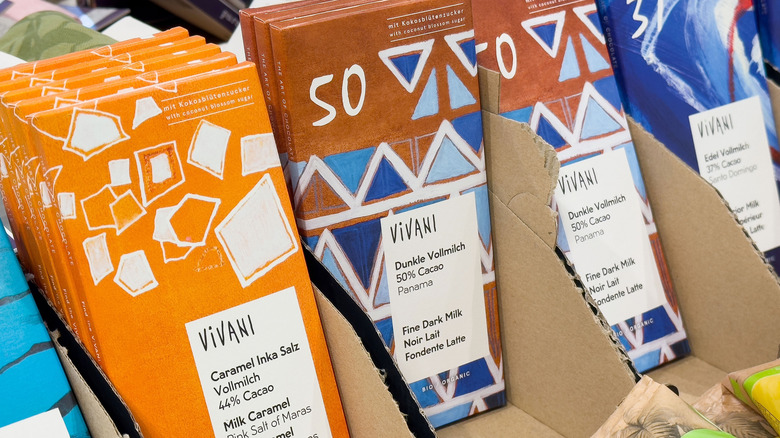
Although Vivani has only been around since the year 2000, it has become one of the biggest names in German chocolate. Its products come with the German Bio-Prüfsiegel standard, which is an organic certification not unlike USDA certification in the United States. So, it's not just tasty but it's ecologically sound, too.
Wondering what organic food really means? Organic chocolate is grown without prohibited pesticides. Vivani also makes other environmental and ethical commitments when producing its chocolate. For instance, it makes sure the farmers that grow cocoa beans to make its chocolates are paid fairly and it supports anti-child-labor campaigns. This means it's a chocolate you can feel good about buying, providing you don't have to choose between ethics and flavor.
Vivani makes a wide range of products, including many vegan options. The vegan hazelnut white chocolate and the dark nougat bars are among my favorites, but there are so many more to choose from. You can buy large chocolate bars ranging from very dark 100% cocoa to white chocolate with no cocoa beans, just cocoa butter. There are also smaller single-serve bars in various flavors from pistachio to lemon cheesecake and espresso biscotti.
2. Ritter Sport
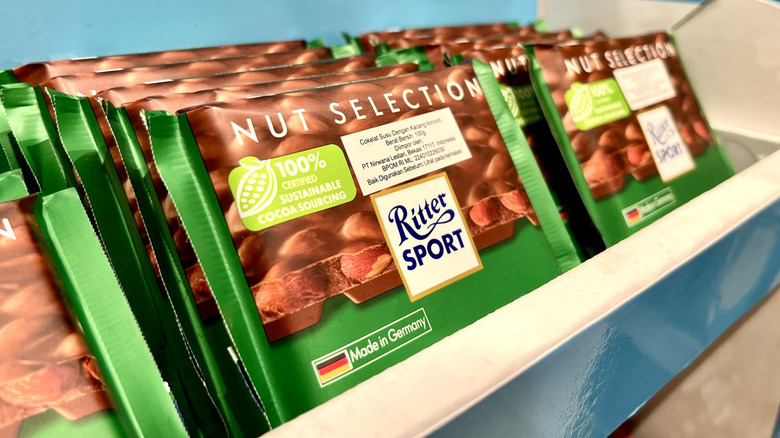
Ritter chocolate dates all the way back to 1912, when the company was founded by Clara Ritter and Alfred Eugen Ritter in Bad Cannstatt, located in the Stuttgart region of Germany. It didn't become Ritter Sport until Clara Ritter suggested making a bar of chocolate that would fit in the pocket of a sports coat. And that's when the square shape and seemingly strange name were born.
This iconic chocolate is generally sold in 3.5-ounce, square packages in a wide range of flavors, including some of the best dark chocolate bars. The cocoa mousse version is one of my girlfriend's favorite chocolates of all time and comes highly recommended. I tend to opt for the vegan salted caramel or roasted peanut. However, not every bar is square and pocket-sized these days. You can also buy larger Duo packs with two flavors, such as crispy cream and choco crunch, or caramel crush and big brownie. There are also packs or bite-sized Ritter Sport minis you can get your hands on.
You can buy Ritter Sport in the U.S., so you don't have to miss out on this one. However, there are some Germany-specific flavors that you'd have to travel further to try out. For instance, Keks + Nuss which has a blend of hazelnut pieces and cookie bits, or Vanille-Mousse, which consists of milk chocolate surrounding a mousse-like vanilla center.
3. Milka
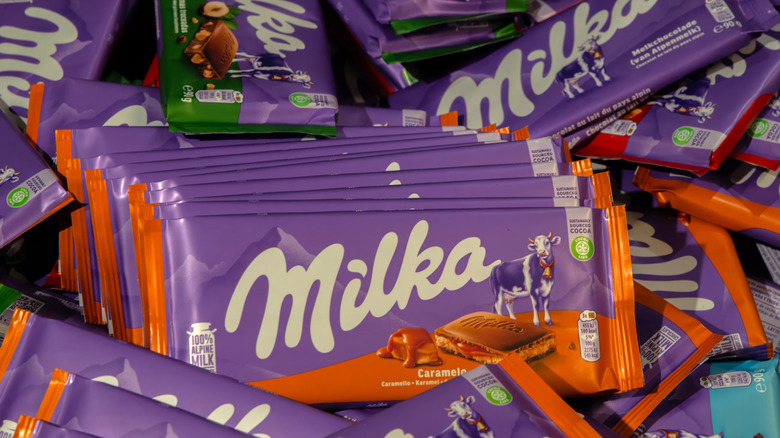
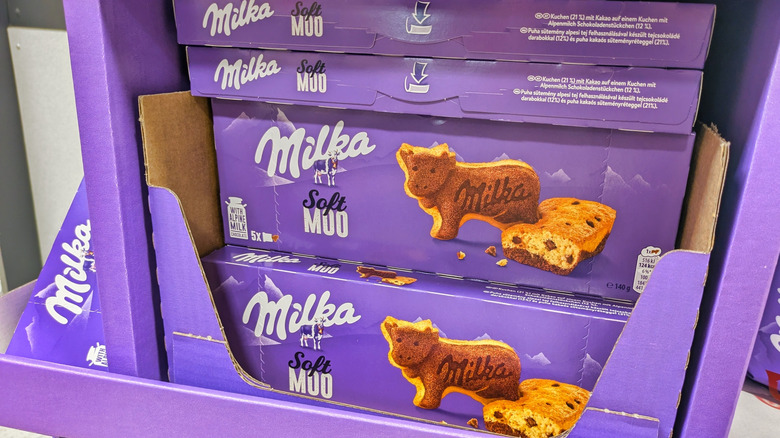
Milka might have originated in Switzerland, but it has been produced in Germany — in Lörrach, Baden-Württemberg, close to the Swiss border — since 1901. This puts it in distinctly German territory. These days, it's owned by Kraft and Mondelēz International, so you can easily find it in other parts of the world, including America.
Milka is known for its light purple wrapper and its creamy, milky flavor. Anyone who has eaten chocolate from this brand for a long time may have noticed changes for the worse, which is a common complaint about chocolate these days, but it's still a solid contender. The truth of Milka is that the chocolate is only made with three ingredients: cocoa, sugar, and Alpine milk powder, which is what gives the bars their distinctive taste.
Of course, there are other ingredients in many bars, depending on the flavor. And there are so many flavors to choose from, with some in Germany that you may not find elsewhere. Popular Milka flavors include Oreo, Biscoff, and noisette hazelnut mousse. Plus, there are other Milka products aside from the bars, such as Milka chocolate-coated wafers, Nussini bars, and more.
4. Niederegger
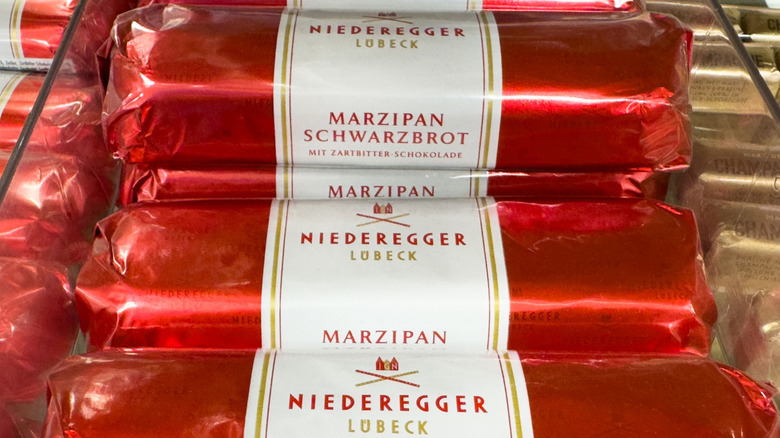
Niederegger is perhaps best-known for its chocolate-coated marzipan. The difference between marzipan and almond paste is the sweetness, with the former containing a lot of sugar. It can be divisive, with most people seeming to either love it or hate it. But if you're not a fan, you'll be pleased to know that Niederegger makes more than just marzipan chocolate.
Niederegger is a popular brand in Germany, with people generally considering it great quality. I'm not personally a marzipan fan, but I've bought this brand for my mother (who loves the stuff) and this is one of her all-time favorites. They come in larger bars — also known as loaves — and individually wrapped pieces, coated in milk or dark chocolate. There are also a number of variations, including coffee and fruit flavors. I have tried some of the brand's other products, though, and enjoyed them.
Non-marzipan options include individually wrapped nougat bites and larger nougat bars, plus chocolate pralines in a range of flavors, including chocolate brownie, toffee, tiramisu, and crispy waffle. There are so many options for marzipan lovers and avoiders, and it's all high quality stuff.
5. Halloren
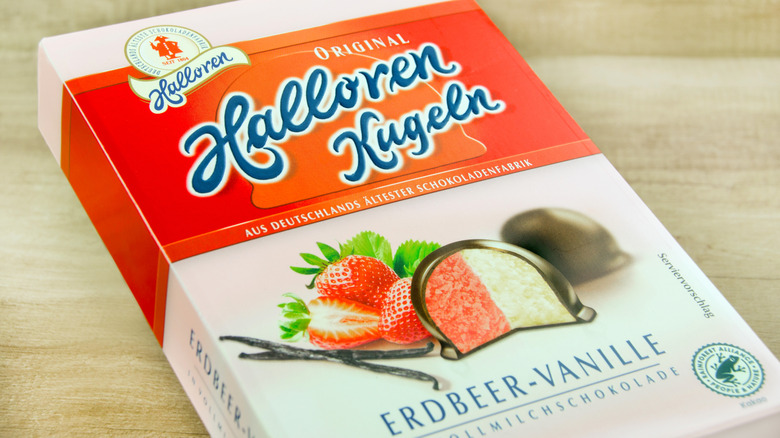
Halloren is possibly the oldest chocolate manufacturer in Germany. The company dates all the way back to 1804, though it was originally a gingerbread bakery. In 1851, it was taken over by Friedrich David, who eventually started making chocolates under the name David und Söhne. Aside from a break in manufacturing during the Second World War, the company has made chocolate ever since — and to great acclaim.
The business is known for the Halloren Kugeln, a type of chocolate ball that's been made since 1952. Originally, these contained half whipped cream and half chocolate cream, but today they're available in all kinds of flavors. They come in salted caramel, strawberry, vanilla, and much more. They're now known as Halloren Os, in reference to their round shape. But, whatever the name, they're still a hugely popular German treat. This isn't something you'll easily find in the U.S., so if you want to try them, you've either got a long trip ahead of you or you're going to have to barter with someone you know who's planning a vacation in Germany.
6. Hachez
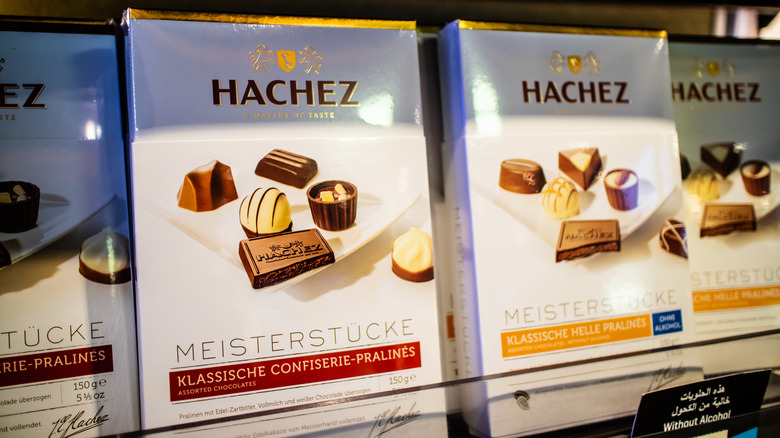
Hachez is a premium German chocolate brand made in Bremen, known for its quality bars and individual chocolates. It was founded in 1890 by Belgian chocolatier Joseph Emile Hachez, and has maintained a reputation for high quality chocolate over the years. What's notable is that it controls the entire production process at its own factory, everything from roasting cocoa beans to producing the finished bars, which is unusual in modern chocolate production.
The company prides itself on quality, and its products are seen as more of a special treat than something you'd just pick up on a whim. Hachez makes a range of products, including bars and truffles. Its bars include whole milk versions, bitter chocolate, and nut bars. It also makes a range of chocolates ideal for gifting, such as its masterpieces and creations ranges. These include individual chocolates with a wide variety of fillings.
Not only does Hachez make delicious chocolates, it also has a commitment to sustainability and is careful about sourcing its cocoa fairly. So the great taste isn't the only reason why you should give them a try.
7. Moser Roth
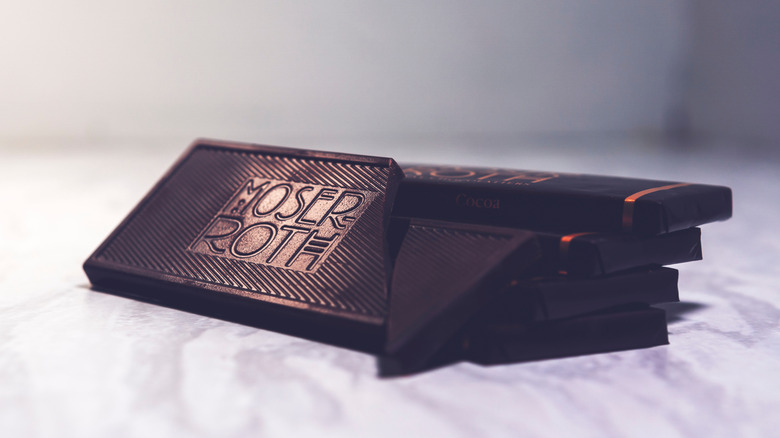
If you shop at Aldi, you might recognize the name Moser Roth. It would be sensible to assume that it's just another Aldi private label brand, but it has a way longer and more interesting history. It was founded way back in 1841 in Stuttgart, putting it amongst Germany's oldest chocolate manufacturers.
In the early 20th century, it was one of Germany's largest chocolate manufacturers, before being shut down by the Nazi party during World War II, and the premises being destroyed during bombing. After the war, the business was bought by Karl Haller and continued manufacturing chocolate. Over the years, it passed between various owners, before being purchased by Storck, who still owns it to this day.
Today, Storck makes Moser Roth chocolate as a private label for Aldi, and has been doing so since 2007. But, don't underestimate it. One of the best Aldi chocolates is the vanilla white chocolate Moser Roth bar, and there are some other great products from this brand on Aldi shelves. This is good news for anyone who wants to try it because this makes it easy to get hold of outside of Germany.
8. Trumpf Schokolade
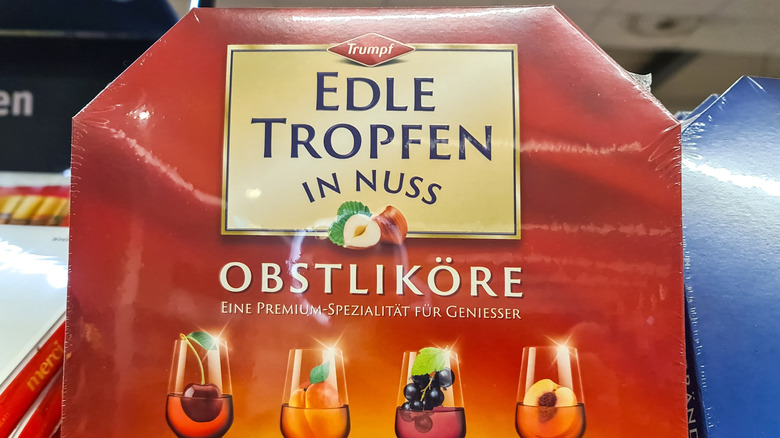
Trumpf Schokolade isn't an international household name like Milka or Ritter Sport, but has a long history behind it. Its roots stretch all the way back to 1857, when a pharmacist named Leonhard Monheim, started making high quality chocolate in Germany inspired by his travels. His bars were made with the help of an Italian chocolatier and were sold in his pharmacy as health bars — which is one reason to wish you were born in the 1800s.
Today, Trumpf is owned by Ludwig Schokolade and it certainly isn't trying to make health food. You can buy a wide range of Trumpf products, including aerated chocolate under the Aero name, Goldnuss chocolate hazelnut bars, and a selection of pralines and other individual chocolates. It's not necessarily a showy brand, but if you find it on the shelves, you should give it a try. It's known for its solid quality and, with such a long history, it's clear that Trumpf Schokolade has perfected its products.
9. Feodora Chocolate
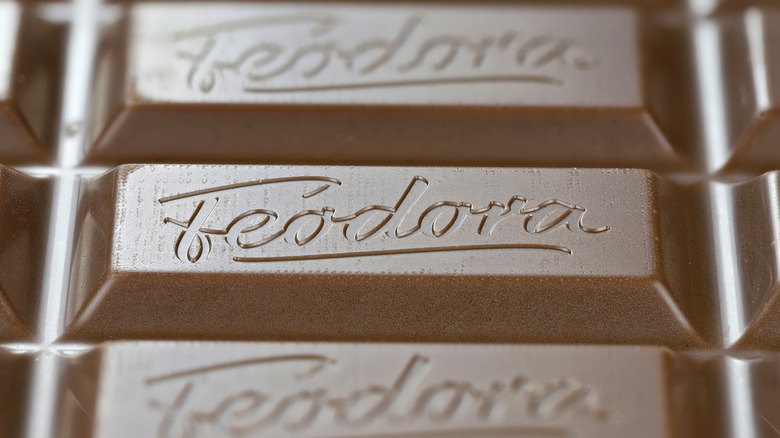
The history of Feodora chocolate goes all the way back to the early 19th century, long before the brand itself existed. In 1825, Friedrich Theodor Meyer founded a sugar refinery in Tangermünde, which gradually expanded into a successful business. By 1904, the next generation of the family moved into chocolate production, launching early products under different names.
The Feodora brand began in 1910, when Hermann Meyer created a particularly refined chocolate and wanted a name that reflected its quality. He chose to name it after Princess Feodora, a member of the German royal family. Shortly after her death, the brand was granted permission by Kaiser Wilhelm II to use her signature and family crest on its packaging.
All these years later, Feodora still uses this imagery for its products, which include chocolate bars and boxes of chocolates, including dark chocolate pralines and milk chocolate pralines. The brand is known for its high quality chocolate, and although it's now headquartered in Denmark, the German Princess Feodora remains its namesake.
10. Rausch
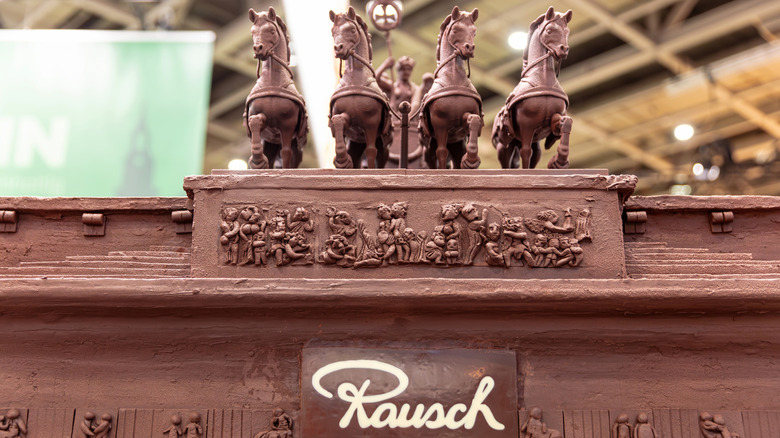
For Rausch, it all started in Berlin over 100 years ago in 1918. The company was founded by Wilhelm Rausch Junior, who learned to make fine chocolates and followed in the footsteps of his father, who was also a confectioner. The company is now run by the fifth generation of the Rausch family, running chocolate houses in Berlin and Piene, alongside selling its chocolate. It's also known for making impressive chocolate sculptures.
This isn't your average supermarket chocolate; it's high quality stuff, coming in single origin bars ranging from 93% to 39%. So, if you like your chocolate extremely sweet and milky, this might not be the brand for you. Rausch also sells some lighter bars with inclusions, such as white chocolate and almond or milk chocolate and salted caramel. Alongside bars, it also makes a range of truffles and pralines in boxes and individually wrapped. If you're looking for a nice gift in Germany, Rausch chocolates wouldn't go amiss.
11. Heilemann Confiserie
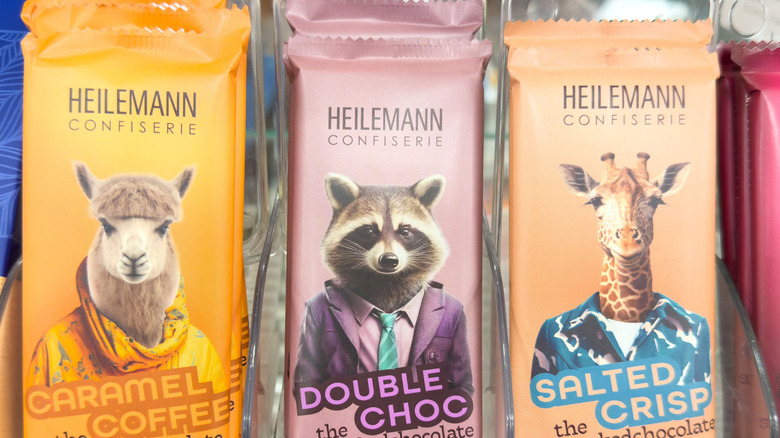
Heilemann Confiserie has its origins in the Bavaria region of Germany. The company was founded in 1955 by Karl Heilemann, who started out in a small shop crafting handmade pralines. The business may have scaled up since then, but the high quality remains, alongside newer manufacturing techniques and a focus on sustainability.
If you're looking for unique chocolate bars, Heilemann Confiserie has some interesting, contemporary flavors, such as caramel coffee and dark lime. It also makes classics, such as white chocolate and vanilla and chocolate orange. Heilemann also makes boxes of pralines and truffles, harking back to its roots. They come in all kinds of great flavors, from classic to contemporary, usually in selection boxes.
These are often named among the best German chocolates, having an excellent reputation. Heilemann uses top ingredients, including Rainforest Alliance or Cacao Trace certified cacao beans, and avoids artificial flavorings.
Methodology
I've spent a lot of time in Germany and, of course, sampled the chocolate. So, my own personal experience and preferences came into the decision-making process when deciding which brands to include. I also scoured the internet for other people's opinions on the best German chocolates. With this information, I weighed up the positives and negatives of different brands, and worked out the right ones to recommend.