

How Long Does Uncooked Fish Last In The Fridge?
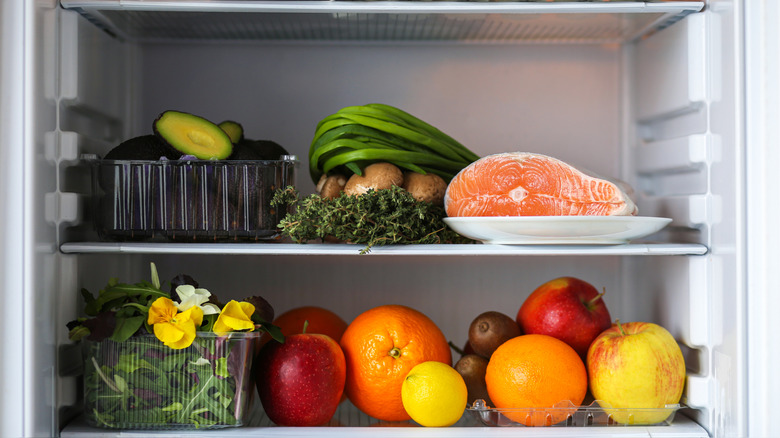
For some, seafood is a treat saved for dining out, often out of fear or lack of knowledge of how to cook it at home. However, it can be an extraordinarily rewarding (not to mention delicious) food group to master, particularly those fish dishes so good you'll want to make them every day. Still, it's vital to follow best practices with this sometimes-temperamental cuisine, including how long fish remains fresh and of high quality. While it doesn't need to be cooked immediately, home cooks are on a relatively tight timeline when dealing with refrigerated, uncooked fish.
According to the USDA, raw fish and shellfish should only be stored at refrigerator temperatures (under 40 degrees Fahrenheit) for a day or two at most from the time you acquire it before cooking or freezing. Larger pieces or leaner varieties can remain at top quality for the longer end of this window, while smaller, fattier fish should be cooked sooner.
Although it's fine to use these guidelines as a general rule of thumb, it's even more important to recognize the signs that fish has gone bad, regardless of how long it's been in the fridge. The most obvious is any sort of foul or unpleasant odor, particularly sourness, ammonia-like smells, or an overly fishy aroma. Flesh that has lost its firmness is also another dead giveaway. For head-on whole fish, throw it away immediately if you notice any cloudiness or opacity in the fish's eyes.
What to do if you can't use it in time

If you find yourself unable to use your fresh fish or shellfish by the time the second day rolls around, freezing is a common option to avoid food waste. Frozen, uncooked fish kept at 0 degrees Fahrenheit will be safe to eat indefinitely, although the quality, for both flavor and texture, will often start to decline after about three months. For best freezing results across all time spans, it's vital to properly vacuum-seal or wrap your seafood, or at least package it in a freezer-safe bag with minimal excess air.
Although there's sometimes still a stigma around frozen seafood, it's important to keep the issue in perspective. The vast majority of seafood consumed by Americans is imported, and between two-thirds and three-quarters of that is frozen at some point in the process to maximize shelf life and freshness. This means it's very possible that the "fresh" fish on ice in your local supermarket may simply be the same frozen cuts available otherwise, just pre-thawed. However, many commercially caught fish are flash-frozen at sea immediately after being caught, a testament to the value of freezing as soon as possible, rather than making a timing mistake you need to avoid when freezing seafood: waiting.
So, if you've got fresh, uncooked fish sitting in your fridge, don't delay. Check for signs of spoilage, and if things look good to go, get it cooked in the next day or so for both food quality and safety reasons. And if you don't know what to make just yet, throw it in the freezer for another day.