

Cooking Japanese Food? Use The Sa-Shi-Su-Se-So Rule For Ultimate Flavor
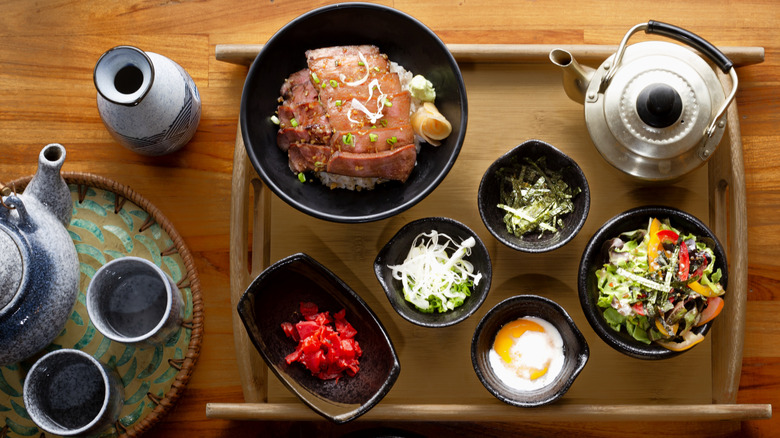
Cooking food from different cultures can be a delightful way to travel the world without ever leaving your kitchen. However, venturing into international cuisine can be intimidating for some, especially when these cuisines are based on unfamiliar principles or flavor profiles. Fortunately, those looking to learn the basics of making delicious Japanese food can look to a simple rule for flavor balance and versatility, known in shorthand as "sa-shi-su-se-so."
The phrase pulls one syllable each from the Japanese names of five key ingredients. First is sugar ("sato" in Japanese), followed by salt ("shio"), vinegar ("su"), soy sauce ("shoyu" or, more traditionally, "seuyu"), and miso. Each offers various flavor elements that many Japanese dishes call for.
The purposes of sugar and salt are obvious even for beginner cooks, but other elements bear a bit more explanation. The vinegar, typically made from rice, offers a tangy boost that helps balance rich dishes while providing a gentler acidity than many sharper types of Western vinegar. Meanwhile, soy sauce and miso (a paste of fermented soybeans and grains) provide a pleasing umami boost that rounds out any meal.
How to use the sa-shi-su-se-so rule
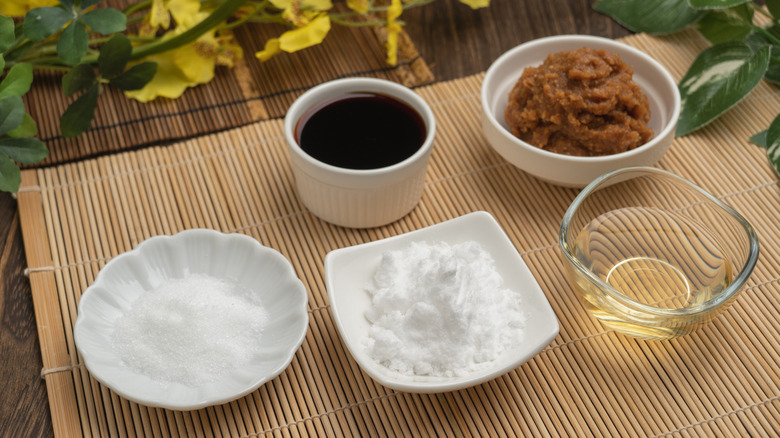
This rule is more than just a list of ingredients. It also dictates the order in which cooks should add these flavorings to build the ideal dish. In Japanese cuisine, adding sugar first is critical, as foods may not pick up the proper sweetness if soy sauce or salt are already present. Additionally, ingredients that lose some of their flavor during extended cooking (such as miso or vinegar) come later in the process.
Worth noting is that not every dish includes all five of these ingredients, and some chefs even recommend picking either vinegar or miso to avoid competing or clashing flavors. However, even beyond familiar staples like salt and sugar, keeping these five ingredients around can enhance countless other dishes (hence why many home cooks consider miso a secret pantry weapon).
So, when you're perusing our list of 35 Japanese recipes to try this week, don't let any unfamiliar options scare you away from trying them. As long as you've got your sa-shi-su-se-so ingredients (and add them in the proper order), you can navigate all kinds of traditional Japanese meals — or even craft your own tasty fusion dishes.