

Baking Powder With & Without Aluminum: How Do They Differ?
We may receive a commission on purchases made from links.
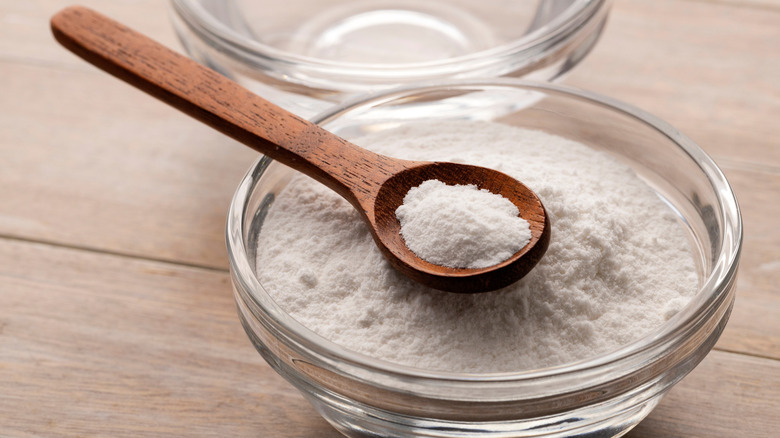
Baking powder: It's a fundamental ingredient used by bakers of all types and skill levels. It helps baked goods rise without the use of yeast or other leavening agents, and it's easy to grab a jar and stash it in your cabinet for future recipes. Those who've looked closely at the baking powder selection on the store shelf may have noticed a key distinction within the choices. Some loudly and proudly declare themselves aluminum-free, while others are silent on the matter. If you're wary about using baking soda with aluminum in it, don't worry too much. Both are safe and suitable for most recipes, although there are a few small yet critical differences to be aware of.
It's important to clarify that this aluminum vs. aluminum-free question applies solely to baking powder, not its commonly confused cousin, baking soda. Both are used in similar ways, but have vital differences in composition. Baking soda is simple sodium bicarbonate, also known as bicarbonate of soda. Baking powder contains baking soda mixed with a starch (like corn starch) and powdered acidic ingredients — sometimes including aluminum.
This means that baking soda needs to be combined with an acidic liquid to activate, while baking powder can be activated with any liquid. Baking powder categories can be further split. There's single-acting, where a single chemical reaction occurs once the mixture is moistened, or double-acting, where an additional rising reaction happens as the baked goods are heated in the oven.
Baking powder with aluminum: common, safe, but not always flavor-friendly
The use of aluminum in baking powder dates back to the late 19th century. Aluminum-based acids were pioneered by chemists who saw advantages in their stability and cost compared to traditional acids used in baking powders, such as cream of tartar. At the time, aluminum-based acids like sodium aluminum sulfate were also innovative because, unlike traditional baking powders, they were double-acting, not single.
In modern times, most store-bought baking powder is double-acting, and aluminum sulfate is still used in many brands, including Clabber Girl, one of the most commonly found and best-selling baking powders. While the use of aluminum in your food may sound concerning, aluminum sulfate as a food additive is "generally recognized as safe" (GRAS) by the Food and Drug Administration (FDA), partly due to the low amount relative to other aluminum sources in the typical diet.
However, some people notice an unpleasantly metallic or bitter taste to baked goods made with baking powder containing aluminum. Those who are baking recipes that call for assertive or bold flavors may not need to worry as much about a potential lingering metallic taste.
Aluminum-free baking powder: a modern yet classic alternative
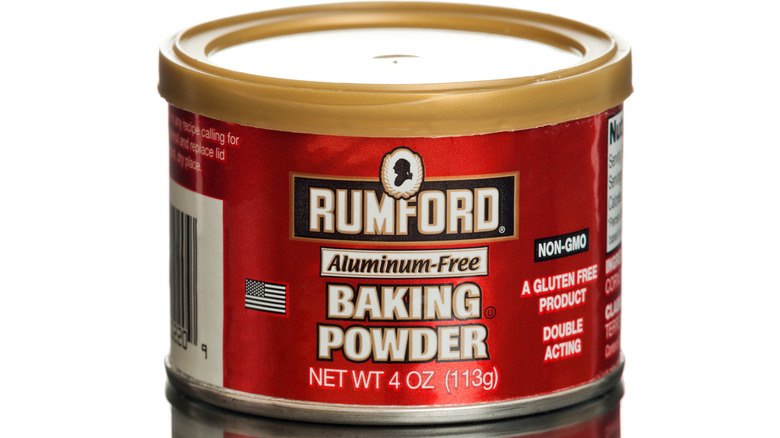
Aluminum-free baking powder truly shines in baked goods with subtle flavors, such as biscuits, British scones, or sponge cakes, where even a hint of bitterness could impact the final product. Instead of aluminum, the acidic component of these products comes from compounds like sodium acid pyrophosphate or cream of tartar. This is the science that sets Alsa baking powder apart from most American brands. Alsa is an aluminum-free, single-acting baking powder from France that many cake makers swear by.
Other popular baking powder brands free of aluminum include Argo and Rumford, along with numerous smaller or specialty producers. It's worth noting that both are Argo and Rumford are double-acting. A key concern with single-acting, aluminum-free baking powder is that it can lead to insufficient rises when not baked immediately after mixing.
When it comes to flavor, quality, price, and safety, the difference between baking powders containing aluminum and those that don't is generally small to nonexistent. Those looking to avoid any hint of metallic taste or simply don't want to ingest metal, should consider grabbing an aluminum-free, double-acting baking powder. This version eliminates many of the leavening concerns of traditional single-acting ones without relying on metallic chemical compounds.