

What Flavor Is Original Red Bull Supposed To Be?
We may receive a commission on purchases made from links.
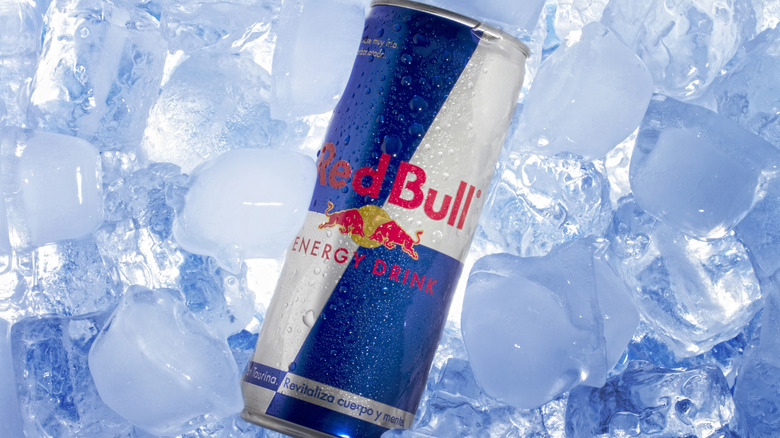
If someone were to ask you what flavor Red Bull is, you might be able to imagine the flavor perfectly, but be unable to give a straight answer. It's also possible that you could ask 10 people about the flavor, and get 10 different answers. The r/Redbull subreddit provides some pretty good guesses: "Like a weird mix of Sweet Tarts and Smarties, I think" or "Bubble gummy-citrusy-chemically-sweet, hint of floor cleaner in there as well." No one's answer is necessarily wrong. The official flavor of original Red Bull is not listed on the can.
Most of the information on Red Bull's website is vague, with "natural and artificial flavors" indicated on the ingredients list. On Amazon, the Red Bull Energy Drink Pack of 12 cans lists "Red Bull" as the flavor. While the true flavor remains a mystery, understanding the drink's origins and purpose may explain why it has an indefinite flavor.
Something you might not know about Red Bull is that the version we know today is a Westernized interpretation of Krating Daeng, a Thai energy drink created in 1976 for the country's working class. Austrian entrepreneur Dietrich Mateschitz discovered it in the early 1980s, partnered with its creator, and adapted the formula for Western markets by adding carbonation and sweetening. The drink was not originally developed around a flavor profile, but rather function. The interesting mash-up of medicinal, metallic, slight fruitiness, and candy flavors is the result of the active ingredients in the drink.
How Red Bull's ingredients influence its flavor
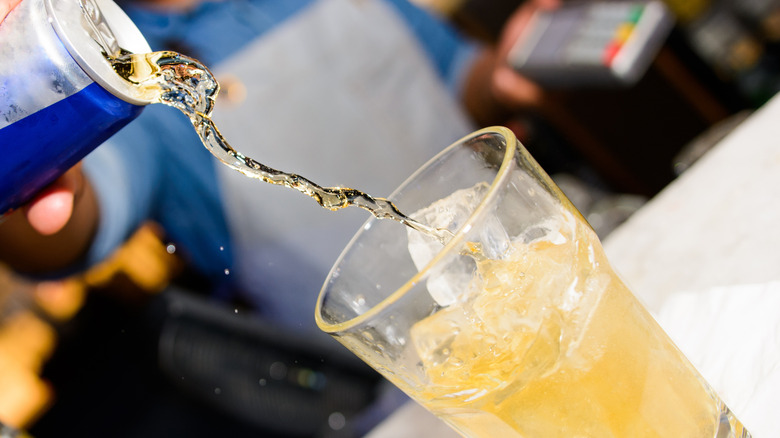
The ingredients list may not peel back the flavor mystery, but it can help explain some of the dominant tasting notes in the energy drink. The touch of sourness found in Red Bull comes from citric acid, which is derived from citrus fruit or created through microbial fermentation. It does not have a lemon or lime flavor, but a pure, sharp acidity. Citric acid also works as a preservative to keep food and drinks fresh.
Red Bull is sweetened with sugar and glucose, a clear syrup made from plant starches. The added sugars help offset the drink's somewhat medicinal flavor that causes some people to compare Red Bull to cough syrup. This comparison isn't so far off; the Thai version, Krating Daeng (available in Thailand and other Asian countries), was originally sold in pharmacies.
Taurine is one of the ingredients that many people associate with Red Bull, as you often don't see it outside of energy drinks. According to Cleveland Health Clinic, taurine is a naturally occurring amino acid that the body produces to maintain hydration, support the nervous system, and promote energy production in cells. Taurine is produced synthetically by pharmaceutical companies for food and drink products. As Nature reports, scientists have identified that amino acids can have a bittersweet flavor, so that slightly bitter, medicinal flavor in Red Bull likely comes from Taurine.
Flavored Red Bull does exist
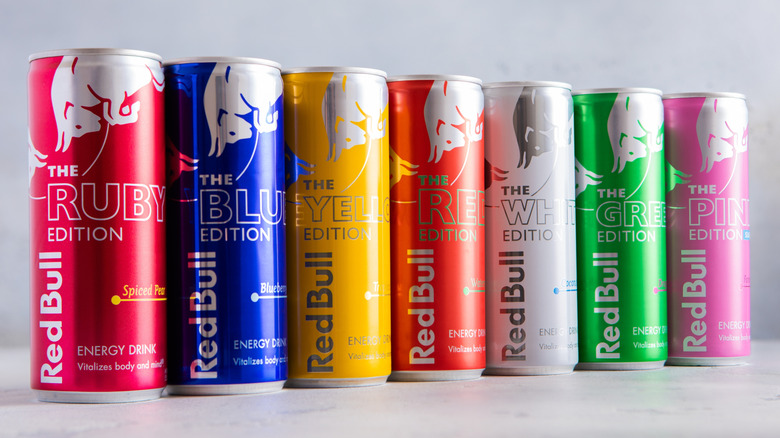
If you aren't a fan of how the original Red Bull tastes, the company offers other canned varieties in more identifiable flavors. Over the years, Red Bull has released limited, seasonal flavors, referred to as "editions". These editions contain the same ingredients as the original Red Bull, and like the original, are also available sugar-free. For spring 2026, the featured flavor is cherry sakura, and for summer 2026, it's sudachi lime. Sudachi is a citrus fruit from Japan that resembles a small lime and is known for its tartness. Past editions have been quite diverse in flavor, ranging from winter's arctic berry in baby blue cans to the perfect-for-cozy-season pear cinnamon.
In early 2026, two limited flavors, Iced Vanilla Berry and Peach Edition, became permanent year-round offerings due to customer demand. Some flavors are considerably better than others — check out these 19 Red Bull flavors, ranked worst to best.