

Does Tequila Really Taste Different In Mexico?
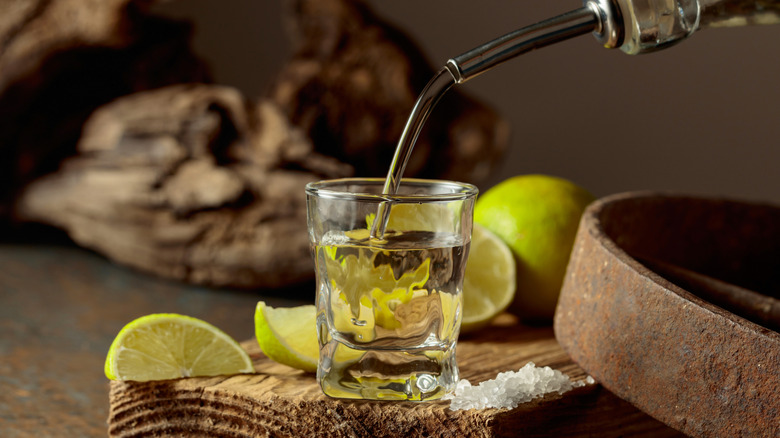
For some, a whiff of tequila signals the start of a celebration. For others, it's a headache-inducing reminder of their worst college hangover. Polarizing as it may be, this spirited spirit is one of Mexico's most beloved exports. And if you happen to be among those who have sworn it off after a night of one too many shots, a trip to its birthplace just might change your mind. If there's one thing to know before taking another sip of tequila, it's that the beverage can actually taste different south of the border.
The liquor is still made the same way — extracted from the sugars of the blue agave plant, twice distilled, and aged — but it may have a lower alcohol content by the time it reaches the bottle. In the United States, "neutral spirits," including tequila, must be bottled with a minimum ABV of 40%. That's 80 proof, and that's pretty darn boozy. In Mexico, tequila can legally be sold with an ABV as low as 35% and no higher than 55%. However, it's commonly bottled at 38% or lower.
Even as small a shift as 2% alcohol volume can make a noticeable difference in taste. You could trade out that spicy, throat-stinging burn associated with tequila in the States for a more mellow-tasting sip in the drink's home country. Sure, it's a little less potent, but the spirit certainly goes down smoother when it's poured at a lower proof.
Tequila is also enjoyed differently in Mexico
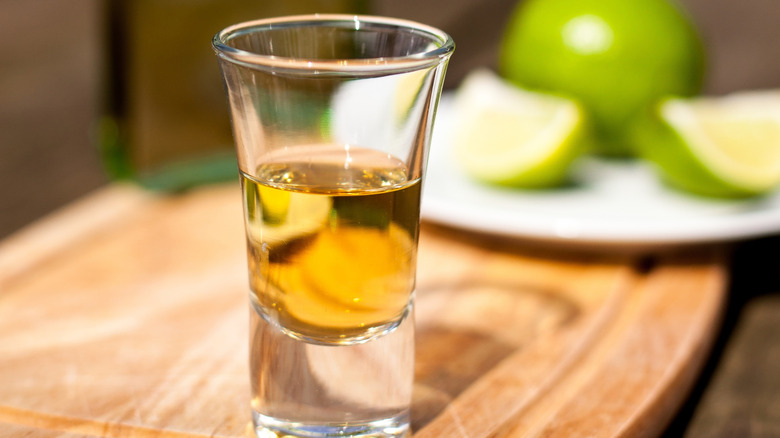
The agave-derived spirit is also appreciated quite differently in its birthplace. While many Americans consume it with salt rims and lime chasers to help ease the boozy burn, that's really one of the biggest mistakes you can make with tequila. Imbibers in Mexico actually tend to savor the sip more slowly. Rather than throwing back shot after shot followed by a chaser, they often enjoy the drink neat (or derecho), sans any ice, mixers, or chasers in order to truly enjoy its earthy flavor. (Ahem, here's a list of some of the best tequilas to drink straight.)
For those who do want more of a dynamic drinking experience, there's also the option of pairing your pour with sangrita, a tomato- and orange-based concoction that supplies some tang and spice (similar to the base of a bloody Mary). But again, this is no gulp and chase situation. In Mexico, you're meant to take small sips of each, alternating between the liquor and the juice mix.
In many cases, tequila is also treated almost like wine with meals. Different types of tequila complement different foods, serving to benefit both your plate and your palate. A bright young blanco, for example, goes great with the light and fresh flavors of seafood. An aged, amber añejo, meanwhile, stands up to the more robust flavors of red meat, making it the perfect liquor pairing to take a smoky steak dinner up a notch. In other words, it's not just the alcohol content that makes the tequila different in Mexico — it's also the entire cultural (and culinary) approach.