

Take The Guesswork Out Of Steak With The Rule Of 3s
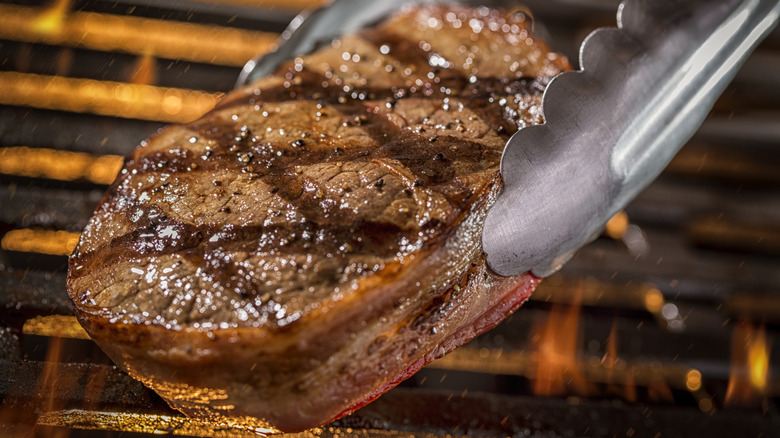
One look at today's beef prices, and it's clear that anyone cooking on a budget can't just wing it when the time comes to cook steak. There are all sorts of tips out there for grilling the ideal piece of beef, from simple hand tricks for determining doneness to highly precise methods like digital thermometers. However, one of the most reliable and (and one of the easiest to remember) is the rule of threes. By splitting your steak's time on the grill into four three-minute sections, you can reliably produce high-quality results.
Following this rule involves a bit of prep work. First, establish two temperature zones on your grill: a hot area (typically around 450 degrees Fahrenheit or a bit higher) and a cool one, free of any direct heat from charcoal or gas burners. This split allows both high-heat searing and indirect cooking, the combination of which produces ideal steaks with flavorful exteriors and tender interiors.
The initial "three" is the three minutes you'll sear the steak's first side over the high-heat section. Flip the meat over to sear the opposite side for the next three-minute period. Once both sides sport a mouthwatering seared crust, it's time to flip the steak again as you move it to the indirect heat section for three more minutes. Finally, flip the steak once more to give it an additional three minutes of cooking over indirect heat. After this 12-minute journey on the grill, it's time to remove the steak and rest it for a few minutes before serving.
Tweaking the rule of 3s to your grilling needs
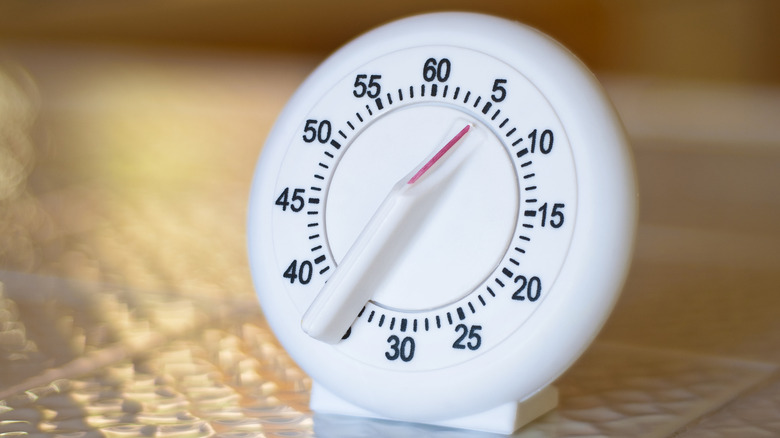
Like all rules of thumb, there are some noteworthy caveats and exceptions to the rule of threes. It's designed to cook medium-rare steaks that are roughly 1 inch thick — common size and doneness requirements, but certainly not the only ones. Thicker steaks will benefit from a similar high-heat sear time with a few extra minutes over indirect heat, while thinner ones can often come off the grill after the initial six minutes of searing. Those who like their steaks closer to medium or medium-well will also need to add some additional time in the indirect cooking phase.
At the end of the day, no rule or trick should outweigh the true arbiter of your steak's doneness: an instant-read digital meat thermometer. Rare steaks should read around 120 degrees Fahrenheit in the center, medium around 140, and well-done at 160 or above. Broadly speaking, the FDA considers 145 degrees to be the minimum safe internal temperature for beef. Although many home cooks and restaurants alike offer steaks below this threshold with no problems, the guideline is still worth noting.
So, whether you're firing up the grill for a weeknight dinner or breaking out the best steaks for a special occasion, don't leave your steak's doneness to chance. Use the rule of threes to create reliably delicious beef every time.