

The Boomer Cooking Behavior That Baffles Younger Generations
We may receive a commission on purchases made from links.
Eating at a boomer's home can be a bit of a mixed bag. Sometimes, you get nostalgic, heartwarming dishes like the melt-in-your-mouth beef bourguignon grandma used to make. Other times, you'll be served a plate of dry, tough meat and vegetables boiled beyond recognition. Given that some boomer classics are retro recipes worth bringing back, why is it that some members of the Baby Boomer generation tend to overcook their food?
As with anything tied to food habits, there's no single answer to the question, but rather a number of interconnected factors. One of the foundational elements to all this, however, is likely the issue of food safety. The guidelines that shaped modern industrial food safety practices in the U.S. were issued only in 1996; the first boomers had already turned 50 by then. Prior to this landmark year in food safety, there were higher rates of reported illnesses caused by contaminated food reaching American homes and restaurants.
Since heat is one of the most effective ways to kill harmful bacteria lingering on food items, it's possible that overcooking food was seen as the best way to avoid foodborne illnesses. We know today that these bacteria can die at temperatures that don't turn your steak into a slab of leather, but it wasn't as simple back then. Our standards for cooking are shaped by how the world around us changes, and some boomers may be sticking with what they learned decades ago: to cook food safely and mercilessly.
Boomers had to cook with outdated science, standards, and tools
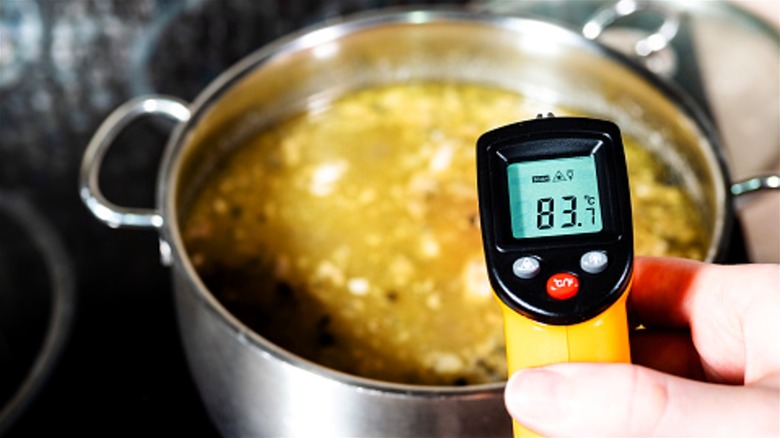
The science behind safe cooking temperatures has changed over time and will continue to do so as researchers broaden their knowledge. For instance, prior to 2011, the USDA's recommended minimum internal temperature for pork was 160 degrees Fahrenheit. Today, it stands at 145 degrees. In 2006, the recommended internal temperature for poultry decreased from 180 degrees Fahrenheit to 165 degrees.
There's also evidence to suggest that the standards of doneness may have simply changed over the years. Susan Burton, writing for Slate in 2010, found that the 1964 edition of the cookbook, "Joy of Cooking," described a leg of lamb cooked at 160 to 165 degrees Fahrenheit as "slightly rare." The 1997 edition stated that the lamb was "medium" at 135 to 145 degrees Fahrenheit.
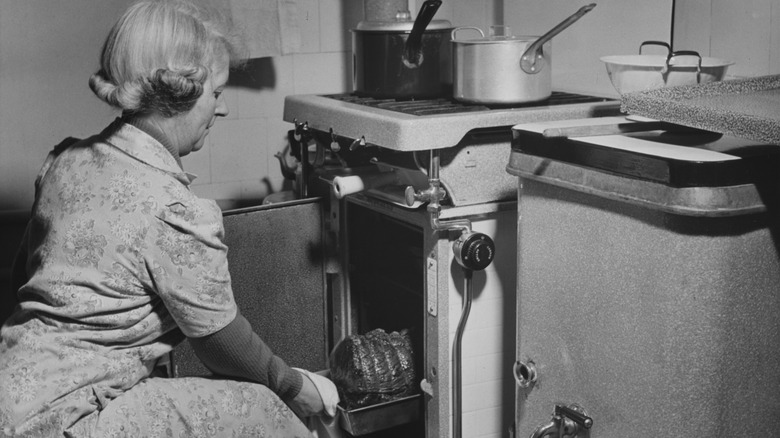
Additionally, younger generations have the advantage of cooking with modern tools that allow for more precise temperature control. Today's induction stoves, for example, can be set to specific temperatures; older gas stoves had you choosing between one and five clicks of a knob. One of the earliest U.S. patents for a meat thermometer was granted in 1942, with the USDA only campaigning for its widespread adoption in 2000. Before this, cooks had to work with less-reliable indicators of doneness and internal temperature, like color. Overcooking meat took a lot of guesswork out of the equation.
History's role in boomer flavor preferences
To fully understand why some boomers prefer overcooked food, you'll have to go a little further back in history and see what type of food their parents might have been cooking. In the early 1900s, there was a prevalent belief that bland, pale-colored food was safer to eat and that spices and seasonings were used to hide signs of spoilage. When the Great Depression hit in the late 1920s, flavor became secondary to a food's price, safety, and its ability to stick to the ribs in many households. World War II kept the bland train going, with food rations issues again making flavor less of a priority than actually being able to eat.
By the time boomers were born, previous generations had gone through nearly five decades where good-tasting food was just a bonus to having something safe on your plate. After World War II, some adults began looking for new and interesting flavors to make up for lost time, cooking up weird retro appetizers like ham-wrapped banana rolls with mustard and cheese sauce.
Others, however, may have fallen into a comfort zone with the flavorless, overcooked food they'd grown accustomed to. They would become parents, serve those dishes during their boomer children's formative years, and impact some of those kids' palates for life. Sure, that overdone pot roast may taste like cardboard to you, but to Nana, it tastes like childhood.