

This Sweet Sandwich Helped People Get Through The Great Depression
We may receive a commission on purchases made from links.
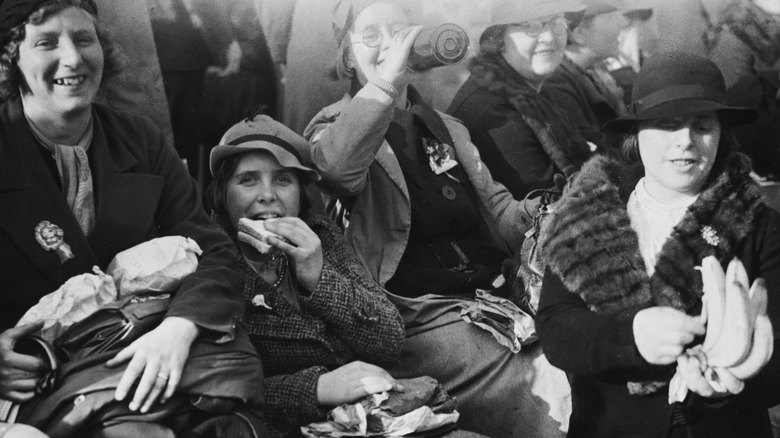
Today, there's no limit to the over-the-top sandwiches you can find. Depending on where you live, you could be a stone's throw away from an Italian sub, cheesesteak, and lobster roll all at once. Back in 1930s America, the economic fallout of the Great Depression meant folks had a lot less to work with. These years of hardship popularized sandwiches that were extremely simple yet flavorful. Case in point: the banana sandwich.
This sandwich has a short, accessible ingredients list: white bread, banana, and mayonnaise. During the Great Depression, the handheld was especially embraced in the Southern U.S. Although banana and mayo is one of the old-school sandwiches people rarely eat anymore, residents of the South still feel strongly about how it's made. The bread should be pillowy soft and the bananas ripe — firm but still sweet. As for the mayo, purists insist on Duke's, which has arguably been the South's condiment of choice since 1917, and is prized for its extra-tangy flavor.
Bananas became more commonplace in the U.S. in the late 19th century. Once regarded as a luxury item, bananas were partially made more accessible in the South by a determined businessman. Back when purveyors thought a few brown spots made a banana inedible, Samuel Zemurray used the telegraph system to expedite distribution and spread awareness of the fruit so more could be sold. Years of industrialization and a shockingly bloody takeover of Latin American and Caribbean farms made bananas more ubiquitous and affordable.
The evolution of Depression-era banana sandwiches
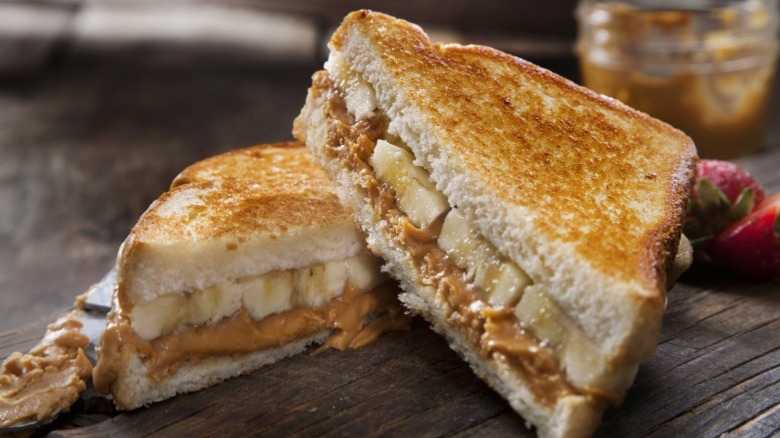
Like the tomato sandwich (which has become more popular outside the South in recent years), the banana sandwich is now more of a nostalgic snack than an everyday lunch. Today's banana sammies also taste a little different from those Depression-era meals we don't eat anymore. The original was made with firmer, more candy-like Gros Michel bananas, which went functionally extinct by the 1960s due to a devastating plant fungus. The Cavendish banana took over, and it's what we still see most today.
It costs more to make a banana sandwich now than it did in the 1930s, but it's still affordable. In the U.S., a one-pound loaf of white bread costs, on average, $1.81 (via Federal Reserve Economic Data). Bananas aren't immune to fruit inflation trends, but remain budget-friendly at approximately 66 cents per pound (via U.S. Bureau of Labor Statistics). A name-brand mayo costs about $4 a jar, but it'll make dozens of banana sandwiches.
The sweetness of banana united with tangy, rich mayo creates a balanced, sweet-and-salty profile that plain white bread was designed to accommodate. Enhancements can be made, though. Many Southerners add peanut butter or bacon. You can also dial up the sweetness with honey, or use marshmallow cream for a multi-regional take that nods to Fluff's New England origins. To really taste the throwback, go retro with sugar and chopped nuts or cream cheese, jelly, and lettuce. It may take some experimenting with room-temp and grilled variations to find your favorite.