

Buying Salad Mix? Check This Spot To Avoid Getting A Bad Bag
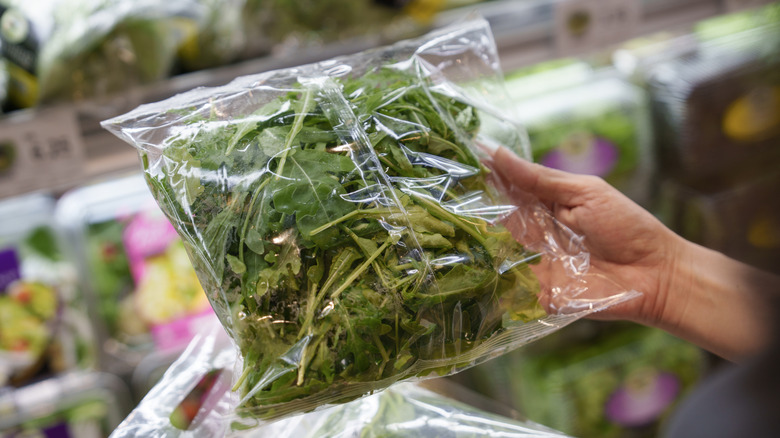
So many products in a modern supermarket are designed with convenience in mind, and that's certainly true of bagged salad mixes. They'll save the prep of washing and chopping lettuce or other greens, and some even come with additional vegetables and salad toppings mixed in. (There's even a hack for eating it that requires (almost) no dishes!) But what you need to know before buying pre-packaged salad is whether it's fresh or has gone bad. Luckily, there's one simple way to tell.
Take a good look at all sides of the bag and pay special attention to the bottom. If you see soggy, wilted leaves at the bottom, or worse yet, a small pool of water, it's better to skip that package and find another one. Wet leaves or a puddle can mean the greens have released moisture, sometimes as a result of damage during processing or shipping and sometimes because the greens are beginning to go bad.
Using slimy, shriveled greens is definitely a salad mistake to avoid, but what if you've already bought the greens and now a few leaves have gone soggy in your own refrigerator? No worries: Even though slimy lettuce can be a sign of spoilage, it's not really unsafe to eat — it just won't taste very good. If you do end up with a bag containing a few wilted or soggy leaves, just pick them out and discard them. The rest of the salad is usually fine.
Regulating moisture is the key to keeping greens fresh
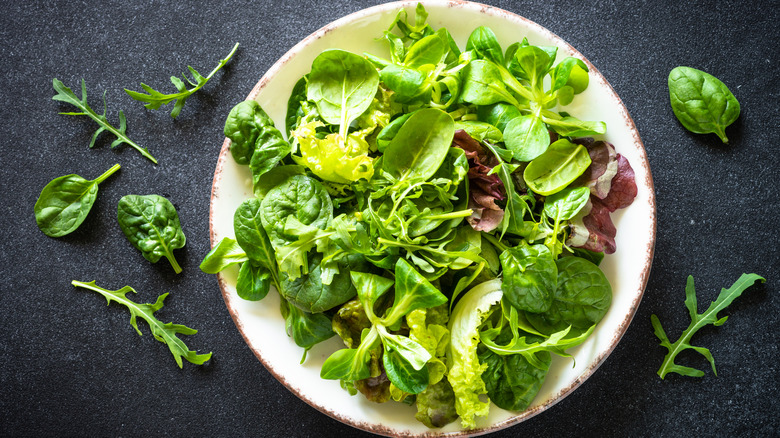
Like any other plant, lettuce breaks down as it gets older, but it's particularly fragile and degradation can start to happen almost immediately when it's harvested. The greens release water as they age, which is what makes the leaves slimy and can cause a moisture buildup in the bag. While that in and of itself isn't harmful, excess water can be a breeding ground for bacteria. And as more of the bag spoils, bacteria spreads, increasing your chance of getting sick.
To slow down the spoiling process, keep salad greens away from other produce (that might release ethylene gas, speeding up spoiling). It's best to remove the greens from the bag they were sold in and use a new airtight container lined with paper towels. The towels absorb moisture the leaves release, reducing the chance of spoiling the whole batch.
Another trick to controlling spoilage of your greens is the crisper drawer. If it's on the high humidity setting with the air vent closed for less circulation, it's an ideal place to store your lettuce. That's because it traps moisture in the drawer, slowing down evaporation (meaning your lettuce will release less of its moisture). If stored properly, lettuce will last up to seven days, though that time might vary slightly depending on the type of greens and how close to the expiration date they already are.