

The Honey Myth Too Many People Fall For
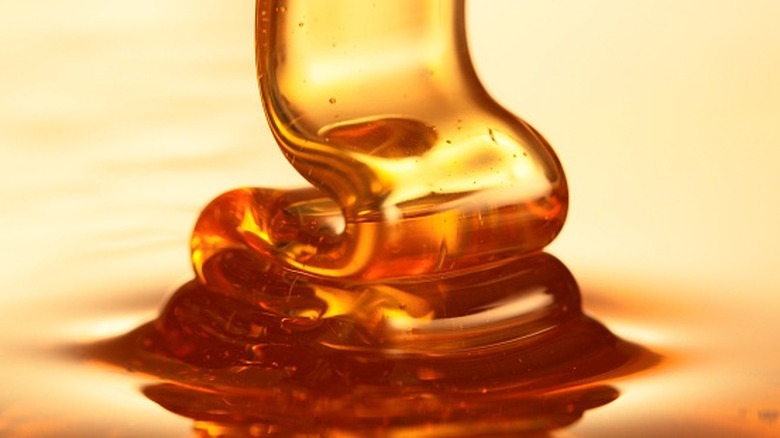
We wouldn't question it if you eat honey every day because it's delicious and nutritious in moderation. Considering that something so amazing comes from the work of flying insects, it's understandable why a lot of myths surround the thick golden ingredient. We want to put one big misconception to rest here and now. Despite what some folks may say, you can indeed use a metal spoon to scoop your honey.
Because of chemistry-related concerns stemming from honey's acidity, some people believe that scooping it with a metal spoon will ruin the nutrients or damage the metal. Instead, they may recommend grabbing a wooden utensil. The beekeeper co-op Sioux Honey called it "an old wives' tale that won't go away." It's true that honey has a high acidity, and other acidic foods like lemons, vinegar, and tomatoes used to cause unwanted chemical reactions with old-fashioned steel spoons. But these days, most metal utensils are made with stainless steel, which has a chromium component that stops corrosion.
Even so, experts warn that you shouldn't leave a steel spoon sitting in this natural sweetener overnight. They also advise against storing your honey long-term in a metal container, which might cause the food to oxidize or face problematic temperature fluctuations. However, for the short interaction of scooping out a little golden goodness, using a metal spoon is perfectly safe.
The pros of acidity in honey, despite the metal spoon myth

The acidity in honey that causes people to reach for a nice wooden spoon is actually one of the reasons this sweetener is so great. It contributes to antimicrobial properties that help your immune system and stop the growth of bacteria. This makes honey highly shelf-stable. The acidity also promotes gut health, although it could cause an allergic reaction in some people. It can degrade your teeth, too, so be sure to brush after eating honey.
On the pH scale, honey ranges from a 3.2 to a 4.5, compared to the neutral value of roughly 7 for many other sweeteners. It contains gluconic acid, formic acid, and acetic acid, which combine in various amounts to create the unique flavor in each of the 300 varieties available in the United States. Those factors are influenced by the flowers from which the bees collect their nectar and even the temperature and humidity during production. You can also mess with honey's acidity-related benefits if you don't store it properly, which is why you should keep it in an airtight non-metal container.
We recommend cooks try one of these honey-based recipes, remembering that you can balance the acidity in honey with mild spices like cinnamon or vanilla and cut the sharpness with fruits, starches or dairy to make the most of the sweet ingredient.