

How To Properly Clean Your Yeti
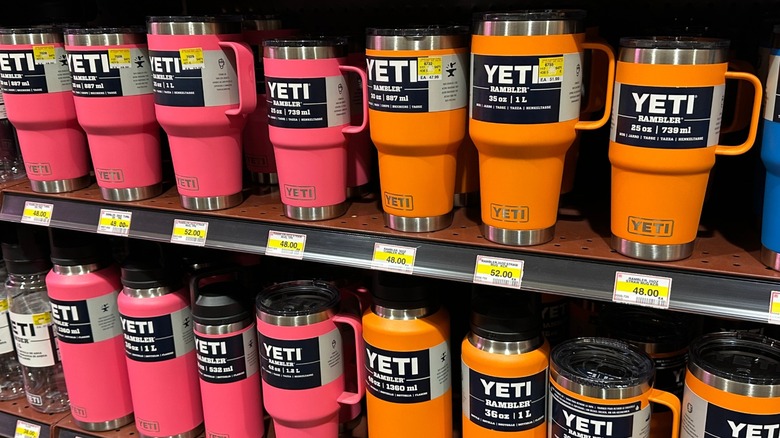
Everyone has a favorite water bottle — you know, the one you carry around with you all day and refill constantly to keep you hydrated. For many, that bottle is a Yeti, which comes in a variety of sizes and is insulated to keep that water icy cold for hours. But being a consistent Yeti-user also means you have to know how to keep your bottle, the lid, and the cap clean — and there is actually a right way to maintain a pristine bottle.
For a simple and quick clean, Yeti bottles can be popped right into a dishwasher because all of the pieces of the bottle are safe for the appliance (there's no reason not to take advantage if you have one in your kitchen). If you don't have a dishwasher, cleaning by hand is the only option. For this, Yeti recommends using a mild dish soap. More challenging stains from beverages like coffee can be dealt with using a cleaning tablet, which Yeti sells to customers. In the event the interior of your Yeti starts to rust, you can scrub it back to sparkling using a stainless steel cleaner.
Cleaning the body of the bottle is fairly straightforward, but what about the caps? For these, the method you'll use depends on the variety of bottle. Many of the Yeti lids feature detachable parts, so you can take things apart and drop them all in the dishwasher to ensure every piece is squeaky clean.
Dirty bottles are a no-go
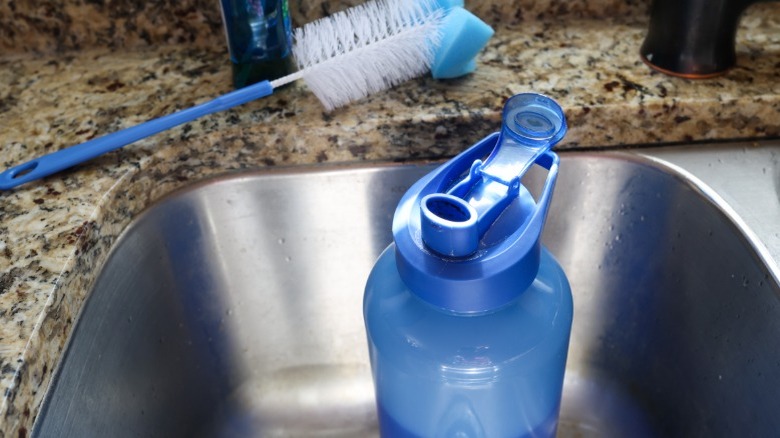
Your water bottle says a lot about your personality, especially if it's dirty. But a dirty bottle actually holds other risks, the biggest being a build-up of germs. Our mouths are full of bacteria and small pieces of the food we've been ingesting that we transfer to the bottles when we sip. Additionally, the water we're putting into bottles can contain microorganisms. All of these bacteria can rapidly multiply, even in a single day. According to a study done in Singapore, the amount of bacteria in water bottles jumped from 75,000 per milliliter to between one and two million per milliliter in just 24 hours (via BBC).
While these organisms aren't always dangerous, there are some that are more sinister than others. For example, if you're not too keen on hand-washing, E. coli (the culprit of one recent U.S. food-borne epidemics) can actually make its way into bottles. Similarly, sharing water bottles with our friends and family can be a route for diseases like Norovirus to spread. Another potential growth inside these containers is mold. Ingesting mold is never a good thing, and can result in stomach issues, allergic reactions, breathing difficulties, and even infections.
So how can you tell if your bottle is contaminated? Mold can appear as visible spots, a foul taste, or a residue. While you can't see microorganisms like E. coli, you can do your best to consistently clean and change the water in your emotional support water bottle.