

Don't Throw Away Used Aluminum Foil — Use It For This Feeder Trick Hummingbirds Love
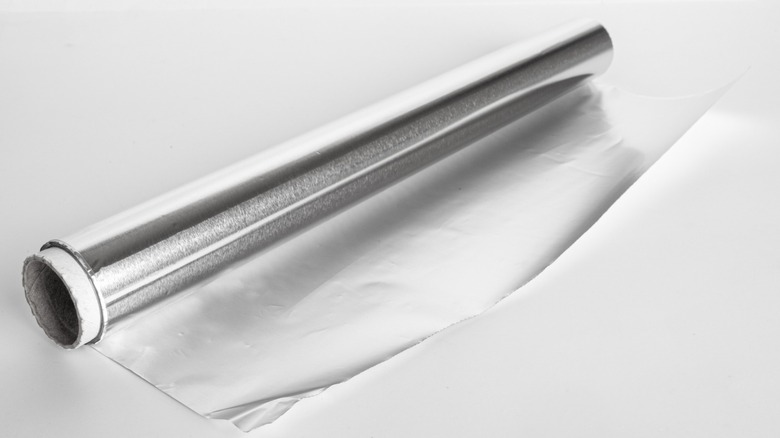
Aluminum foil is a kitchen staple, used for anything from baking potatoes to covering the top of a cheesy lasagna. But once you've used it, it can feel wasteful to throw it straight into the trash — especially for those who are looking to be more conscious with their waste. So if you have a hummingbird feeder, you already have the perfect way to reuse that extra aluminum foil.
Hummingbird feeders are different from your classic feeder in that they're filled with sugar water and not a collection of seeds. The tiny birds love this sweet delicacy, and buzz over to indulge, but if not taken care of correctly, the sugar water can actually make hummingbirds sick. Because it's sitting out in the sun, the sugar water can very quickly ferment, and also becomes too hot for the birds to consume if it hits over 102 degrees Fahrenheit.
Here's where that aluminum foil comes in: It can be wrapped around the nectar reservoir to prevent the water from spoiling or harming any birds who stop by the feeder. If you've ever tried to make s'mores using a solar oven, you know that the foil reflects the sun. It will perform the same duties around your feeder, and can keep the sugar water cooler by fending off some of the incoming rays. Aluminum foil has two sides, but either can face outward in this case. However, you'll have to periodically check the water to ensure there's no contamination or mold growth, and clean it if you notice any.
Hummingbirds keep gardens growing strong
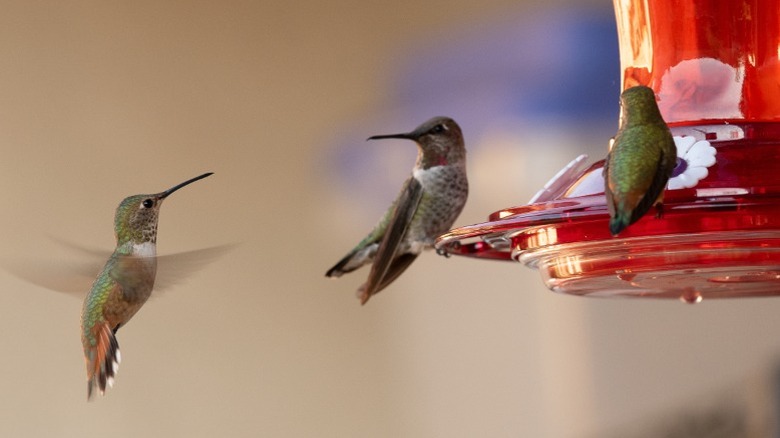
Now that you're keeping those tiny birds safe, you might be wondering why hummingbirds are beneficial for your backyard gardens. While most bird species eat seeds, worms, or other insects, hummingbirds are part of a unique grouping of avians that are pollinators. Bird pollination is called 'Ornithophily,' and follows the process you might know bees for: a bird feeds on a plant's nectar, and in doing so pollen gets stuck to its body, the bird then transports that pollen as it flies in search of its next food source. Although hummingbirds don't contribute directly to the pollination of our food, the process itself is vital for maintaining healthy wild plant systems. The only species found in the eastern part of the United States is called the Ruby-throated Hummingbird, and the little creature can stop at up to 2,000 flowers every day in search of nectar. In comparison, bees only visit 1,500 — so attracting these birds to your garden is even better than the buzzing pollinators.
If you want to keep these birds around your plants, there are a few things that'll help beyond wrapping their feeders in aluminum foil. When choosing a feeder, opt for one that's red in color to help attract hummingbirds. Additionally, to help the foil do its cooling job, you can place the feeder in a shadier spot. For the "nectar," all you'll need to do is mix white sugar and purified water in approximately a 30-70 ratio.