

Once Found In 19th-Century Kitchens, This Bread Accessory Is Now A Thrift Store Treasure
We may receive a commission on purchases made from links.
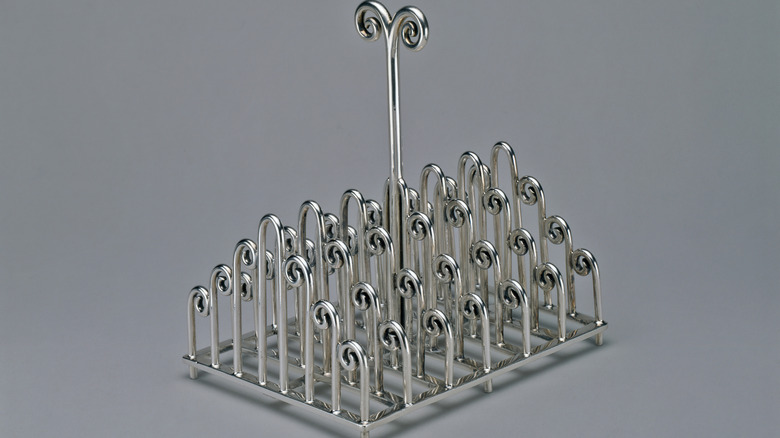
In the modern-day kitchen, smart tech and cool gadgets often take priority. Yet it's worth taking a glance into the past for some long-forgotten kitchen accessories that deliver both fashion and function. One example is a tabletop serving item from the 1800s: the toast rack. Instead of piling slices of toast onto a plate, wealthy Victorian-era households would place them upright in narrow slots — a fancy way to serve an everyday breakfast food while preserving its intended texture.
If you see one in a thrift store, take a closer look. Older, antique toast racks are typically made of sterling silver, silver plate, brass, or copper, and can be valuable. This is especially true if they feature ornate designs, unique handles, or a folding component. Depending on the design and age, expect to find pieces for anywhere from $40 to several hundred dollars. So if you see an older one in a thrift store for less than that, it's a great deal. And note the difference between vintage and antique kitchen items; antique toast racks are more than 100 years old, while vintage ones are 20-99 years old (and typically cost less).
Vintage examples also regularly appear on eBay and Etsy, where you could find everything from Victorian silver pieces to Art Deco designs. For those who don't care how old it is, modern stainless steel or ceramic versions are easy to find on Amazon for less than $20.
The argument in favor of toast racks
Some antique and vintage pieces don't have a practical place in the kitchen — like fine china – but the toast rack certainly does. It's true that you could simply stack toast on a plate to pass around the table, but keeping it upright and separated helps it stay crisp and firm for longer. When toast is still hot, it releases moisture, and that layer gets trapped in between the slices. And if sitting for too long, toast can get soggy. The rack's space between the slices allows steam and moisture to escape.
Most traditional toast racks feature five to eight slots, a small tray or base to catch crumbs, and a handle on top for easy passing. In wealthy Georgian and Victorian households, they weren't just functional, they elevated something basic like bread into a more refined offering.
Whether it has a simple design or ornate details, toast racks are versatile in the modern kitchen and home. These vintage racks can be used as mail organizers, recipe card holders, stationery storage, napkin stands, or to display thin cutting boards. Even if you never plan on serving toast at a formal breakfast table, this centuries-old kitchen accessory still has a place in today's home.