

The Boomer Tipping Habit That Younger Diners Shake Their Heads At
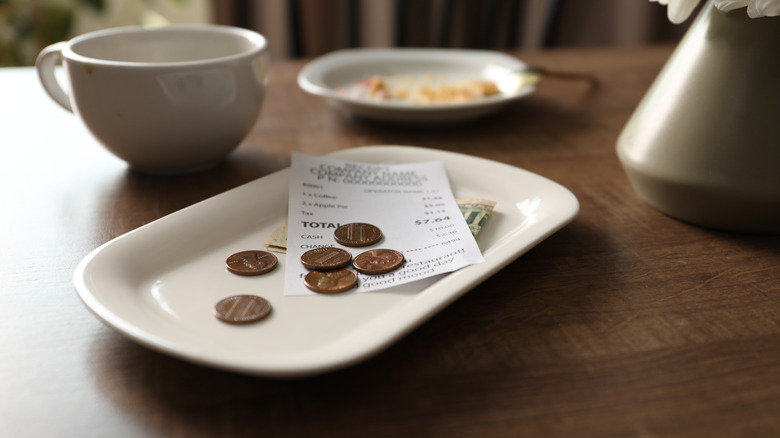
If you thought the general conversation around tipping culture is volatile, just wait until age gets involved. As reported by Southern Living in 2025, TradingPedia (a news website featuring financial topics) polled 2,005 consumers on their tipping practices and found that Millennials and Gen Z diners are the most generous, leaving 19.49% and 19.31% on restaurant bills, respectively. Conversely, Gen Xers usually tipped around 18.21%, while Boomers left just 16.4% on average. In case you're unaware, the birth years for Gen Z range from 1997 to 2010, 1981 to 1996 for Millennials, 1965 to 1980 for Gen X, and 1946 to 1964 for Boomers.
With acceptable tipping minimums creeping ever upward, the tipping practices of older adults have become even more of a lightning rod. On Reddit, an airport bartender recalled waiting on an older patron who gleefully informed them, "Sorry, I don't believe in tipping." One commenter highlighted the legitimate issues with the American tipping system while also saying, "I'm not going to screw over a real person over some nebulous philosophical argument." Another Redditor introduced a historical perspective among the many criticisms, stating, "Boomers will say it as a way of getting out of a social convention that they and their parents largely are the cause and perpetuators of."
What's the proper amount to tip?
Tipping is a deeply flawed system, and many agree that they'd rather see workers receive a fair wage from their employers. Some establishments use automatic gratuities to provide consistent wages to wait staff, but many others pay the federal tipped minimum hourly wage to servers. That means servers can earn as little as $2.13 per hour, provided that the combination of these wages and their tips meets the federal minimum wage, which is just $7.25. While tipping culture can feel overwhelming, especially in these rough economic times, it's an obligatory aspect of dining out if you want to support your favorite restaurants and the people who work there. In this case, there are some guidelines you can follow.
When receiving decent, attentive service, the acceptable tipping range usually falls between 18% to 20%, and anything beneath 18% usually signals that something was amiss (verbal abuse, a lack of attention, and biased behaviors are all good reasons to leave a not-good tip). For a more impressive experience, diners should tip between 22% and 25% or go even higher if they choose to. At the end of the day, people are free to tip whatever amount they please, but that doesn't safeguard the more frugal among us (yes, that means you, Boomers) from criticism.