

Why You'll Sometimes See Bell Peppers Sold In Packages
We may receive a commission on purchases made from links.
The humble Capsicum Annuum is the species that includes bell peppers, and it's a staple food in cultures across the world. Capsicum Annuum is believed to be the first pepper species cultivated by humans for food, starting around 6,000 years ago in Mexico. If bell peppers have been consumed for thousands of years just the way they are, why have growers and retailers begun packaging them in plastic?
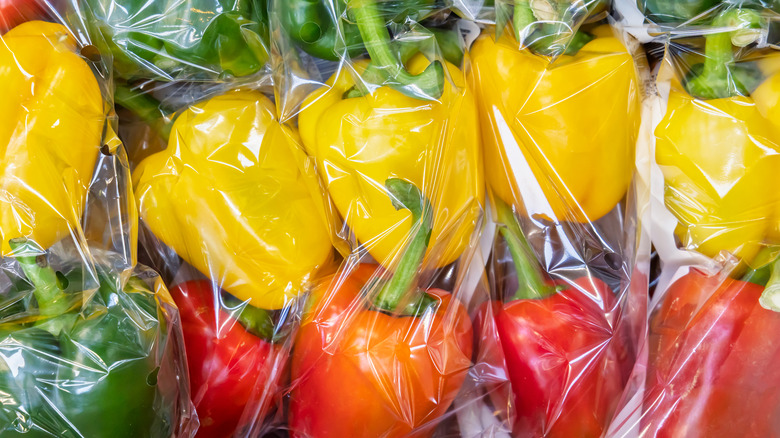
Despite the crop's long history, individual bell peppers are not particularly durable. They have soft skin and a high water content, which means they can be damaged easily and are susceptible to moisture loss. An extra layer of plastic helps preserve them during travel and while in the grocery store, protecting against bruises or punctures, as well as moisture evaporation that can lead to shriveling. Still, that extra plastic wrap isn't essential, so only some stores use it — such as Aldi, which tends to wrap a lot of its produce in plastic for those preventative reasons.
Another, simpler reason bell peppers may be pre-packaged is for the convenience of having multiple colors of bell peppers together all at once. It's common to see multicolor packs (though many exclude green peppers) or even pre-sliced mixed peppers for a ready-to-eat option. Here, it's all about convenience and variety, not preserving freshness.
Remove the plastic to store peppers at home
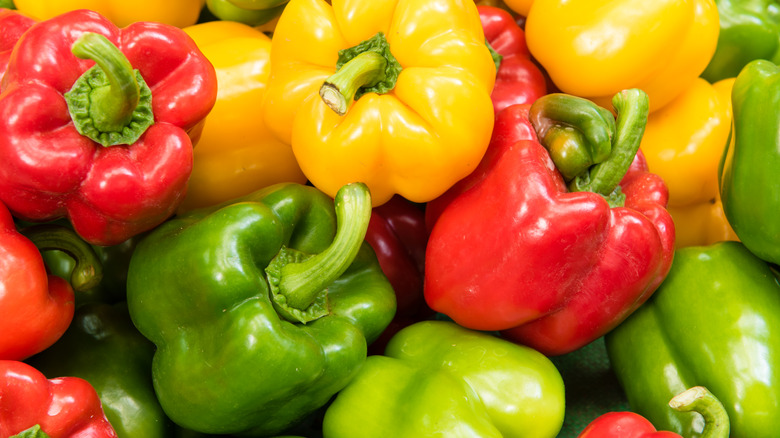
Plastic packaging for bell peppers may be of use during transit and at the store, but you should remove it once you get them home. Airflow helps preserve these vegetables, especially when you store them unwrapped in your crisper drawer. The crisper keeps peppers' moisture at the right level — not so high that it encourages mold growth, and not so low that the peppers shrivel.
Another important note: Bell peppers prefer it a bit warmer than most of your refrigerator. While many refrigerators are set to around 40 degrees Fahrenheit, peppers do best closer to 45 to 50 degrees. Colder temperatures can result in the peppers softening.
You've probably heard the saying that one bad apple spoils the bunch, and the same is true for mixed produce in the crisper drawer. Certain fruits and vegetables, such as apples, bananas, avocados, and peppers, release ethylene gas, which hastens their ripening process and ripens the produce stored alongside them. Because these particular ethylene gas producers are also sensitive to its effects, storing peppers in a non-breathable plastic bag traps the vapors, causing them to spoil faster. The main point of the plastic package is to protect peppers during transport and stocking. Once you bring the peppers home, the plastic has served its purpose and is no longer needed.