

How Worried Should You Be About Mercury In Canned Fish?
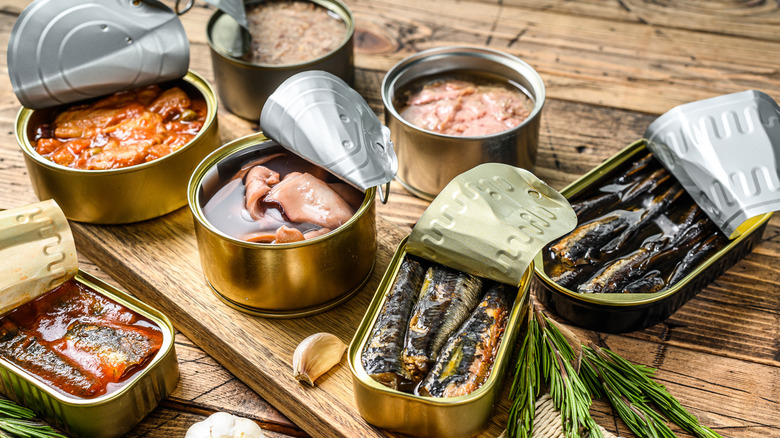
Most people have likely heard about the positive health effects of eating fish: They're rich in omega-3 fatty acids, which lower heart attack and stroke risk. They may also boost brain health, protect your vision, and even improve sleep quality. However, like all good things, there are potential risks from overdoing it, particularly with canned fish. Among them is mercury consumption. However, the level of concern that's warranted hinges on the type of canned fish, who's eating it, and the quantity and frequency of consumption.
To better understand this dynamic, consider how this toxic heavy metal ends up in fish. Outside of some naturally occurring mercury, humans play a key role. For instance, industrial processes such as using coal to create electricity release excess amounts of the metal as waste. This ends up in the air, and later, our waterways. Fish and other marine life, down to the tiniest organisms, consume the mercury as part of their daily lives. Unfortunately, the metal can't easily be removed once it enters the body. This presents a particular problem further up the food chain. Larger fish need to consume high numbers of smaller ones to survive, bio-accumulating all of the previously eaten mercury. This means bigger ocean dwellers, such as tuna, can end up with troublingly high concentrations.
Methylmercury, the most damaging type, is also the most common form found in seafood. In the developing brains of children, too much can lead to neurological problems, including lower intelligence, issues with motor skills, and mental health disorders. Adults can also experience visual impairment, muscle numbness or weakness, difficulty speaking, and other side effects.
Lowering mercury risk with better fish choices

As dire as the consequences can be, they're fairly easy to avoid with just a bit of mindfulness about your diet. Part of this involves picking the right canned fish and avoiding or limiting riskier ones. The former, safer group includes anchovies, crab, oysters, salmon, sardines, and squid, among others. Bigeye tuna is a prime example of canned fish to avoid, with skipjack and other canned light tuna serving as a better, lower-mercury replacement.
Although mercury exposure is a serious concern, it's not the only thing to look for when buying canned fish. For instance, some consumers may want to be mindful of sodium content, which can be high in some varieties. Folks trying to maximize the benefits should consider avoiding water-packed fish and opting for more nutritious, more flavorful oil-packed varieties instead. It's also worth checking for certifications and designations that tell you about whether the fish was caught or raised responsibly and sustainably, such as the Marine Stewardship Council label for wild-caught fish and the Aquaculture Stewardship Council label for farmed ones.
There's no avoiding the fact that mercury can be dangerous to your health, and canned seafood is a surprisingly easy way to overconsume it. However, adults in good health who eat it in moderation should have less to worry about than more vulnerable groups.