

12 Common Mistakes People Make When Roasting Vegetables
We may receive a commission on purchases made from links.
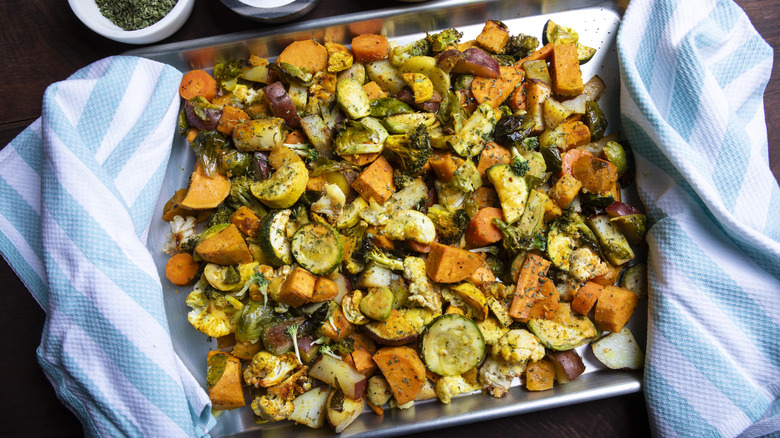
When done right, roasted vegetables sweeten and intensify the natural flavors of the produce, making it one of the best cooking methods for veggies. They turn out so tasty that even veggie haters will be impressed; I always say that if you think you don't like a particular vegetable, try roasting it. But, there are some common mistakes people make when roasting vegetables, leading to bland or soggy results, among other potential problems.
I've roasted hundreds of trays of veggies in my time, between working as a food writer, dabbling as a food professional, and really loving vegetables. But, I wanted to speak to other experts to get their opinions. Bryan Quoc Le, PhD, is a food scientist, food industry consultant at Mendocino Food Consulting, and author of "150 Food Science Questions Answered." Jen Wooster is a recipe developer and food blogger at Peel With Zeal. Joanne Gallagher is the co-founder and recipe developer behind Inspired Taste. Cadry Nelson is the creator of Cadry's Kitchen and the author of "Living Vegan For Dummies." With their combined expertise, we're going to get to the bottom of the mistakes to avoid when roasting vegetables.
1. Chopping vegetables into uneven sizes
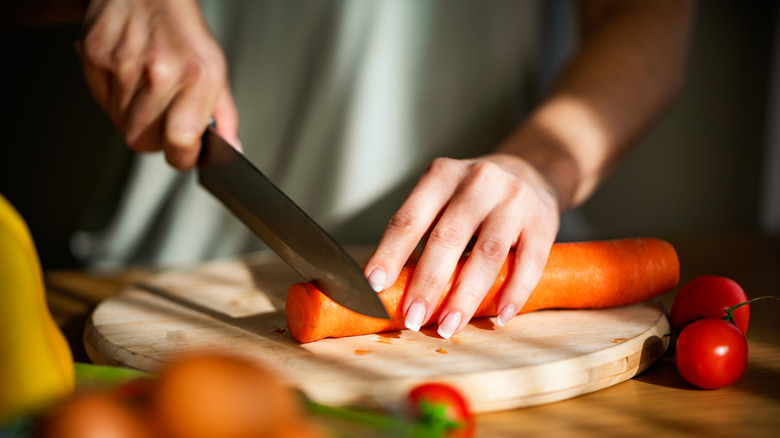
The first mistake you can make happens way back at the beginning of prepping. It's tempting to just chop your veggies any old how, especially if you're in a hurry. But, it's important to cut them uniformly. It might seem persnickety, but it does make a difference to how they turn out. You don't have to get a ruler out or anything, but you should eyeball it to make sure the chunks are roughly even.
When you've got some small pieces and some large ones, the smaller ones cook more quickly, which leads to issues. You don't need to be a pro with a knife either, Joanne Gallagher notes. "Just aim for similarly sized pieces so you don't end up with some vegetables that burn while others stay too firm in the middle." Perfection isn't required and roasted vegetables don't need to look picture perfect on the plate. Just paying a small amount of attention to accuracy while you chop makes all the difference.
2. Not parboiling certain types of vegetables
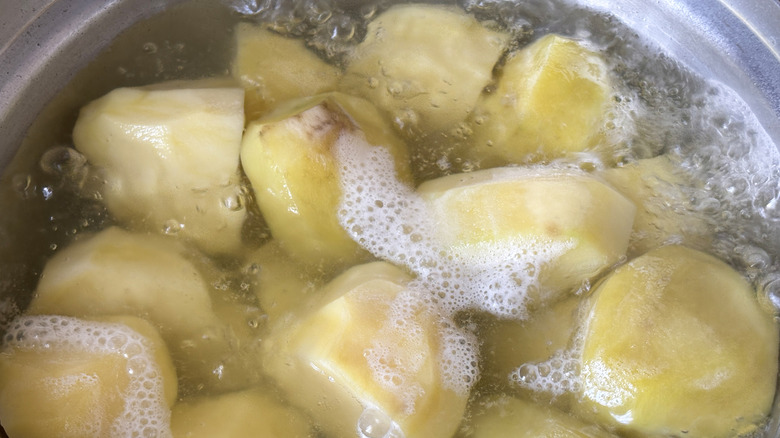
You might think that roasting vegetables just involves chopping them up and throwing them in a roasting tray with some oil. While this is often true, you should also consider adding parboiling to your repertoire. Not every type of vegetable requires this step, but some really benefit from it.
Parboiling is the act of simmering your vegetables briefly. This could be anything from a quick blanch to about 10 minutes of simmering, depending on the vegetable and the size of the chunks. The aim is to start the cooking process but not complete it. For some kinds of veggies, it helps them become perfectly tender on the inside but crisp and caramelized outside.
Jen Wooster explains that the process provides the balance between being cooked through and burning. She also notes it's good at "preserving color in vibrant veggies like broccoli or green beans." It's particularly good at getting starchy vegetables to come out extra crispy. It's why you should parboil potatoes before roasting, but other veggies like parsnips, beets, and carrots are also improved through this extra step. If you compare the results, you'll wonder why you weren't parboiling your veggies sooner.
3. Roasting vegetables that are still wet from washing
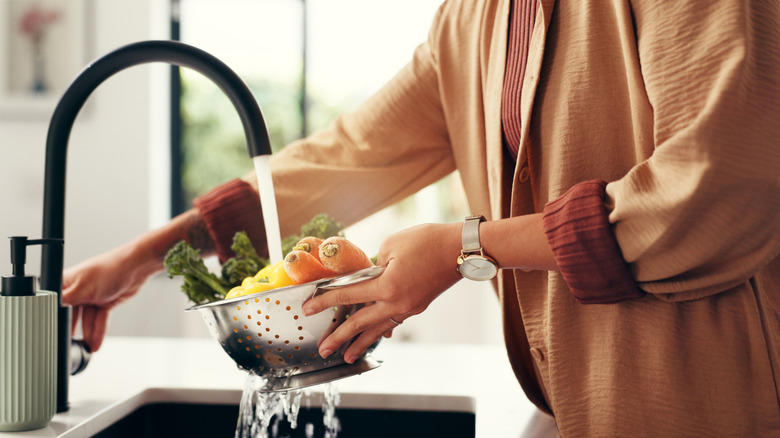
Washing your vegetables is important to get any leftover dirt and pesticide residue off the exterior, particularly if you aren't planning on peeling them. But, one common mistake is roasting vegetables that are still wet. You might think it won't make much difference, but it can significantly impact how they cook.
According to Joanne Gallagher, "Another common mistake is not drying vegetables well after washing them, which can cause them to steam instead of roast." If yours turn out bland and soggy rather than caramelized with sweet, intense flavors, they've probably steamed in the oven. Luckily, it's a simple fix. Just make sure to dry your vegetables with kitchen paper or a clean dishcloth before prepping and cooking them.
It's not just a problem with freshly washed produce; it can also happen with parboiled vegetables. In this case, you should also be careful about the excess water. Make sure to drain vegetables thoroughly by letting them sit in the strainer for 5 to 10 minutes before adding them to the pan. At this time, the moisture on the surface will have time to evaporate, leaving the exterior nice and dry so the vegetables roast rather than steam or simmer.
4. Overcrowding the vegetables in the pan
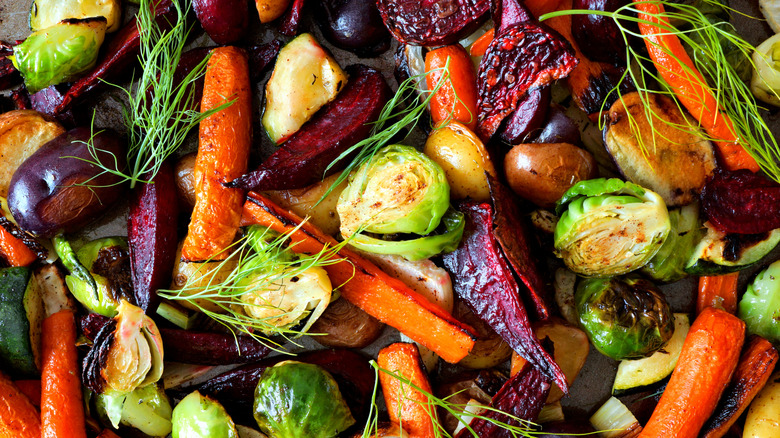
Nobody wants to do more dishes than they have to or cook their food in batches, but don't just shove all your chopped veggies in one pan and hope for the best. When you overcrowd the pan, the veggies won't cook as they're supposed to and you'll be left with limp, soggy excuses for roasted veg.
This is one of the most common mistakes novice home cooks make when roasting vegetables, notes Joanne Gallagher. "If the pan is too full, the vegetables release steam that gets trapped, so they soften instead of developing those browned, caramelized edges everyone loves," she explains. Instead, she makes sure to spread them evenly on the tray, leaving space for the air to circulate.
This does mean that you won't be able to fit a huge amount of vegetables onto one sheet, but that's okay, as you can always spread out if you need to. "If necessary, use a second baking sheet, and rotate them top to bottom in the oven halfway through cooking," suggests Cadry Nelson. It might seem like just a small difference, but it can really make or break the finished dish. Whatever the type of vegetable, whether parboiled or not, they all need a bit of breathing space to avoid steaming.
5. Using too much or too little oil for roasted vegetables
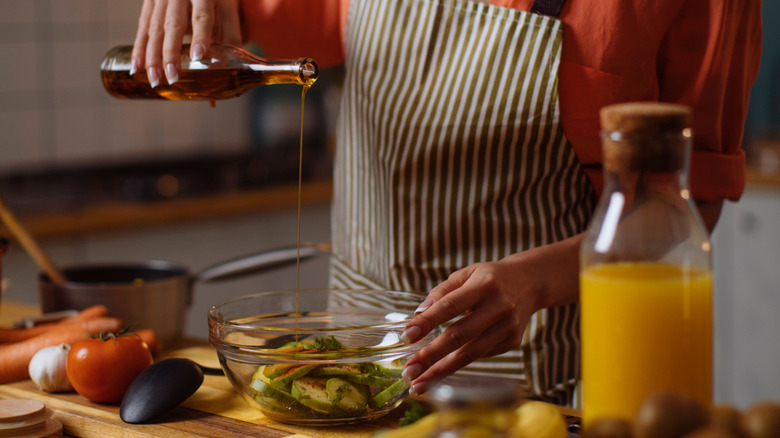
There's a fine balance between too much and too little oil when roasting vegetables, and either option leaves you with a less-than-desirable result. It's not difficult once you've got a feel for it, but many people are either heavy handed, thinking the more the better, or underdo it because they're not used to cooking this way or due to misplaced health concerns.
According to food scientist Bryan Quoc Le, PhD, "You definitely need enough oil to help heat transfer evenly across the vegetables." So, it's not just preference, it's science. "If you end up using too little, parts of the vegetables burn faster and you end up with uneven cooking," says Quoc Le, PhD. "Too much, and you've drowned the vegetables and end up with a lot of greasy residue," he adds.
What's more, Cadry Nelson explains, "If you use too little oil, vegetables can become dry, tough, or prone to sticking to the baking sheet." I've certainly had times when I've roasted vegetables and used too little oil and they haven't softened and cooked through as they should. Joanne Gallagher suggests using a couple of tablespoons for a full sheet pan, or enough to coat everything lightly without leaving the vegetables drenched. The best way to do it is by tossing the vegetables in a bowl with oil beforehand, she recommends.
6. Using the wrong kind of oil
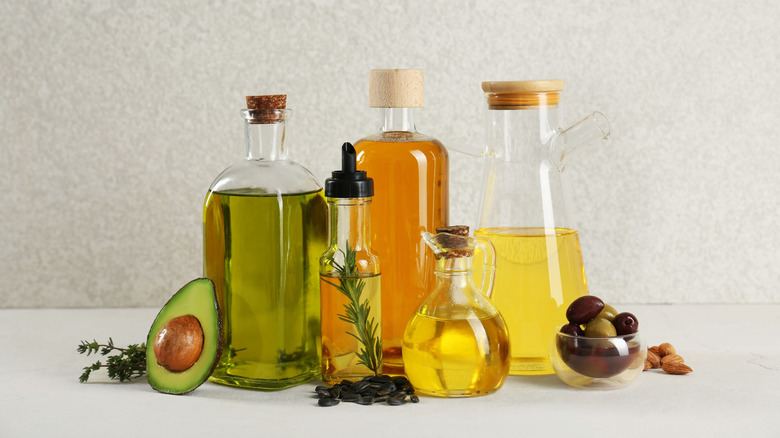
While there isn't one perfect type of cooking oil to use when roasting vegetables, some are better than others. It's often a case of balancing flavor and other properties, along with their suitability for cooking. You should also consider what you'll be serving with your roasted vegetables and whether you need a neutral oil or one with a flavor that works with the rest of the dish. If you pick something strong-tasting, like toasted sesame oil, and then eat the veggies in a pasta dish, the flavor profile will be all off.
"For roasting, I usually reach for olive oil, but avocado oil works just as well," says Joanne Gallagher. Meanwhile, Bryan Quoc Le, PhD, notes that "It's best to use an oil with a high smoke point, such as avocado, coconut, or safflower oil."
That said, there is a lot of confusion over the smoke point of various oils and their suitability for cooking. For instance, people often recommend against cooking with extra virgin olive oil due to its supposedly low smoke point. Nevertheless, at around 400 degrees Fahrenheit, it's somewhere in the middle. Plus, some studies suggest that smoke point isn't actually a great indicator for whether or not an oil is suitable for cooking. Personally, I almost exclusively roast my veggies in extra virgin olive oil, for the flavor and its health benefits.
7. Not seasoning properly
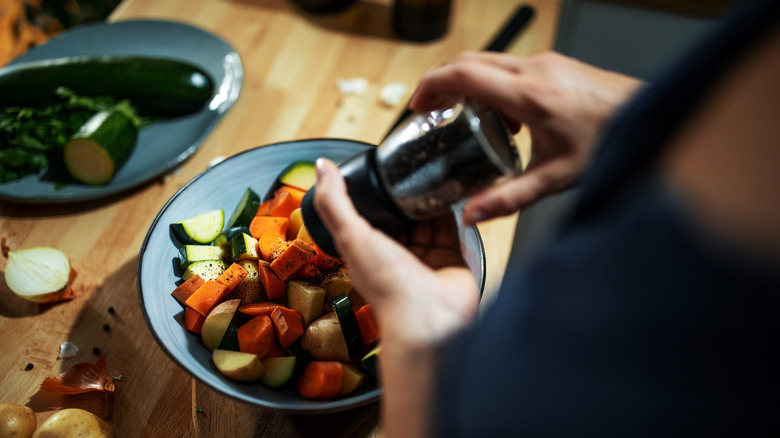
There's nuance to seasoning roasted vegetables. It's easy to overdo it, but you equally don't want them to turn out bland. "People tend to not add enough salt to their veggies," notes Bryan Quoc Le, PhD. "Salting helps to draw out water and inhibit the bitterness of vegetables," he says, adding that an even coating of salt boosts the flavors of the veggies and makes them tastier than under-salted ones. However, you have to be careful not to add too much, as this could entirely ruin the dish.
Cadry Nelson advises taking shrinkage into account when seasoning, since vegetables tend to get smaller as they roast and their moisture content decreases. "If you over season at the beginning — especially where salt is concerned — it will be intensified at the end when the veggies have cooked down," she explains. Nelson suggests salting relatively lightly before cooking, and adjusting to taste when the vegetables come out of the oven. It's better not to be too heavy handed, as you can always add more salt but you can't take it away.
Joanne Gallagher is pro seasoning. "Vegetables really benefit from salt, especially root vegetables, because it helps bring out their natural sweetness as they roast," she says. She likes to add a generous teaspoon of dried herbs, such as herbes de Provence. If you struggle with dry herbs and seasonings sticking, Jen Wooster recommends mixing them in with the oil when you toss the veggies. This will help them adhere to the vegetables and prevent burning.
8. Picking the wrong pan for roasted vegetables
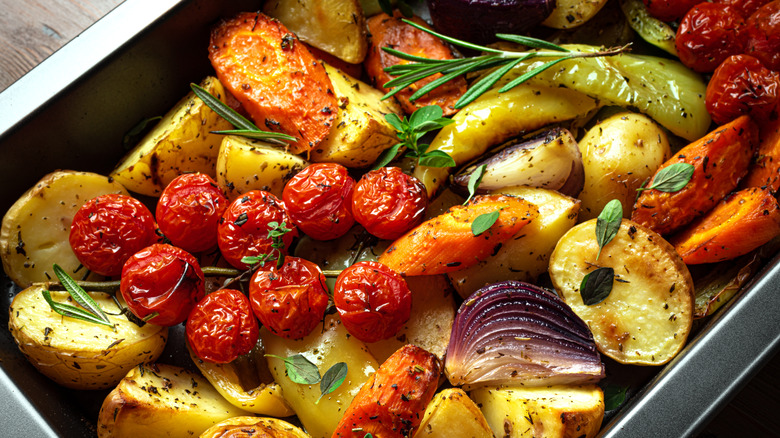
You might think that any pan with sides or at least a bit of a lip will do the trick for your roasted veggies, but there is actually a wrong and right type of pan. If you're struggling with getting your veggies caramelized and find they often come out soggy, it might be the pan that's the culprit.
"A roasting pan might seem like the best choice, but it's actually not ideal for vegetables," Joanne Gallagher tells us. The design makes them great for whole chickens, turkeys, and large cuts of meat, but not necessarily for vegetables. "Those high sides trap heat and steam, which softens vegetables and prevents them from getting crisp around the edges," she explains.
So, roasting vegetables in a casserole dish or roasting pan is a steamy disaster. What should you use instead? Gallagher advises picking up a sturdy rimmed sheet pan. "The low sides allow better airflow while still catching any oil or juices before they spill," she explains. It's such a simple switch and it could end up totally transforming your roasted veggies. Just avoid a totally flat cookie sheet unless you're eager to clean your oven.
9. Roasting vegetables at the wrong temperature
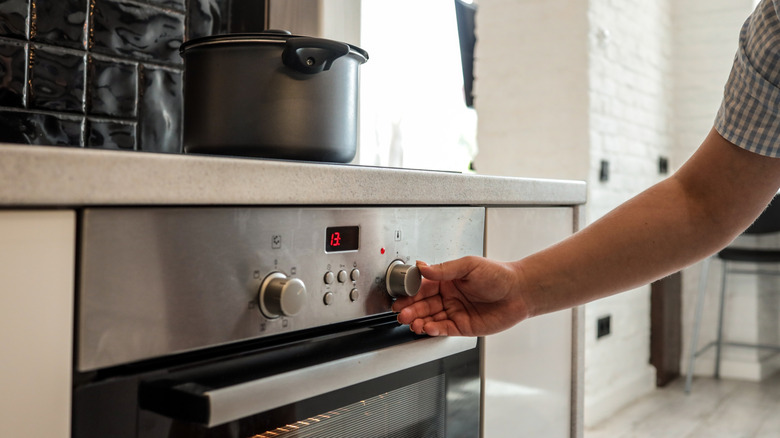
It's important to find the right temperature balance for your roasted vegetables, and this will depend on the type of vegetables you're roasting. If you cook them too hot, they might burn before they cook through. But, if you cook them at a low temperature, some types of vegetables can dry out before they're cooked through or it can be hard to achieve caramelization.
"I usually roast hearty vegetables at 425 degrees and more delicate vegetables at 400 degrees," says Joanne Gallagher. "It's hot enough to encourage browning without burning the outside too quickly," she explains. But, you also need to think about how the temperature interacts with the cooking time. You can get away with cooking veggies for longer on a low heat, but some vegetables can also take high heat for longer. "Hearty vegetables like potatoes, carrots, squash, beets, and onions can take anywhere from 30 to 60 minutes, while softer vegetables like asparagus, zucchini, mushrooms, or bell peppers roast much faster," says Gallagher.
That said, there are some times when it's better to roast vegetables low and slow to keep them from burning before they're cooked through. For instance, our roasted carrots recipe skips the parboiling stage and roasts whole carrots for 50 minutes at 330 degrees. This gives them plenty of cooking time, but keeps them from drying out or getting burned.
10. Choosing the wrong vegetables to roast together
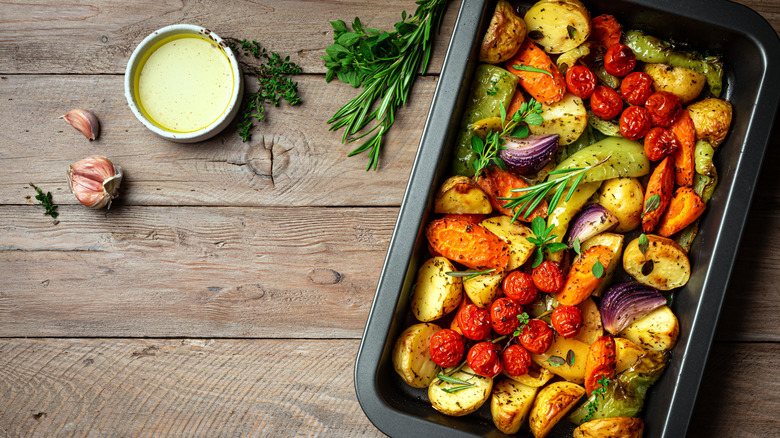
While sometimes you might roast just one type of vegetable at a time, there are other meals that call for a mixture of roasted produce. Or, you might be making one of those meals that involves throwing whatever you can find in the fridge into your oven. In these cases, it's important to choose the right vegetables to roast together. Getting this wrong is a common misstep that can throw off the finished dish.
Joanne Gallagher notes that combining vegetables that require similar roasting times is ideal. "For example, hearty vegetables like carrots and potatoes roast well together, while vegetables that cook more quickly like zucchini or mushrooms usually turn out better on a separate pan." If you roast zucchini in the same pan as potatoes, for example, the zucchini will be cooked long before the spuds. By the time the potatoes are ready to eat, the more delicate vegetable will have burned or shriveled and dried out.
Generally, harder vegetables pair well with each other, as do softer ones. If in doubt, search the cook times of the vegetables you're considering roasting together to see if they're a match. If you must roast incompatible vegetables in the same pan, even things out by cutting the slower cooking ones significantly smaller than the quicker cooking varieties.
11. Checking the oven too often
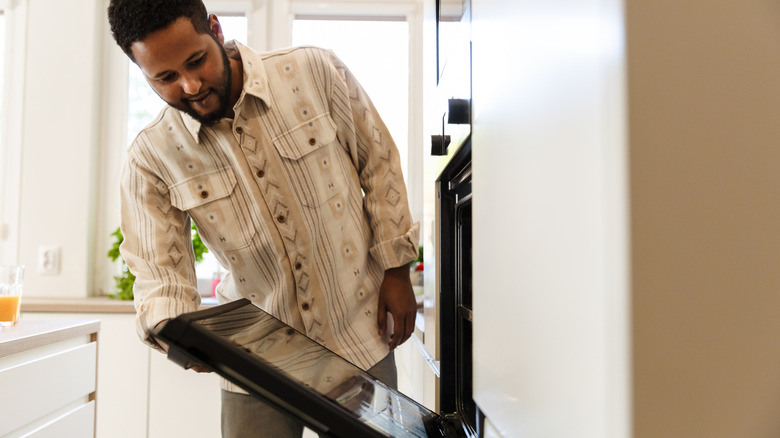
We understand what it's like to be eager for dinner to be ready, but checking on your roasting vegetables every few minutes is a mistake. You might know that opening the oven makes a cake collapse but assume that the same doesn't go for other foods. While it's not as much of a disaster opening your oven while your vegetables are roasting, it's still something you should aim to avoid where possible.
"Checking the oven too often can affect the roasting process because you release heat and moisture," explains Bryan Quoc Le, PhD. Every time you open the door, you're letting out the stored heat and your vegetables cook that much slower. "It's best to leave them alone and let them finish," he advises.
Whether you're eager for dinner or you're worried that you're going to overcook your vegetables, it's not always easy to leave them alone, but there is a sensible alternative. Instead of opening the door, switch on your oven light to help you see inside. Using a low-sided pan means it should be easy enough to check on the progress. And, if your oven door is too dirty to see through, well, that's telling you something obvious: It's time for a clean.
12. Leaving out the finishing touches
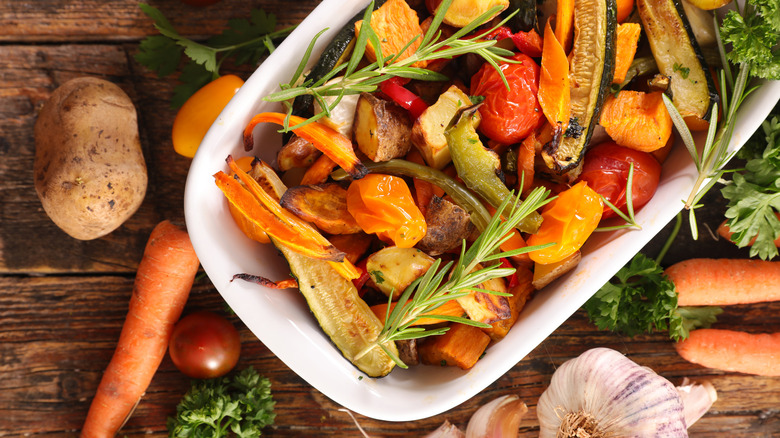
Once your veggies are nicely roasted, that doesn't mean they're totally done. If you're skipping the finishing touches, you're missing out. There are plenty of ways to make them special once they're out of the oven, elevating them from a perfectly decent side dish or component of a meal to something memorable.
That could just be an extra sprinkle of flaked sea salt before serving, after tasting and making sure they aren't already salty enough, but you can go all out. For instance, Jen Wooster recommends a sauce for dipping or coating your veggies, such as creamy garlic or roasted red pepper. Joanne Gallagher suggests stirring in delicate herbs like parsley, mint, tarragon, dill, or cilantro at the end of cooking. The heat from the veggies will wilt them slightly, but they'll still be fresh and bright, whereas they would end up burning if they went in the oven for more than a few minutes. Gallagher adds that lemon pairs well with vegetables like asparagus or broccoli.
Cadry Nelson agrees that roasted vegetables are nice with a touch of acid. "A drizzle of balsamic glaze or squeeze of lemon juice usually does the trick," she says and adds, "For heat, spoon over a little chili crisp." There are all kinds of ways to liven up roasted vegetables, so pick whatever appeals to you most.