

What Does Dynamic Pricing Actually Mean For Your Grocery Bill (And Which Chain Stores Use It)?
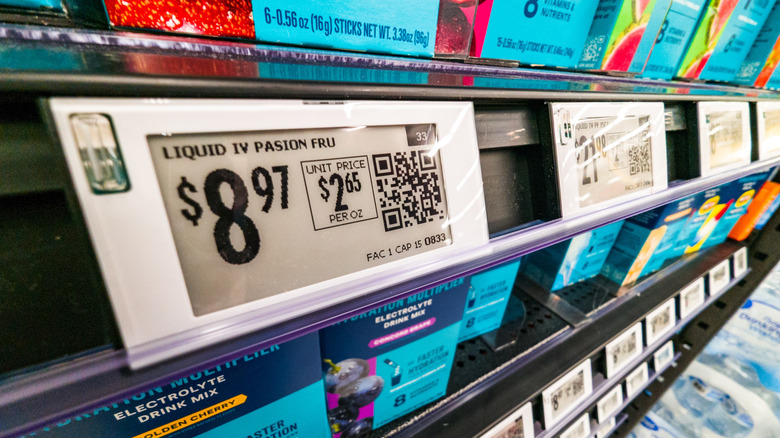
Imagine going grocery shopping and passing by a bottle of ketchup for $3. Then, when you glance back a minute later, that same bottle of ketchup is priced at $4.50. It's not your mind playing tricks on you — it's called dynamic pricing. Retailers are increasingly using this algorithmic approach to change in-store and online prices in response to supply and demand, inventory, and other factors. Although dynamic pricing has the potential to cost shoppers a lot more, it's not yet clear whether it has actually resulted in uniformly higher grocery prices.
Dynamic pricing is just one of several changes coming to grocery stores in 2026, but it isn't something every grocer can or will adopt. To change prices immediately, a store needs to have digital price tags rather than paper ones. If you still see stickers on shelves or the items themselves, your store isn't modifying prices in real time. It's harder to tell when shopping online.
Food expenses are on the rise all over the U.S., though some states are being hit harder by high grocery prices. Customers looking to save money at the grocery store may want to avoid stores with algorithm-based prices. Retailers don't publicly explain where or in what ways it's currently being used, so dynamic pricing models can be tricky to spot. Online, Amazon, Walmart, Target, Kroger, Publix, and Wegmans have all used it, but not in the way you might think. About half of the price differences are actually decreases.
As more retailers adopt dynamic pricing, interest in regulation grows
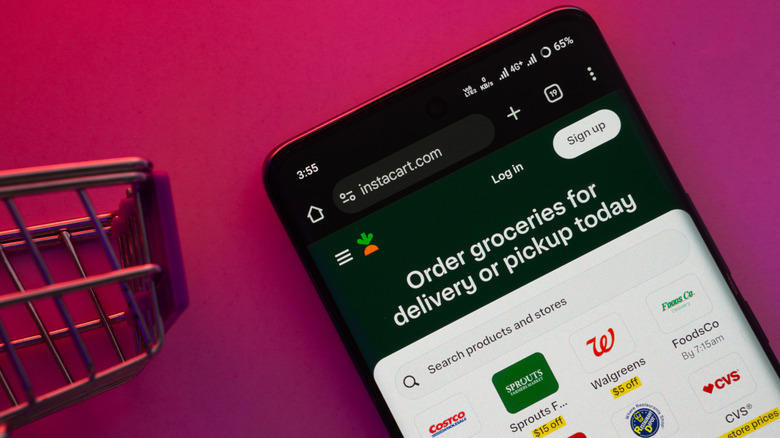
In 2025, an investigation by Consumer Reports and Groundwork Collaborative showed that dynamic pricing was a real problem in online grocery shopping — one that seriously affected customers. Item prices could fluctuate from customer to customer by almost 23%, the investigation found, with the grand total for baskets of identical items varying up to $9.59. After the report came out, Instacart ended the program that allowed these price variations. The findings received national attention and inspired some lawmakers to act.
Maryland was the first state to ban surveillance pricing on groceries. This form of dynamic pricing uses consumers' data (or an AI formula) to set personalized retail prices. New York City is considering its own ban, and New York State law requires companies to disclose when surveillance pricing has been used. These measures are controversial. Some argue that they're necessary to protect privacy and prevent price gouging. Others claim bans may actually hurt the customer.
In 2024, New York City grocer Westside Market introduced a dynamic pricing test that digitally tracked shoppers' movements in the store and offered manufacturer rebates on products based on perceived interest. The strategy didn't involve raising prices instantaneously (the chain said it doesn't change its digital price tags more than once a day). "We're doing it for the right reasons," Westside's CEO George Zoitas told The New York Times. This type of real-time pricing could benefit customers and isn't the target of active or proposed bans, which only prohibit dynamic price increases.