

How Far A Dollar Would Go At A Steakhouse In 1906
Some of the oldest steakhouses in America are in New York City, long regarded as a culinary center of the United States. For instance, Keens Steakhouse, dating back to 1885, is still one of the best in the Big Apple. Just over a dozen blocks south was Walton's Old Homestead Oyster and Chop House, an early 20th-century establishment on Eighth Avenue situated between 22nd and 23rd Streets. Unlike Keen's, Walton's legacy has been lost to time, save for a historic menu from 1906. Back then, a dollar would get you a full meal at Walton's, which seems almost impossible to believe now, thanks to inflation.
According to the menu (via the New York Public Library), a sirloin steak cost just 40 cents, with a 10-cent upcharge for onions and 20 cents to add mushrooms. Sides of green peas and hashed potatoes cost 10 cents apiece. Broiled oysters? Those were 30 cents. Top it off with an IPA for five cents a glass (you could get two glasses on this budget), and dinner will come in at $1.
Another option: start with a tomato salad at 25 cents, followed by pork chops for 30 cents. That leaves enough money to order a plain lobster for 40 cents and a trusty 5-cent IPA. Other dishes at Walton's, such as broiled lamb kidneys or Welsh rarebit, have mostly vanished from American steakhouses. Chop houses of the early 20th century were modeled after traditional English pubs, where those dishes were more common.
Over more than a century, restaurant price increases have outpaced inflation
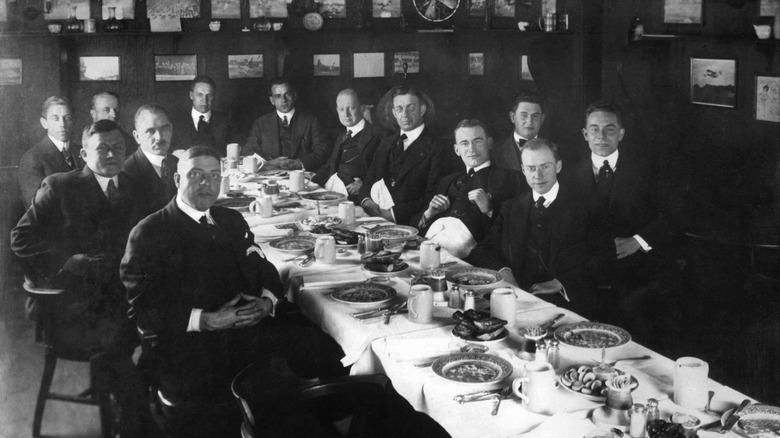
Today, $1 in 1906 terms is around $37, but you'd be hard-pressed to find a modern-day restaurant where you could get a steak dinner with sides, broiled oysters, and a beer (or two) for $37. At Keens Steakhouse, a sirloin steak alone is $69. Adding a side of vegetables ($18 for asparagus), hash potatoes ($15), and a ½ dozen oysters ($29) will bring the total to over $130 before factoring in beer. That's quite a bit more than what inflation alone would suggest.
Why are restaurant menu prices outpacing inflation generally? It's a trend with more than one explanation. Restaurants' costs have increased, from rent and labor getting pricier to obligatory 21st-century expenses like social media marketing. The consumer price index (CPI), which is used as a baseline comparison for inflation, includes a variety of categories, and food prices often rise faster than other consumer goods.
As restaurant prices rise, there are still budget-conscious ways to enjoy a meal like the one Walton's Old Homestead Oyster and Chop House served back in 1906. Buying the raw materials needed to cook that steak dinner at home would total around $34 at Food Bazaar, a supermarket chain with locations in four New York City boroughs. For that price, you'll walk out of the store with a pound of sirloin steak, about six oysters, frozen peas, a 5-pound bag of potatoes, and two canned IPAs.