

12 Creative Ways To Use Wine In Your Cooking
We may receive a commission on purchases made from links.
Wine can elevate a dish, adding everything from zingy brightness to deep, rich, complex notes, depending on the wine you use and how you cook it. If you're used to cooking with wine, you're probably most familiar with the typical uses: a dash of white wine in a risotto, a generous glug of red in a winter stew, and, of course, French classics like beef bourguignon and coq au vin. But, there are some lesser-known ways to use wine in your cooking.
As a food writer and all-round fan of cooking, I'm well-versed in using wine in recipes. However, I wanted to get a broader range of opinions, so I interviewed some experts in the field. I spoke with Chef Magnus Young of the Clif Family Winery and Farm in the Napa Valley; Chef Brett Vibber of Merkin Vineyards Hilltop Winery & Trattoria in Arizona; and Erin O'Brien, a recipe developer and author of "Dig In!" who regularly uses wine in her cooking.
Thanks to these food and wine experts, I left with more ideas on how wine can be used in non-traditional ways. From dessert pairings you wouldn't expect to finishing touches that you wouldn't find on an average menu, there are all kinds of creative ways to use wine in your cooking.
Make wine salt
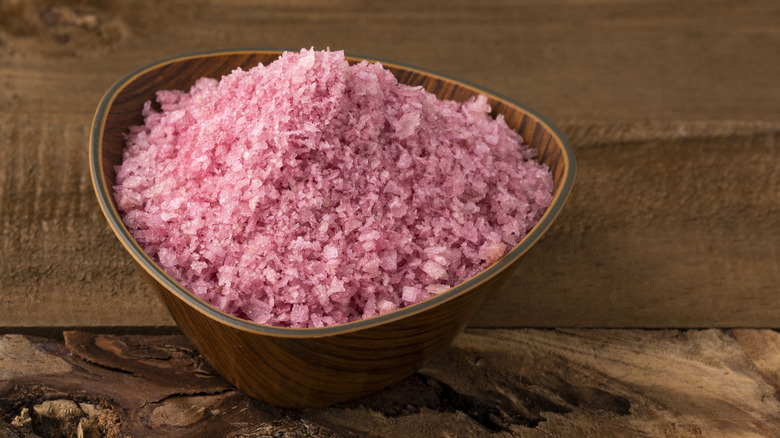
If you want a kind of wine flavor to finish dishes with but don't want to overdo it, you might want to consider making wine salt. This isn't something you hear of every day, and it may be a little involved for an average weeknight meal, but if you're looking for a fun project in the kitchen, this could be it.
"Our wine salt seasoning blends are an interesting way to use wine in cooking," says Clif Family Winery and Farm chef Magnus Young. "We soak sea salt in either red or white wine and let it evaporate off leaving the concentrated wine flavors, and pigment giving the salts a beautiful hue."
Trader Joe's has made wine-infused sea salt, so this isn't a totally new concept, but we bet the homemade stuff is way more intense than anything you'd buy at the store. Plus, making it yourself gives you the chance to experiment with different types of wines or choose your absolute favorite. This should be used as more of a finishing salt than something you'd add to a dish while it's cooking, as you want those wine flavors to shine through.
Splash it into pozole
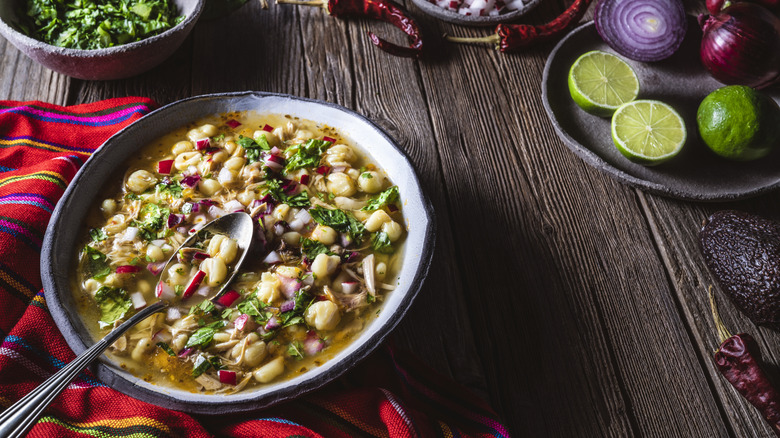
Pozole is a Mexican dish that's somewhere between a soup and stew, brothy but loaded with hominy. If you look at what's in a traditional pozole recipe, wine isn't going to make that list. But, according to food blogger and cookbook author Erin O'Brien, it can make an excellent addition.
O'Brien tells us that there's a pozole recipe that has been passed down in her family for generations, to which everyone adds their own tweaks along the way. "Sometimes, I like to add a generous splash of wine for extra depth and acidity," she says. "Although my grandma was very skeptical at first, I'm proud to report that we all agree it enhances the broth without taking away from the nostalgic flavor."
It's not the kind of dish where people necessarily expect it to contain wine, O'Brien notes. "That is really how I like to cook with wine in general," she says. She doesn't want the wine she uses to take over or be too obvious or in your face. "I want it to support the dish and make people wonder why it tastes so good."
If you're not a pozole fan, it's a technique that you could use for other recipes. Add a glug of wine into a favorite soup or stew and see how it turns out. You might just take it to the next level.
Get acquainted with the nuances in varietals

You can get creative cooking with wine simply by trying out different wine varietals, rather than reaching for the obvious choice every time. For instance, burgundy is the classic choice for a bourguignon, but there are so many more types of red wine out there. If you get familiar with the differences in varietals and what they bring to a dish, you can make creative choices while not straying too far from classic dishes.
"I think when cooking with wine, most people tend to cook with color rather than varietal," says Magnus Young. But, he believes that paying attention to the specific type of wine you use can add a lot to a dish. "While the cooking process does muddle some of the particular nuances of a specific grape's flavor, there are advantages to being more intentional with what wine you cook with," he says.
He gives a couple of examples from his kitchen, such as using cabernet when making a sauce for grilled beef because the wine is dry with robust tannins to help balance the char, or using bright, acidic chardonnay with some minerality to it for seafood dishes. "It's similar to pairing wine with a dish, and if your intention is to pair a dish with a specific wine, using some of that bottle in the cooking process helps to create a flavor bridge," he adds.
Pair red wine and chocolate
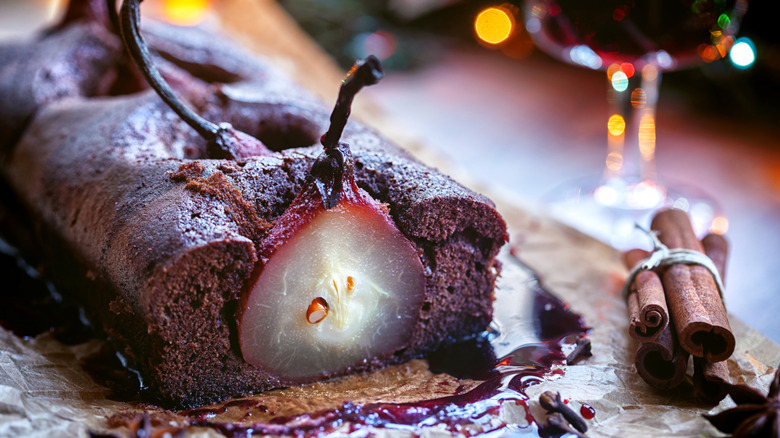
Using wine in desserts isn't a new concept, but there are some flavor pairings you don't expect. Red wine and chocolate is one such pairing, recommended to us by Erin O'Brien. When you try to make it work in your head, it seems like these two strong flavors wouldn't work together, but we have it on good authority that they do.
O'Brien likes to use wine in desserts "because it brings acidity and depth without making something feel overly sweet." And she finds red wine and chocolate work especially well together. "I'm actually working on a red wine chocolate cake right now, and the wine adds richness and a touch of fruitiness, making the chocolate taste even more chocolatey," she tells us.
Our recipe for red wine cupcakes combines chocolate and red wine to delicious effect. The slight bitter notes of the wine complement the rich chocolate and the overall sweetness of cupcakes, bringing you a dessert that's impressive but isn't designed for the palate of a 5-year-old.
Try white wine in Bolognese
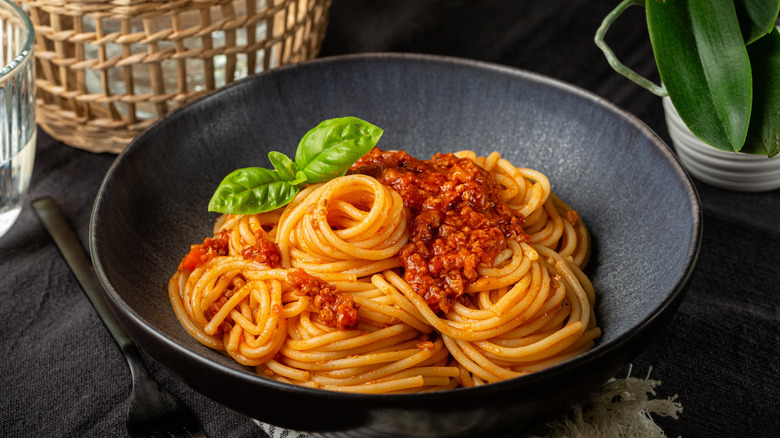
Using wine in Bolognese isn't a new concept. While it feels like there are as many different Bolognese recipes as there are stars in the sky, wine is a relatively common addition, especially for those looking for an elevated version. However, it's often red wine, which adds an intense richness. If you want to get creative and try something a bit different, you might want to consider using white wine instead.
Bolognese is one of the dishes that surprises Brett Vibber, Executive Chef at Merkin Vineyards Hilltop Winery & Trattoria. "It has always seemed like a dish that would naturally take red wine," he says. However, "when I lived in Italy I was astonished to see that it is properly made with white wine," he tells us. Marcella Hazan's classic Bolognese recipe, for example, uses white wine, and she's the queen of Italian cooking in the U.S.
This doesn't give you such an intense, rich flavor, but it adds more of a brightness to the dish. You should stick to dry whites, though, as sweet wines will change the flavor profile. And, while we're talking about surprises with Bolognese, many people don't know that traditional versions often contain milk. So, it might be time to start trying out a new way of making this, harking back to the old traditions.
Whip up wine glazes or syrups
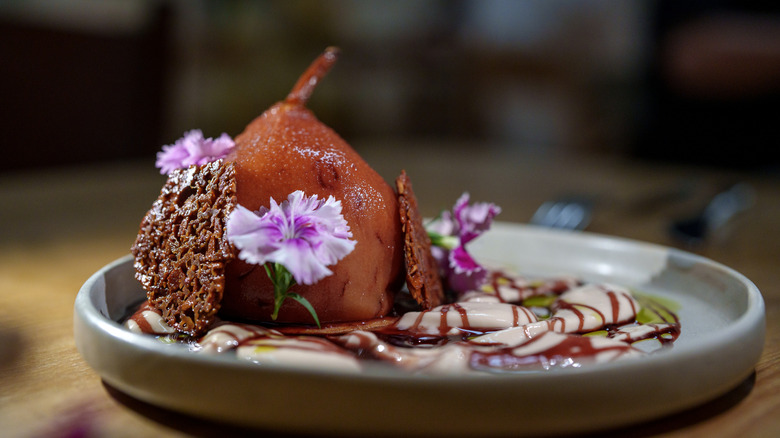
Using wine in glazes or syrups is a different way to add it to your cooking repertoire, compared to more classic sauces. And, what's great about this is that you can use the resulting syrups or glazes in a range of different dishes. This can help you get creative and try out different things, since you already have the part containing wine ready to go, so it feels more low-stakes.
At Clif Family Winery & Farm, Magnus Young's team makes glazes and syrups from wine reductions that they use on desserts. This is a nice way to add some wine to a sweet dish without having to bake it in or find a whole new recipe. You can use an existing favorite and just drizzle it with some of the syrup.
"I think wine reductions are such an easy way to make something feel special," says Erin O'Brien. She uses these reductions to make things like sweet syrups or savory glazes. "For sweet dishes, a wine syrup with citrus, vanilla, or honey can be amazing on cake or fruit," she tells us. And, once you have the technique down for making syrups or glazes, you can apply them to any wine and experiment with adding flavors. It's something that can stand you in good stead for livening up dishes for years to come.
Use sparkling wine in sauces
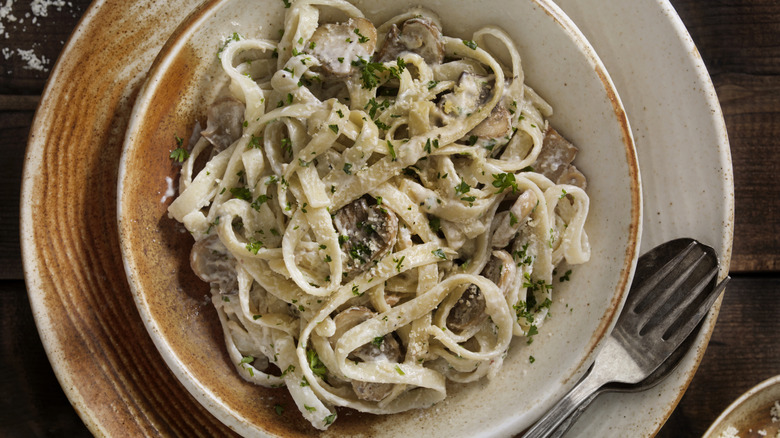
Sparkling wine, like Champagne or prosecco, are usually reserved for toasts or nights out on the town. However, there's also a place for them in cooking, if you want to be more creative with your choices. You might not want to use one of the most popular Champagne brands, or the priciest, but a lower end sparkling wine that you'd be happy to drink will do the trick nicely.
"A splash of sparkling wine in a creamy sauce, risotto, or seafood pan sauce can add acidity so the dish doesn't feel too heavy," says Erin O'Brien. She remarks that this is the same logic that has people pairing fatty, salty, or fried foods, like french fries, with a glass of Champagne. She also thinks this points to a bigger lesson when cooking with wine; that it doesn't have to be intimidating. "There are guidelines, but there are not as many 'rules' as people think." Plus, sometimes part of the fun with rules is breaking them.
You can start out by trying sparkling wine in dishes where you might usually reach for a generic white wine. It does a similar job of adding brightness and is particularly nice in creamy or buttery sauces that need something to cut through the richness. However, you can also use your imagination and experiment with other combinations.
Try your hand at a wine-washed cheese
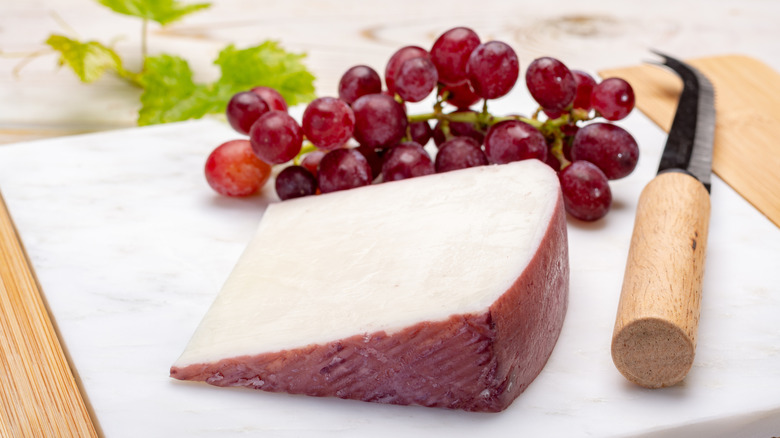
It might be a little out of the wheelhouse of most home cooks, but experimenting with wine-washed cheeses is a great way to get creative in the kitchen. Whether you're an experienced cheesemaker or it's something you've been wanting to try, this variety has a rich complexity and it's an interesting experiment. Magnus Young notes that wine-washed cheeses often have a stronger wine flavor than you might expect. Of course, they're distinctly cheesy, but those fruity and earthy notes do come through.
Once you've produced your wheel of cheese, it's soaked in wine for several days. This isn't just for flavor but to create a surface environment that's less accommodating to mold. During the aging process, this means that the wrong microbes are less likely to grow and ruin your cheese. After the wine soaking step, the cheese is aged for four to six weeks, at which point, you should have something delicious.
Of course, the prospect of making cheese from scratch might not appeal to you much. In this case, consider seeking out some wine-washed cheese and using it in your cooking. It's probably not the kind of thing you'd throw in mac and cheese, it's better uncooked to fully appreciate the flavors, so consider adding it to salads and cheese boards or using it as the finishing touch on a dish.
Reduce wine until it's jammy
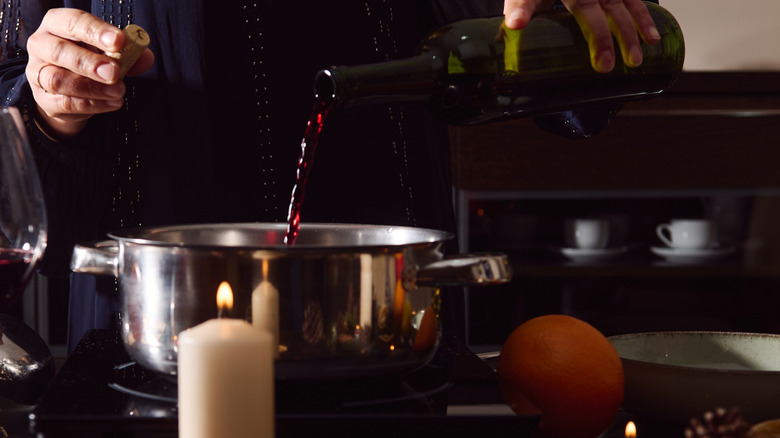
The beauty of cooking with wine is the way that it reduces and its flavors both mellow and intensify. The harsher boozy edge cooks off, but the more nuanced flavors come to the forefront. You might be used to reducing your wine by half or a third for things like sauces and stews, but you can actually push it much further.
"I love reducing red wine with aromatics until it becomes almost jammy, then serving it with roasted meats, vegetables, or even a cheese board," says Erin O'Brien. With a thick consistency and intensified flavors, you can use this kind of jammy wine reduction as a condiment, in the way you might use a cranberry sauce or quince paste.
To reduce your wine like this, use a wide saucepan or sauté pan rather than a deep pot. When there's more surface area, the evaporation happens more quickly and you reach the jammy stage faster. Simmer the wine gently over a medium or medium-low heat, avoiding a hard boil. Leave it uncovered so that the evaporated liquid can escape, and stir occasionally. The timing will depend on the quantity of wine you're reducing. The main thing to be careful of is reducing it too far, which can turn it bitter, overly acidic or tannic, or burned. It will thicken slightly as it cools, so take it off the heat when it's just a little way off jammy.
Make wine jellies
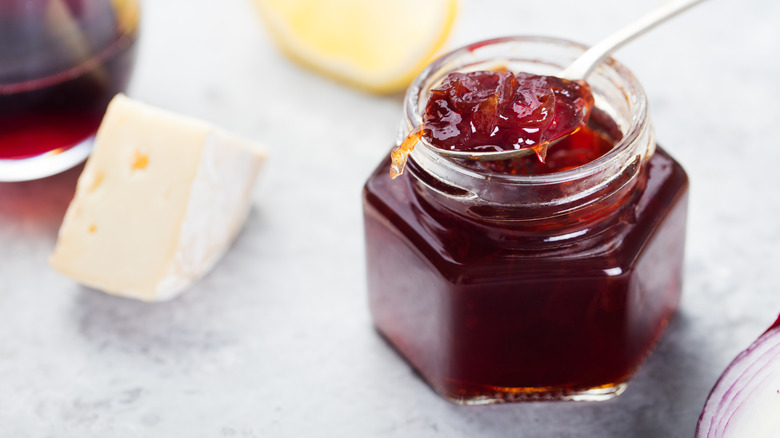
If you're looking for a novel way to cook with wine, you might consider making jellies or gummies. There are a number of variations you could opt for, but all of them have their place, it just depends on your preferences.
At Clif Family Winery & Farm, Magnus Young and his team make "wine jellies called pâte de fruit using our wines rather than juice which would be the traditional base ingredient." They're made by mixing pectin and sugar with the base ingredient — in this case, wine — and heating the mixture. This results in little jelly sweets that are vegetarian, unlike those containing gelatin. And Young isn't alone making these kinds of treats. Brett Vibber says that one of his favorite things he's recently made for Merkin Vineyards' tasting room is a selection of wine gummies.
Rather than a thick jelly sweet, you can also make wine jelly, as in the kind of jelly you might eat in a PBJ. It's effectively a grownup grape jelly, with an alcoholic kick. You can use any style of wine to make this kind of jelly. Again, you just add sugar and pectin, but a lesser amount to get a softer, spreadable result.
Use wine as a finishing touch
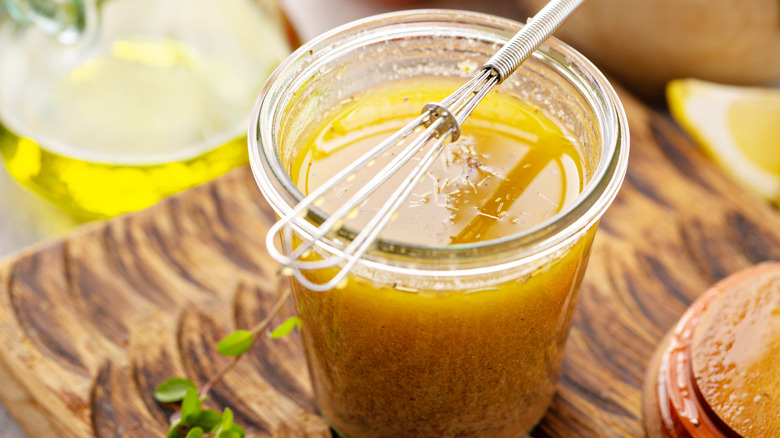
Wine is often the kind of ingredient that's cooked for a long time in a dish. It might be simmered for hours in a stew, or gently reduced into a glaze. It isn't the kind of ingredient you expect to use as a finishing touch. However, it might be time to think about wine differently and consider it as the sort of thing you might reach for when your finished meal needs a little something to elevate it.
There are many types of vinegar you might use to finish off a dish, mixed with olive oil in a dressing or drizzled on to add brightness. Well, you can actually think of using uncooked wine in a similar way. "When teaching people how to cook I often discuss wines and vinegars together regarding seasoning," says Brett Vibber. When you think about it, this makes sense; both have a similar mix of sweetness and tartness.
Of course, they don't taste identical, and one difference is that wine is drinkable on its own, whereas vinegar is too sour — but they can both cut through richness and add brightness as a finishing touch. "The acids in wine open up the flavors of the food," Vibber explains. When using wine in this way, its profile is important. It shouldn't be overly sweet and it should be something you like to drink. Start with just a little in a dressing and work up from there to find the right balance.
Create wine snow
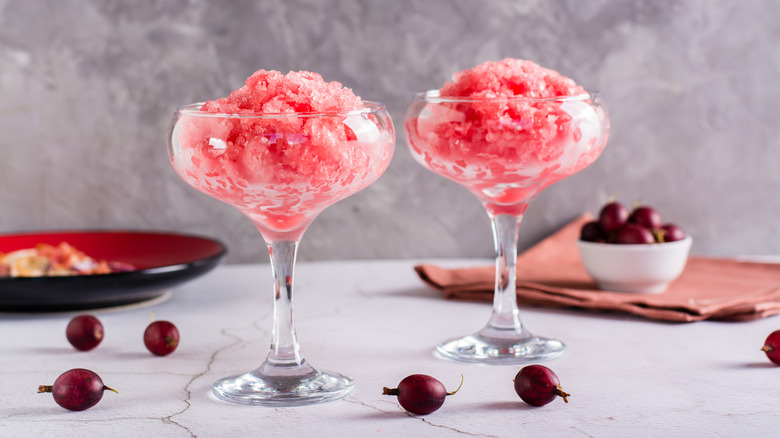
If you're looking to get Michelin star fancy with your home cooking, consider making wine snow. This isn't an everyday dish for wine, but something that Magnus Young had at a restaurant once and loved. And, when food is memorable for a chef, that means it's something special.
Young tells us that this white wine snow was served with a grape and yogurt salad. "The wine was lightly thickened with a gelling agent, charged into an iSi canister before being dispersed into liquid nitrogen creating light and fluffy frozen wine chunks," he explains. "It was then blitzed into a powder to create the wine snow." Sure, it might not be Wednesday night dinner territory, but it definitely is creative.
Realistically, most home cooks aren't going to go out and buy liquid nitrogen to make a fancy frozen wine topping, but making a wine sorbet might be more realistic. There are various methods, but most involve wine, sugar, and an additional fruit or juice. Fruity reds work well for this kind of sorbet, but sweet whites or sparkling wines are also great for any dessert. Ultimately, it depends if you want a lot of sweetness or more acidic contrast, and there's something to be said for either option.