

We Tried 12 Ways To Cook Burgers. Here's How They Ranked
Whether you're making burgers at home or you're eating your way through the best burgers in every U.S. state, everyone has a strong opinion about what makes a burger truly great. Maybe you like the smokiness of a charcoal grill or the crust-worthy sear of a cast-iron pan. Maybe you like the consistency of pan frying or the convenience of gas grilling. And maybe you even want to level up your burger game with techniques like smoking or sous vide. No matter which way you regularly take your burger, the cooking method can change just about everything.
From the flavor and crust to the juiciness and texture, certain cooking methods create entirely different burger experiences. And while some are wildly worth the effort, some should be gone and forgotten forever. To figure out the best way to cook a burger, I tested 12 different cooking techniques ranging from the classic backyard BBQ to a viral-worthy cooking hack. Some were good, some were great, and some were downright awful. Here's how each burger cooking method ranked from worst to best.
12. Sous vide
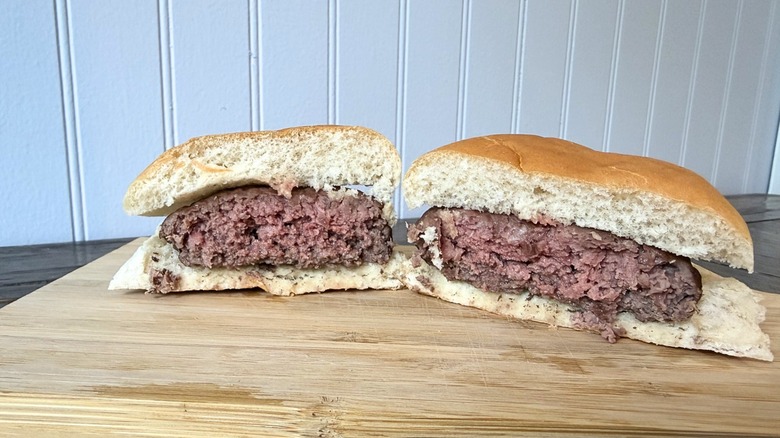
I had high expectations going into this cooking method. After all, the process of sous vide is beneficial for foods that require precise temperature control. So I assumed that cooking a burger to 135 degrees Fahrenheit would be fool-proof this way, and it was. It just wasn't worth the effort.
To be fair, the sous vide technique did exactly what it was supposed to do. The burger was cooked perfectly to 135 degrees Fahrenheit and retained all of its moisture. But rather than feeling like I was eating a classic burger, it felt a little too similar to eating medium rare meatloaf instead. While the burger had a lot of juice, every bite lacked something that you want when enjoying one of America's most popular dishes. The flavor was muted, while the borderline mushy tenderness felt too dense. Plus, the amount of time necessary and equipment needed was entirely unjustified. Overall, this is the only burger on the list I would never make again.
11. Reverse sear
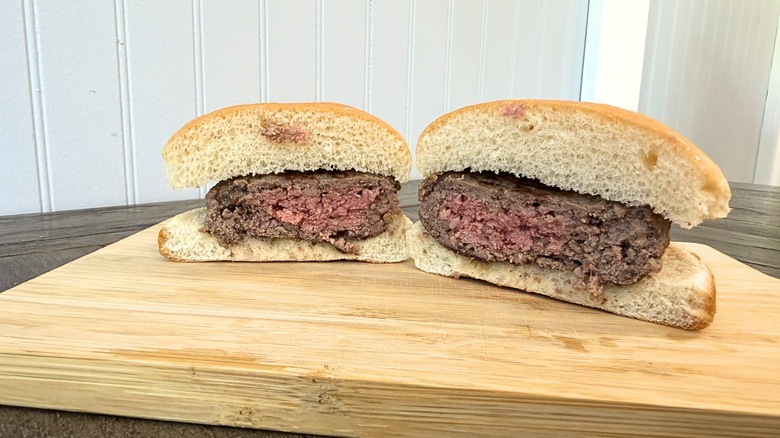
Reverse searing seems to be taking over my social media algorithm these days. And it seems to be the secret to cooking thick steaks evenly. But what about burgers? At first, this technique sounded great. And it's not like it was bad. It just wasn't worth the two-step effort.
To reverse sear the burger, I first cooked it in a 250 degrees Fahrenheit oven until it reached an internal temperature of 115 degrees Fahrenheit. I then seared it on a high-heat pan for about 30 seconds on each side before letting it rest for five minutes.
The end result was appealing with a nicely browned crust. Once I bit into it, though, the burger became less enticing. Of all the burgers on this list, this one was the least juicy, which might be a result of the two-step cooking process. The overall flavor was good, but it lacked something that made techniques like charcoal grilling or smoking feel more memorable.
The biggest issue with this burger was simply the amount of effort it required. Between temperature monitoring and dirtying multiple pans, this was a time-consuming cooking method that just didn't pay off.
10. Oven-finished
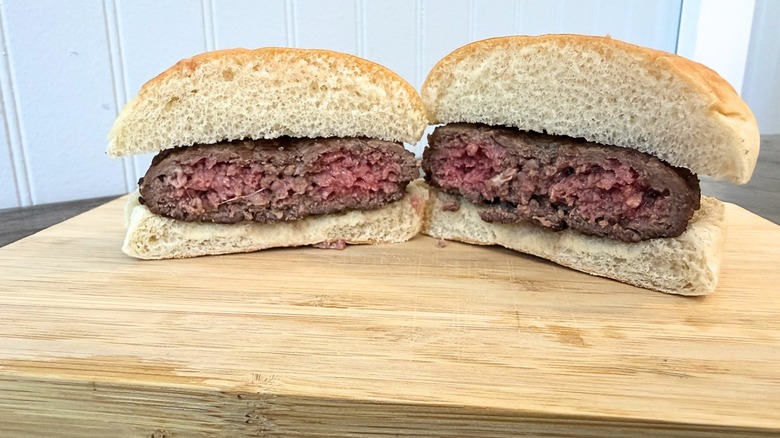
Similar to reverse searing, the oven-finished burger was a two-step process that I genuinely didn't think was worth it. I seared the burger on a high-heat pan for about one minute per side. I then finished the burger in a 400 degrees Fahrenheit oven until it reached an internal temperature of 125 degrees Fahrenheit.
The good thing about this method compared to reverse searing is that you avoid the problem of burning the outside before the inside fully cooks through — which is usually my biggest mistake when making a burger. So I was pleasantly surprised when this burger came out perfectly cooked while remaining juicy and tender after it sat.
I think the big downside of this cooking method is that the two-step process feels unnecessary. If you can perfect your burger cooking with just a frying pan or just a cast-iron pan, and forgo the added step of finishing it in the oven, then that's much more reasonable.
9. Pan-fried
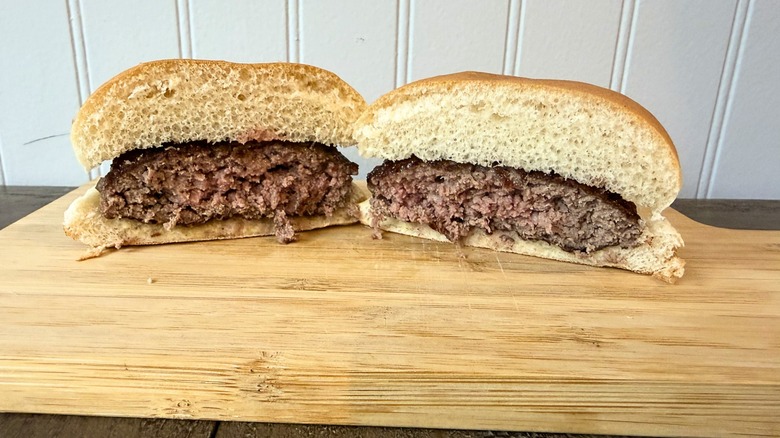
Pan-frying was one of the most straight-forward ways to cook a burger. Heat a pan to medium-high heat, and then cook each side for three minutes.
The meat developed a dark crust almost immediately in the pan, and the burger definitely retained its juices throughout the cooking process. When it came to flavor, the beefiness came through, but so did the burn of the pan. This is where the pan-frying technique faltered: the pan itself struggled to handle the high heat necessary to immediately lock in the burger's juices, which resulted in a hard char on the burger once it was cooked to an internal temperature of 125 degrees Fahrenheit. The burger quickly continued to cook after I took it off the heat.
While the inside was super juicy and tasty, the outside tasted slightly too charred for my liking. Despite that issue, this required much less effort compared to some of the other burger cooking methods on this list.
8. Cast iron
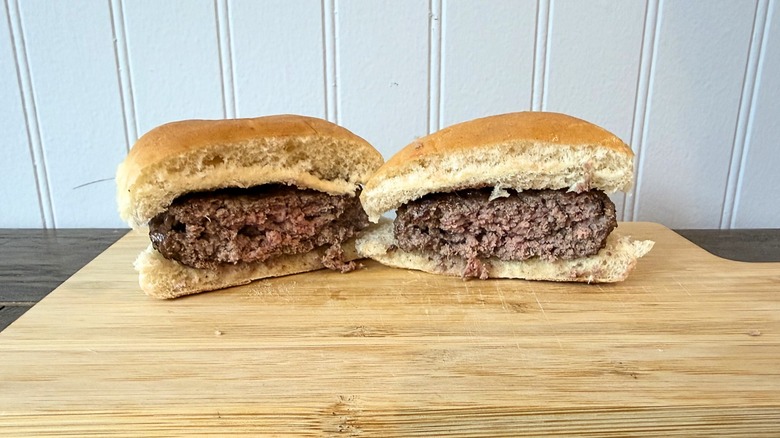
Unlike a frying pan, a cast-iron skillet has much higher heat retention. So when the burger went into the cast iron, the meat formed a deep caramelization rather than forming an immediate hard sear like it did in the frying pan. Between the flavor and the texture, this burger absolutely delivered.
To make this burger, I heated my cast-iron skillet over medium-high heat before cooking a patty for three minutes on each side until the internal temperature reached 125 degrees Fahrenheit. The end result was a restaurant-quality burger I'd happily eat any day of the week. It was flavorful with a satisfying sizzling crust. This burger also retained fat well through cooking, which kept it tender and juicy after resting for five minutes. My favorite thing about this burger was the texture contrast. Every bite felt balanced in a way the other burgers on this list lacked.
The one problem with this cooking technique was how chaotic it can become when cooking with a cast-iron skillet. Between the grease splatter, the cast iron cleanup, and the fire alarm going off, cast-iron burgers are a commitment I'm not always ready to commit to.
7. Broiler
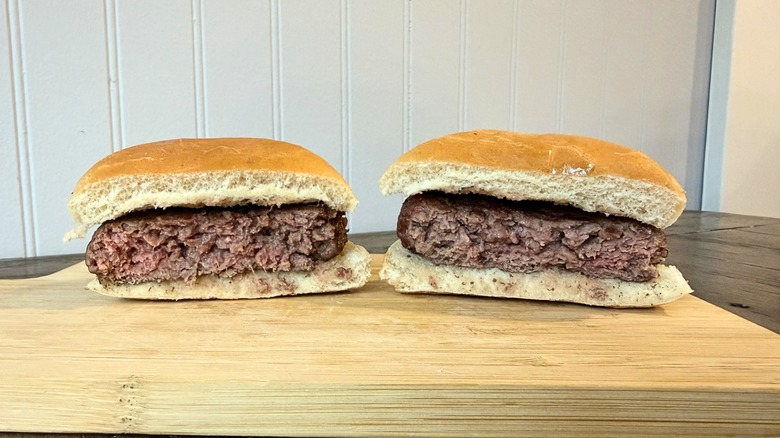
I was pleasantly surprised by how well the broiler worked to cook a burger. The direct high heat from the oven almost mimics the high-heat from a grill, and it seems like it'd be a great alternative to when the weather's not great for outdoor grilling.
It was also fairly easy to do. I just turned my broiler on high and cooked my burger for four minutes on one side and five minutes on the other side. I then let it rest for five minutes. The flavor was good — more muted than some but the meatiness really came through. Texture-wise, though, the broiled burger didn't come through. Even though the broiler browned the meat nicely, it didn't have the crust you'd expect from a burger.
At the end of the day, the broiled burger was easy to cook and tasted good. I could see these becoming a problem if you were to cook multiple burgers at a time, though, since all broilers heat up differently as well as inconsistently.
6. Gas grill
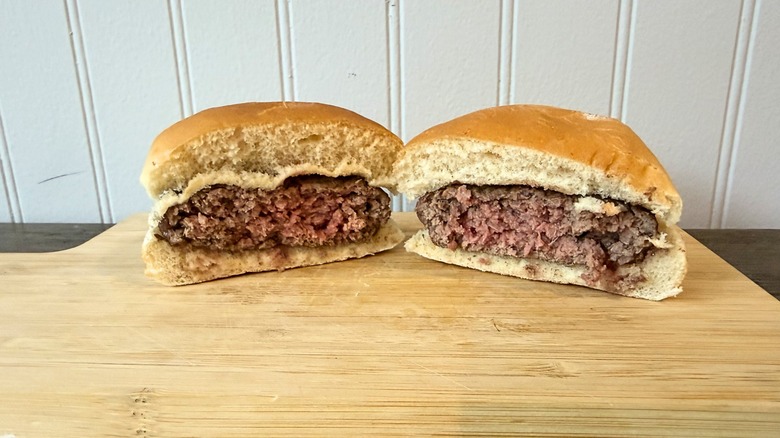
Out of all the techniques I tried on this list, cooking a burger on a gas grill is the one I've done the most. So I fully expected this to rank better than it did.
To cook a burger on the gas grill, I first heated my grill to 425 degrees Fahrenheit and then seared the burger for three minutes on each side before letting it rest for five minutes. Even though this way of cooking burgers is synonymous with summer cookouts and backyard barbecues, the burger came out with a flatter taste than I expected — especially when compared to the other burgers on this list. It lacked the smokiness of the charcoal grill cooked burger and the hard sear of what the cast iron produced. I also think it lost its juiciness through the grill grates, which further impacted the burger by causing flare-ups and creating uneven pops of char.
Ultimately, the gas grilled burger was a decent burger. It was just a little on the safe side compared to other burgers in this lineup that had a wow factor.
5. Blackstone
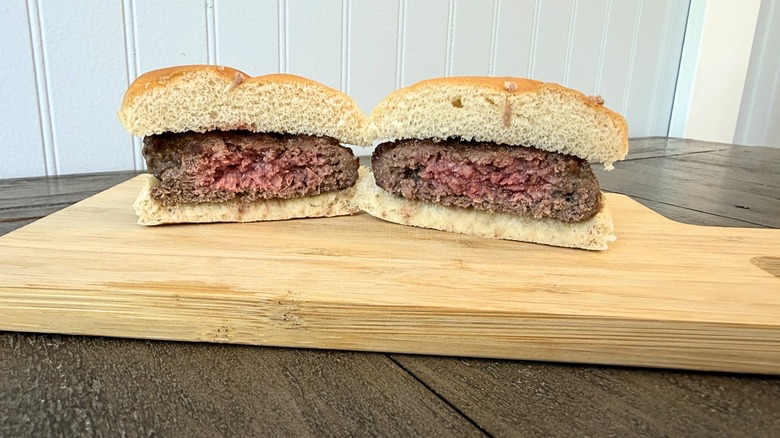
The rise of the Blackstone as a cooking method has created an entire culture around cooking burgers, and it's easy to see why. Between the even heat and massive surface, it's hard to mess up a batch of burgers on a Blackstone. To make this burger, I heated the Blackstone to medium-high heat and cooked the patty for four minutes on each side until the internal temperature reached 125 degrees Fahrenheit. I then took it off to rest for five minutes.
The burger came off the flat-top with a nice, crispy crust, and had a warm, pink center that oozed with juices when I cut it open. Since it cooked right in its own fat, each bite had a richness to it that other cooking methods couldn't replicate. I think the temperature difference between the actual griddle and the chilly outdoor air resulted in the burger not gaining much more heat as it rested, though. Because of this, I can see how cooking a burger to an exact doneness on a Blackstone could be a bit more difficult.
Even though this was a great burger, I think the Blackstone is better suited for smash burgers rather than the thicker restaurant-style burgers made for this list. Using such a large flat top is great for thinner burgers with overly caramelized crusts, and I found myself missing that texture when I initially bit into the Blackstone burger.
4. Campfire
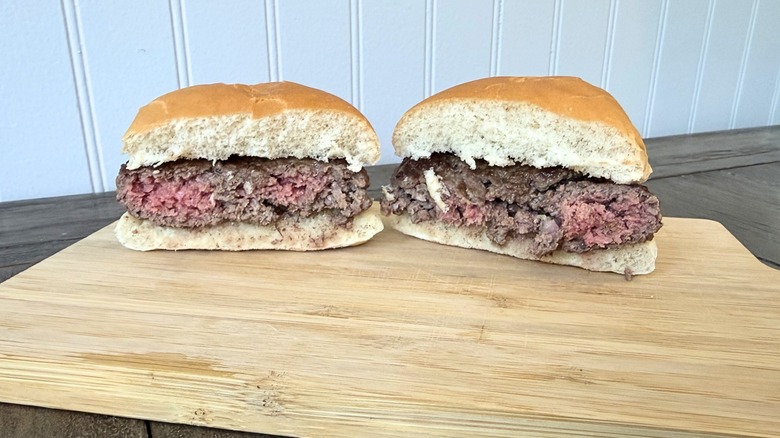
As someone who loves a good campfire, I had the most fun making this burger. And also felt the most accomplished after all was said and done. It took me about 20 minutes to build a fire and let the wood burn down enough to sustain the consistent heat necessary for cooking a patty. Once I had steady heat going, I placed a grill grate over the flame and cooked the burger for about three minutes per side until it reached an internal temperature of 125 degrees Fahrenheit.
The end result was close to perfection. The patty had a distinct wood-fired flavor that immediately stood out, and the contrast of texture between the charred outside and the tender inside made for one of the best bites of the entire tasting. As with any open-fire cooking technique, though, things got a little inconsistent. Flare-ups happened. Air pockets popped. Soot scattered. So the burger did have some downfalls. The amount of flavor that came through after a mere six minutes, though, was enough to rank this near the top.
3. Air fryer
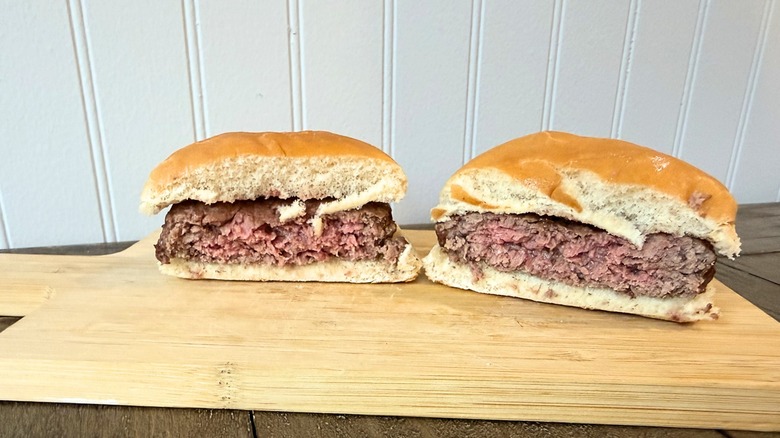
Of all the unique things you should always make in your air fryer, a burger should absolutely be one of them. Going into this taste test, I fully expected this technique to rank worse than it did. Without any open flame, smoky grill, or contact with direct high-heat, I thought an air-fried burger would be lacking in flavor and texture. Instead, this cooking technique was a great way to cook a batch of burgers indoors.
I cooked this burger at 400 degrees Fahrenheit in the air fryer until it reached an internal temperature of 125 degrees Fahrenheit, which took my air fryer about 11 minutes. I then let it rest for five minutes before sandwiching between a bun. The result was shocking.
The burger cooked evenly, retained plenty of juice, and required almost no effort aside from dialing in the timing. I was surprised at how flavorful the actual burger was, too. Rather than getting its flavor from char or smoke, the flavor came from the beef itself, which tasted richer than the other burgers. The consistent, enclosed heat also allowed the burger to fully retain its fat, so every bite was deliciously juicy.
Unexpectedly, the air fryer delivered one of the beefiest and most consistent burgers on this list. And the lack of stress and clean up it required is what secured its rank in the top three.
2. Smoked
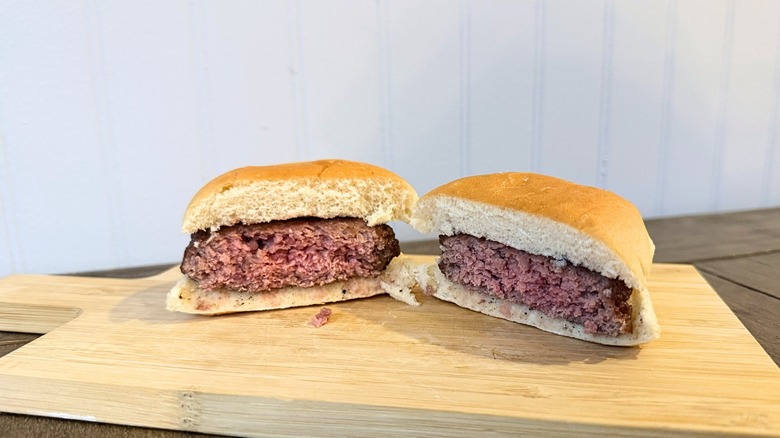
The smoked burger easily delivered the best flavor. However, it also took the longest. To make this burger, I heated my Big Green Egg to 250 degrees Fahrenheit with charcoal. It took about 45 minutes to get a steady temperature going, because while this ceramic smoker is incredible once you've perfected it, the Big Green Egg definitely requires patience when it comes to airflow and temperature control. Next, I filled a drip pan with an IPA and some cherry wood chips. I then got to smoking. The burger stayed on the smoker for about 45 minutes until the internal temperature read around 125 degrees Fahrenheit.
The extra effort needed with this burger became immediately worth it. You could smell the wood as it was smoking, and my taste buds had never been more ready for another burger. Once you bite into a smoked burger, you might never go back to a non-smoked one. This burger was full of complexities. Between the smokiness from the cherry wood, the sweetness from the IPA, and the buttery juiciness from cooking low and slow, every bite was rich, tender, and oh-so-decadent.
The only downside to this burger was the time commitment. But I'd do it again in a heartbeat.
1. Charcoal grill
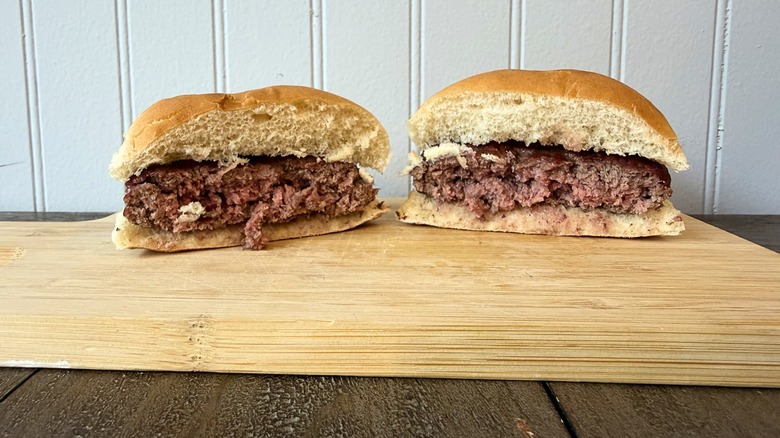
While some burgers on this list were the best in certain categories, the charcoal burger excelled across the board. To make this burger, I heated my charcoal grill to 400 degrees Fahrenheit with lump charcoal. I then seared the burger for three minutes per side, pulling it off once the internal temperature hit 125 degrees Fahrenheit. The burger rested for five minutes before easily claiming its well-deserved top spot on this list.
The charcoal grill burger was deeply beefy with the perfect amount of smokiness and char that never overpowered it. The grill marks added the most satisfying crust, and the seared exterior helped the burger stay juicy inside. What really stood out about this burger was how consistently perfect it was across every category. The smoked burger was incredibly flavorful but took so much time. The cast-iron burger had a perfectly caramelized crust but the chaos became daunting. The air-fryer burger was wildly convenient but lacked texture contrast. The charcoal burger, however, had high marks across the board.
That's not to say that using a charcoal grill is the easiest feat. It still requires more equipment, more time, and more attention than other methods on this list. The effort genuinely paid off, though. Going forward, every burger I make will be made on a charcoal grill.
Methodology
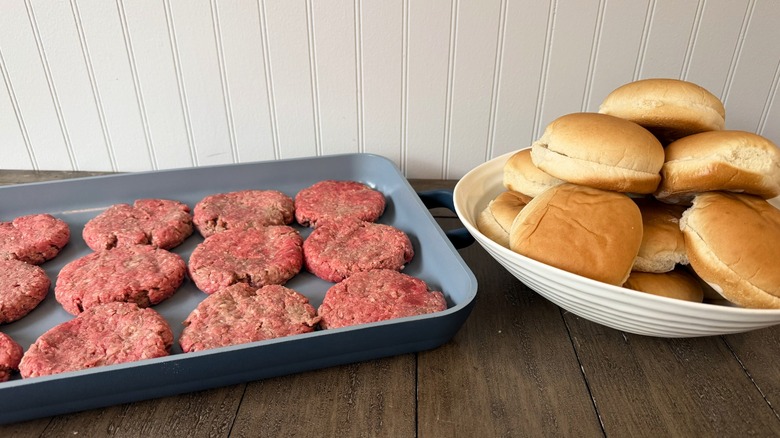
First, I had to figure out which cooking techniques I actually wanted to test. I chose 12 different methods that included both well-known ways and lesser-known ways. This included pan-frying, air-frying, charcoal grilling, gas grilling, smoking, cooking over a campfire, cooking on a Blackstone, cooking on a cast-iron pan, broiling, oven-finishing, reverse searing, and sous vide.
The next step was to figure out what criteria I would use to determine how these cooking techniques would rank against one another. I settled on flavor and texture, as well as overall cooking experience. For flavor, I focused on how savory, smoky, beefy, or charred each burger tasted. Did the char overpower the beefiness? Did the cooking method add smokiness or sweetness? When comparing texture, I looked at both the inside and outside of the burger. Did the outside have a nice crust while the inside stayed tender and juicy? Lastly, overall cooking experience was a critical factor in the rankings, and ended up playing a huge role throughout this list. Some methods needed my full attention while other methods were more hands off.
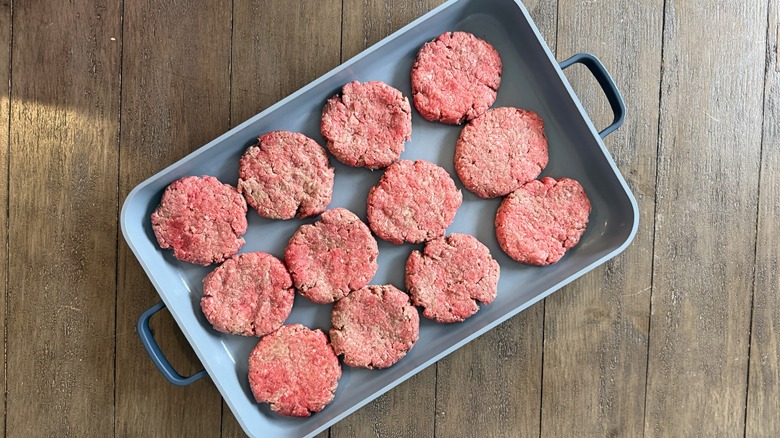
I also made sure that each burger was made with the same 80/20 ground beef blend, was formed into a 4 ounce patty, had the same thickness and seasoning (just salt), and had the same target doneness between 130 and 135 degrees Fahrenheit.