

What's The Average Lifespan Of A Garbage Disposal?
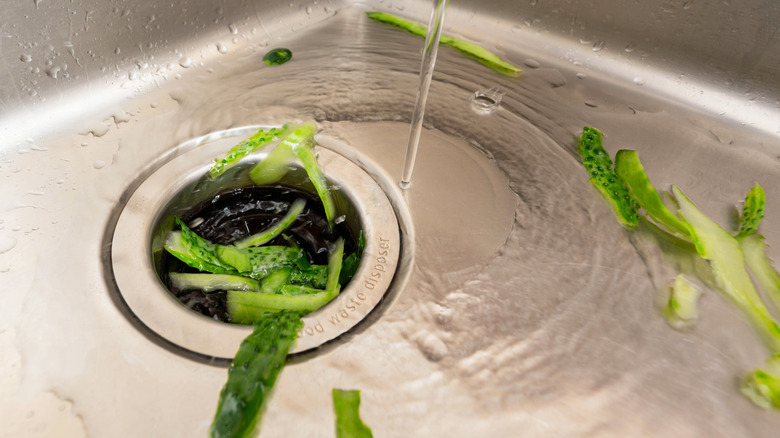
The garbage disposal is a common appliance in American kitchens, and for good reason: it helps home cooks get rid of food waste quickly and easily. According to a 2020 survey by Consumer Reports, over half of U.S. households have one under their sinks. As popular and convenient as a garbage disposal may be, it's a headache to deal with one that's malfunctioning or verging on death. How long is a garbage disposal supposed to last, anyway? The average lifespan is between 10 and 15 years, about the same as most home appliances.
Proper care and maintenance are key to maximizing a garbage disposal's lifespan. You might be surprised by some of the wrong ways to use a garbage disposal, such as forgetting to turn on the cold water when running it. Cold water solidifies fats so they can be ground up, instead of clogging the pipes later on. Garbage disposal cleanings should be done weekly, and that's the time to use hot water (and soap) with the machine. Pouring in baking soda and vinegar, followed by a flush with hot water, will clear any clogs.
Why might a garbage disposal die? Although it's a strong appliance, there are foods a garbage disposal can't handle. Putting the wrong items down the drain, including corn husks or seafood waste like hard shellfish shells, could cause buildup, damage the grinding mechanisms, or burn out the motor. Other times, a garbage disposal simply reaches the end of its life and stops working.
Signs your garbage disposal needs repair or replacement
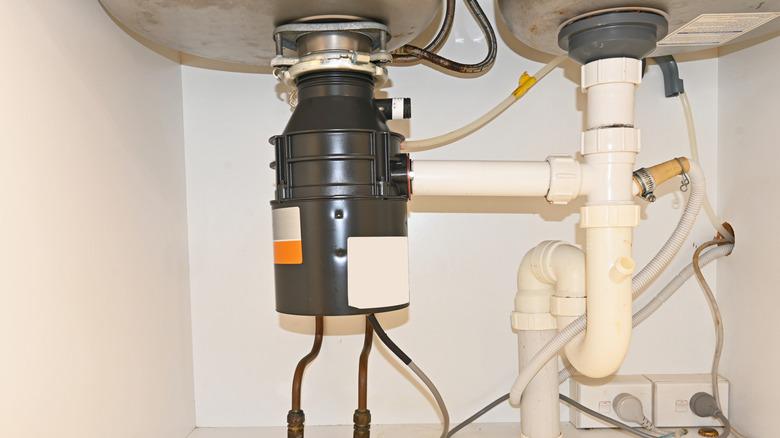
Recognizing that your garbage disposal is at the end of its life can be more nuanced than total mechanical failure. Sometimes, it'll run fine but won't drain when the grinding is done. If this persists, it may be a sign of waste buildup inside or that the grinding mechanism isn't fully liquefying all the food you've put into it. Similarly, if a once-speedy unit suddenly begins taking a long time to grind up the usual amount of scraps you put in, that might be a sign the unit is on the decline and perhaps in need of replacement.
Disposals are built with a reset button to be used after a malfunction or a problem like overloading. If the appliance requires repeated resets during normal functioning, it means the motor is overheating and shutting itself off to prevent damage. This, too, can signal that the disposal should be replaced.
Sounds can also be important indicators. If you hear a hum but there's no actual grinding happening, it's because the grinders aren't able to rotate despite the motor working. Something's in the way, and it could be rust or stuck debris. Rattling can mean there's a hard object (metal or bone, for instance) trapped, or that a part of the machine itself is loose. In these cases, DIY repair might be possible, but it may be best to consult a professional.