

Are Bigger Blueberries Always Better?
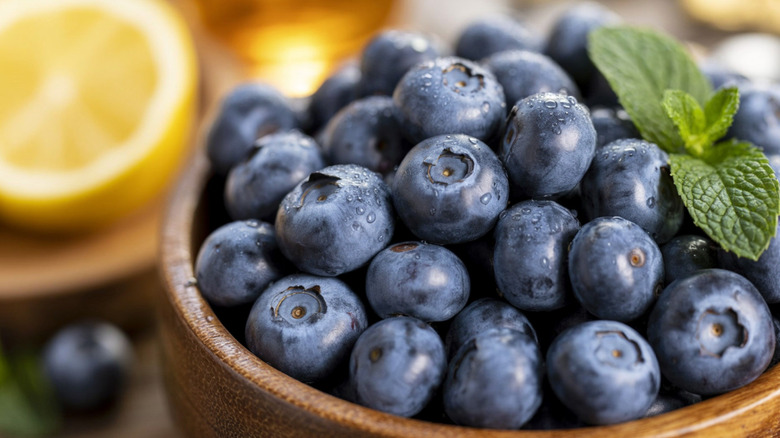
Blueberries can either be vibrant jewels that explode with flavor, or they can be sad, dry, and tasteless. Does size matter when it comes to choosing the perfect ones? Not really. A common mistake people make when purchasing blueberries is assuming that bigger means better: sweeter, juicier, and more nutritious. That's not necessarily true.
Among the things you need to know about blueberries is that they come in two basic categories: highbush and lowbush. Highbush varieties, commercially cultivated since the 1910s and so named for their tall-growing plants, are by far the most common, and they're probably what you think of when you imagine blueberries. Lowbush berries are wild and much smaller with a more intense flavor. They're also far less common. Highbush plants are cross-pollinated to encourage the growth of larger, "jumbo" fruit.
Because regular and jumbo blueberries come from the same basic plant and the same basic growing methods, their flavor and texture aren't that different and don't particularly vary by size. Larger berries tend to have a higher water content, but they're not necessarily riper or sweeter. They also tend to have a milder, more consistent flavor than the wild variety. Among regular blueberries, size tends to vary because of factors like water supply and pollination, but these don't necessarily influence the fruit's taste.
Everything you need to know about blueberry size
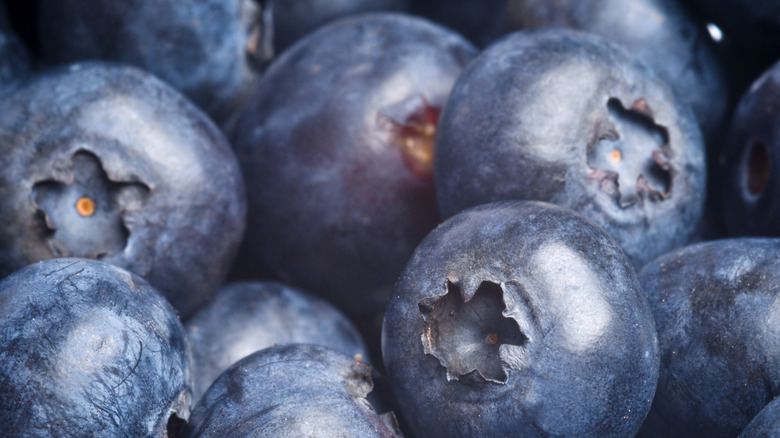
Wild, lowbush berries tend to grow in the cold climate of the Northeast, especially Maine. Cultivated highbush blueberries have a wider spread and are commonly grown in New Jersey, North Carolina, Georgia, Florida, Texas, and California, among other states. Others are grown in Mexico, Peru, and Chile. Because of the lowbush variety's relatively small geographic range, you'll rarely see them sold fresh outside of Maine.
Among cultivated berries, the nutritional value tends to be about the same regardless of size. The difference is pronounced, though, when comparing cultivated blueberries to wild ones. Tiny wild berries tend to have less sugar, more fiber, and more manganese but less vitamin C. They also have more antioxidants, which are found in the skin; because of the berries' small size, a serving of wild blueberries will have more skin than the same amount of cultivated ones.
When cooking with bigger berries, keep in mind that they have a high water content. This can be useful if you want the blueberry juice to infuse throughout a dish or baked good, but some recipes will become soggy if your berries are too large. If you want a large burst of juicy berry flavor, though, jumbo blueberries are definitely the way to go. Ultimately, the size matters less than how fresh and ripe they are.