

How Much A 6-Pack Of Beer Cost In The 1970s Compared To The 2020s
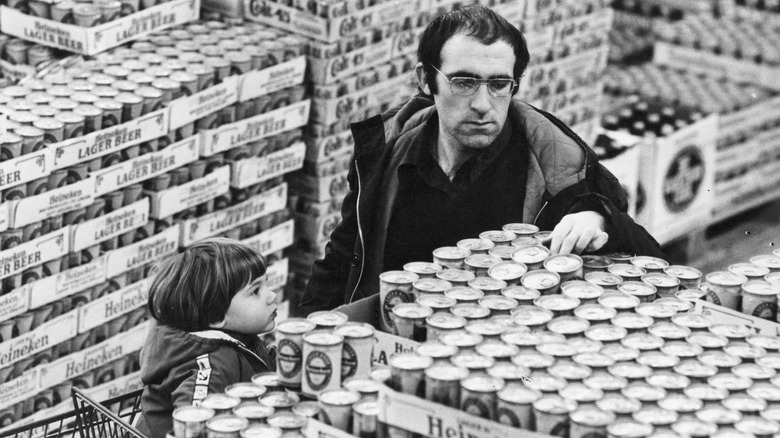
As grocery prices continue to climb and break records, the American consumer might wonder if the same trends will hit their favorite beverages. When comparing beer prices from the 1970s to the 2020s, the answer is a bit complicated. The world of beer is very different today than it was in the '70s — back then, names like Budweiser, Miller High Life, Coors, and other classic brands defined the decade. Now, craft beer has become a major industry force, and that has shifted the balance of pricing across brands.
Shoppers in Albany, New York could visit their local Albany Public Market in 1970 and find a variety of big-brand beer. In an ad from June of that year, the grocery chain advertised a six-pack of Miller High Life in 12-ounce cans for $0.99 (via Newspapers.com) — certainly less than what today's shoppers pay. Budweiser was even cheaper, at just $0.89 for a six-pack of 12-ounce cans in March of that year (via Newspapers.com).
Prices have only increased in the decades since. Albany Public Market has been gone since the 1980s, but shoppers at the Hannaford supermarket in Albany can find a six-pack of Miller High Life for $5.99 today, a 600% price increase (though today's cans are 16 ounces, not 12). Six-packs have declined in popularity, so the best Hannaford comparison for the Budweiser is a 12-pack priced at $13.99, meaning six cans would be $7. That's an increase of nearly 800%.
What inflation says about beer prices
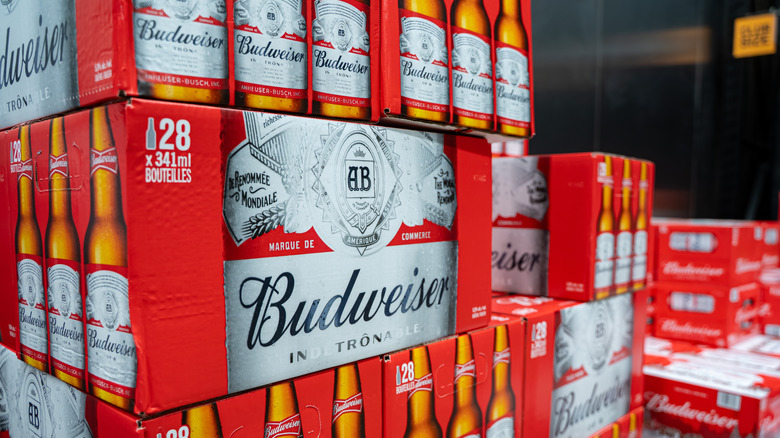
These price increases might seem alarming, but it's important to consider them in the context of inflation. The buying power of $1 in 1970 is equivalent to around $8.60 in 2026 terms, according to the Bureau of Labor Statistics. In other words, beer prices have risen slower than the general inflation rate. That means today's six-pack of beer is on par with, or relatively cheaper than, what it would have been in 1970.
Why have beer prices risen less sharply than general inflation? The answer lies primarily in the economics of large-scale brewing. Over the decades, major producers of low-cost beer have developed highly efficient production methods, like purchasing ingredients in bulk, streamlining packaging, and increasing sales volume to dilute their costs. All of this has kept mainstream beer relatively affordable. But craft brewers operate with smaller batches and higher-quality (meaning higher-cost) ingredients, and therefore can't compete on price. For example, packaging alone could add $1.50 to the cost of a craft-beer six pack (via HuffPost). When craft beer is factored in, the national average cost of a six-pack is around $11 (via Cheapism).
Sticker shock aside, big-brand beer drinkers these days are still getting a pretty good deal compared to 1970 prices when considering inflation. The tradeoff is a very different market: Rather than just a handful of mainstream options, now beer buyers see thousands of craft options alongside big brands, with premium price tags to match.