

How Much Did Fast Food Burgers Cost In The 1960s?
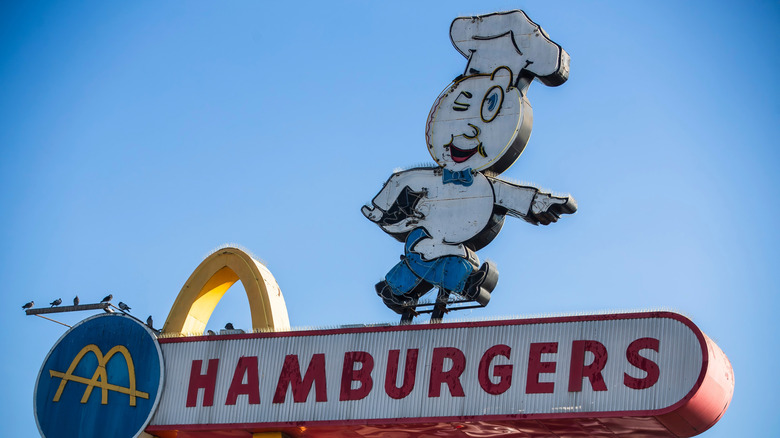
Some fast food burgers are just overpriced (at least according to customers). You might especially feel the squeeze these days given how significantly fast food prices have risen in recent years — often faster than the overall rate of inflation. So, while many of the hamburgers Americans munched on back in the 1960s are still available from quick-service restaurants, the prices have increased substantially. But by how much?
Today, seeing a burger priced under $0.20 feels almost impossible. In the 1960s, though, that was perfectly normal. McDonald's was charging just $0.18 for a hamburger in 1967. Even the newly introduced Big Mac cost only $0.45, though the higher cost was a reason executives hesitated to release the sandwich. Burger King's famous Whopper sold for $0.37 throughout the 1960s, while White Castle sliders were available for just $0.14 each.
With those prices, it's hard not to wish for a time machine. In 2026, a basic McDonald's hamburger is $3.49, and a Big Mac costs $7.59, roughly 19 and 16 times their 1967 prices, respectively. Burger King's Whopper now sells for $7.69, around 21 times higher than the original price, while White Castle's slider costs $1.23 today, an increase just under tenfold. (These prices come from orders at New Jersey locations, so prices will likely vary across the country.)
Some burger prices have risen faster than inflation (but not all)
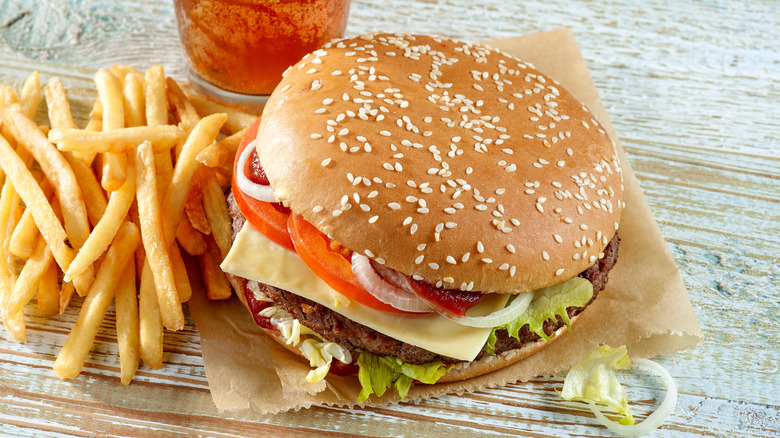
Is inflation responsible for these eye-popping increases? For the most part, yes, but not entirely. According to the U.S. Bureau of Labor Statistics' inflation calculator, $1 in 1967 equates to just over $10 in 2026, representing an increase of a little over tenfold. But not all burger prices have followed that pattern. Some have risen at a rate nearly double what inflation would predict, while the White Castle slider is actually cheaper than its inflation-adjusted historical price.
That suggests factors beyond inflation influence these costs, and that's where things get interesting. The food industry is particularly volatile, and prices often increase or decrease at rates different from the overall trend of inflation. That's because there are a wide variety of factors that set food costs, like labor, marketing, demand, rent, and maintenance requirements. Even macro considerations like climate change can drive up food prices.
While today's burger prices might seem outrageous compared to the 1960s, inflation only tells part of the story. Some fast food chains have pushed prices well beyond economic projections, while others have remained surprisingly close to where you'd expect. Either way, it's hard not to look at an $0.18 hamburger and wish those numbers had stuck around.