

5 Fast Food Chains That Rack Up Some Of The Most Serious Health Inspection Violations
Most people who stop at a fast food restaurant aren't pausing to think about what happens behind the counter. Is the kitchen clean? Are employees following proper safety precautions? Is all the food stored well? Luckily, you don't generally have to think about those considerations, because it's the job of health inspectors to make sure restaurants can't hide their mess. There's no single national authority on health inspections because they're usually run locally, but over 3,000 agencies nationwide inspect restaurants and other food service establishments (per the FDA).
We investigated inspection records of over 3,700 fast food locations in four U.S. cities — Atlanta, Chicago, Las Vegas, and New York — along with other news coverage and reports to track down repeat offenders. We found Popeyes, Jack in the Box, Subway, Sonic, and Burger King have all had serious health inspection issues nationwide. These chains have seen notable violations, concerning mishandling of food, and in some cases, even shutdowns by health departments.
Here's the good news for fast food enthusiasts, though: Typically, these restaurants perform well on health inspections. Even among these chains with significant problems, there's no pattern of heath code violations. Ninety-four percent of the restaurants surveyed (over 3,500) not only passed the most recent inspections but did so with the highest possible score (for instance, grade A in New York City or between 90 and 100 in Atlanta). While some restaurants do continue to violate health codes, it's location-specific, not chainwide.
Popeyes' problems range from plumbing to mice
Fried chicken lovers might want to skip a visit to their local Popeyes. In 2024, an Atlanta outpost failed inspection with serious violations after inspectors found food being stored at unsafe temperatures, while stagnant water covered the floor in the kitchen. (Management told a reporter from Atlanta News First to leave when asked about the violations.)
Elsewhere, the story is similar. A Colorado Springs, Colorado, location failed inspection three times with dirty kitchen equipment and cooked food being held at unsafe temperatures. And in Detroit, an employee recorded a video inside a Popeyes showing a messy kitchen. That led to an inspection, which found insects in the food, improper storage temperatures, and plumbing problems.
In our analysis, Popeyes performed slightly below average on the whole, but earned the dubious distinction of being just one of two chains in New York City with locations shut down for serious violations. Inspectors found mice, evidence of mice, flies, and unsanitized food surfaces. That location racked up 75 violation points — an unusually high number — and was shut down.
Jack in the Box has improved but still sees serious issues
One of the worst fast food outbreaks in history was Jack in the Box's 1993 E. Coli contamination. The fast food chain's bacteria-laced meat contributed to more than 700 people in four states becoming ill, which included four deaths, and was tied to 73 Jack in the Box locations. While the presence of E. Coli isn't something local health inspectors would catch at the restaurant level, its spread was hastened by the chain undercooking its burgers, which health inspectors had previously warned about. But Jack in the Box continued to undercook its burgers, allegedly on purpose, in order to achieve juicier burgers.
Following this outbreak, the USDA classified E. Coli as an adulterant, meaning it was strictly prohibited from showing up in any beef sold. Although it initially denied responsibility, Jack in the Box fixed this error. It raised cooking temperatures, switched meat suppliers, and tossed tens of thousands of pounds of potentially contaminated meat.
Even though the chain implemented stricter food safety standards, restaurants still sometimes fail health inspections. A Phoenix, Arizona location might be cooking burgers to the proper temperature but was storing refrigerated food at room temperature for longer than is safe (though that violation was corrected immediately). Another Phoenix outpost had uncooked tacos sitting on the counter, with internal food temperatures up to 53 degrees Fahrenheit, and the manager on duty wasn't properly certified in food safety.
Subway performs among the worst
A Subway in Augusta, Georgia might make a peanut butter and jelly sandwich seem more appealing. The Augusta Press reported in 2025 inspectors found staff had a lack of food safety knowledge and necessary certifications, and unidentified debris was spotted around the kitchen, while refrigerated food was kept at room temperature. General food storage was incorrect, like food being stored on the floor in multiple places and, oddly, jalapeños stored in the handwashing sink.
Unfortunately, that location was not alone. In 2012, the New York Daily News reported Subway locations in New York City had been shut down for health violations more than any other chain in the city, totaling 55 times from 2007 to 2012.
Today, there are fewer Subway locations in New York City, but the chain still struggles both in the Big Apple and elsewhere. In fact, it was the worst performer in our survey, with 10% of its locations (or around 40 stores) seeing subpar sanitation. That includes one in Chicago that was forced to close by health officials. Like many other fast food restaurants, Subway runs on a franchise system, so certain franchisees may be better at sanitation than others.
Sonic has problems with mold and more
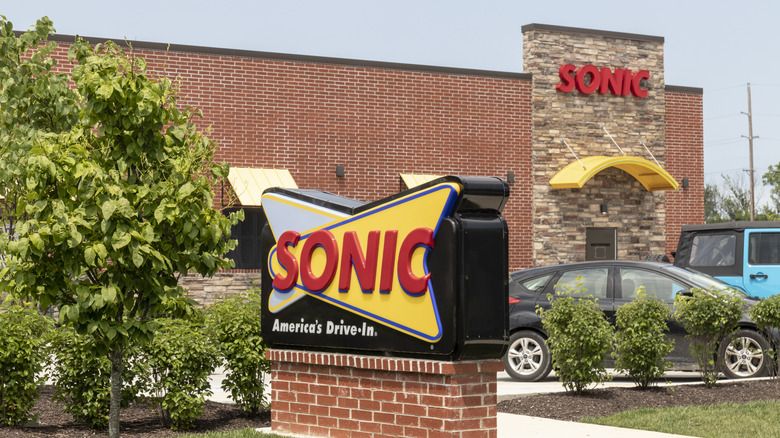
Sonic is one of the few major fast food players that's a drive-in, so many customers don't ever actually enter a building to get their food. On one hand, that means unruly customers won't make a dining room messy. On the other, it means diners don't often see what the interior looks like, so it's much harder to gauge how clean the food preparation areas actually are.
But if you are thinking of pulling into some Sonic locations, you might want to keep driving instead. A Lawrenceville, Georgia location failed its 2018 inspection because of fruit flies and cockroaches, along with other serious concerns, such as a mold-like buildup in the ice machine and ice cream being stored at too-warm temperatures. Sonic made significant improvements, raising its initial inspection score from 55 to 82 at the reinspection.
Up in Syracuse, New York, in 2026, inspectors found unlabeled sauces, mold and dust accumulation, leaky ceilings, and debris clogging floor drains. And the year prior, a Coral Springs, Florida, location was ordered closed after inspectors found mold on lemons and limes and in the ice machine, bugs in the ice cream, flies in the kitchen, and dirt on several surfaces. Even though there isn't evidence of chainwide safety problems at Sonic, these individual reports are still serious and could be why so many people can't stand Sonic.
Burger King's violations extend beyond its restaurants
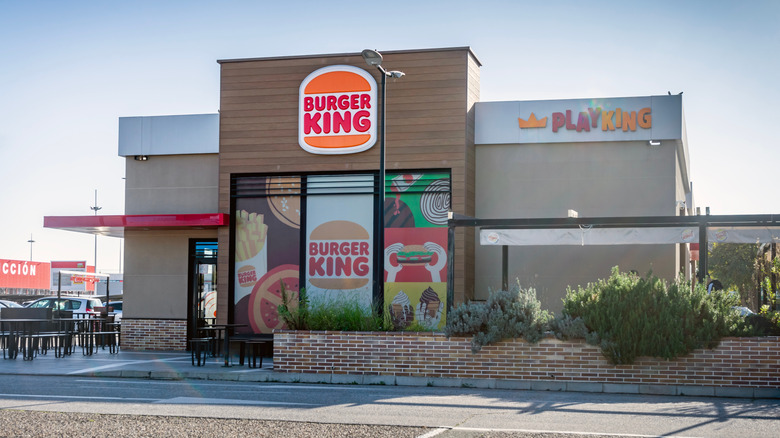
In our analysis, Burger King generally performed about average, but that doesn't mean the chain is free of serious problems elsewhere. In 2021, a Massachusetts location became bad enough that workers staged a walkout, according to the Springfield News-Leader. A subsequent health inspection found less severe problems than what the employees had described but still cited a number of sanitary violations.
In DeKalb County, Georgia, a 2023 inspection revealed a dead roach and expired food in the kitchen, causing the restaurant to fail. Local station WSB-TV reported, despite this, the fast food restaurant still had its previous, passing health inspection sign up, which was another violation. Across the northern border, a Canadian location in Richmond, British Columbia allegedly sold two burgers with mold on them after a history of repeatedly failing health inspections.
It's not just the Burger King restaurants with problems, though. A March 2026 inspection found serious violations in the employee cafeteria inside the corporate offices of Burger King's parent company, Restaurant Brands International. With black and green mold in the ice machine, roaches both living and dead, and grime buildup on kitchen equipment, the cafeteria was closed for 24 hours. But Restaurant Brands International doesn't run its own cafeteria, instead contracting it to a third party.