

Don't Let The Name Fool You: Here's What 'Dirty Water Hot Dogs' Really Are
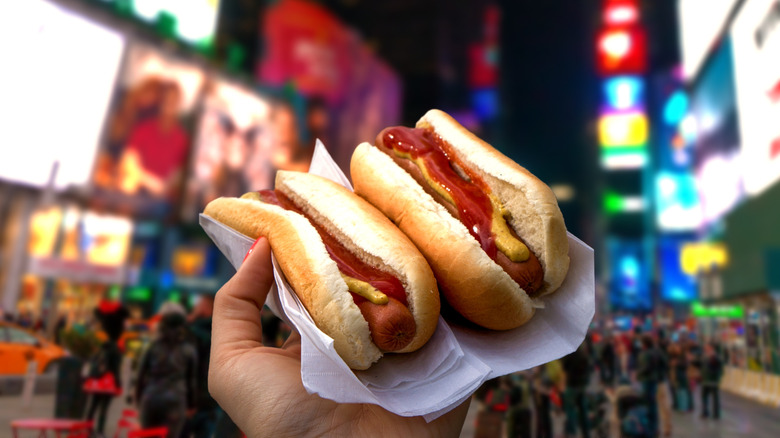
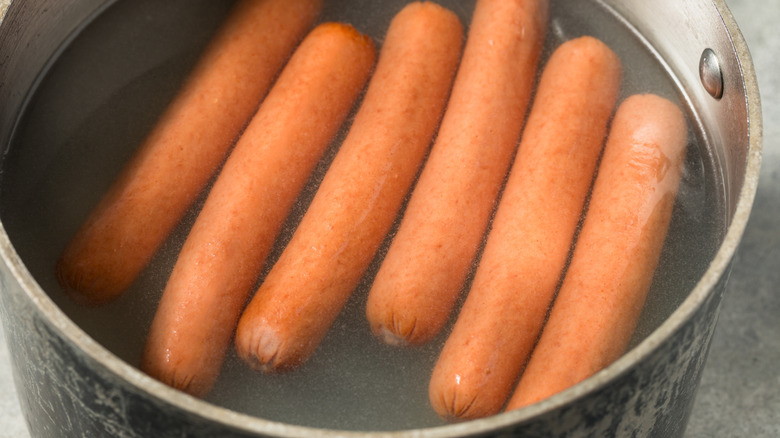
Names, like looks, can be deceiving in many cases. This definitely holds true for various foods, such as "dirty water hot dogs." Taken literally, the name sounds positively disgusting. However, those familiar with the terminology and the technique it references know better. "Dirty water dogs" have simply been boiled and allowed to sit in seasoned water that enhances their savory flavors.
The name is thought to have originated from hot dog carts in the New York and New Jersey area. To ensure that their franks stay warm and ready to eat, vendors have traditionally kept them in a vat of simmering water. As the day progressed, the water turned murkier while hot dog juices and spices created an almost broth-like mixture that infused the meat with a stronger taste. In general, it's the same principle as cooking hot dogs in beer, another trick for adding another punch of flavor to your dogs.
Although this traditional method requires extensive time and plenty of hot dogs to achieve the ideal "dirty water" flavor, home cooks can create a workable replica with the proper mix of seasonings. There's no definitive recipe, but many versions include elements like vinegar, nutmeg, garlic powder, salt, and cumin, among other seasonings.
What to consider when making your own dirty water dogs
Those looking to recreate a New York-style dirty water dog might want to grab a pack of Sabrett's if possible. The company, which bills itself as providing "New York's #1 hot dog," is a major supplier to the Big Apple's street carts. If you've been to the Big Apple, you may have seen them shielded underneath Sabrett's famous blue and yellow umbrellas. However, when a Mashed contributor tried and ranked 11 hot dog brands, Sabrett's only earned a middling sixth place due in part to its products' unremarkable length and seasoning. For a more highly rated option, home cooks could grab uncured beef hot dogs offered by either Trader Joe's or Whole Foods Market's 365 brand. The former earned praise for their size and pleasing saltiness, while the latter were large and peppery. Both sound well-suited for the dirty water treatment.
However, not everyone who loves a good frank will like the idea of heating it in water. In fact, Mashed determined that boiling was one of the worst ways to cook a hot dog. The main criticism stemmed from lack of crispy skin and the method's potential to kill the taste of your franks as they become waterlogged. However, "dirty water" addresses this latter pitfall by using simmering liquid to infuse extra flavor into the dogs. So, while this classic American street food could have a branding issue among folks who've never heard of it, this dish sounds better once you know about the rich flavor hiding behind the name.