

5 Ways Big Mac Sauce Has Changed Over The Years
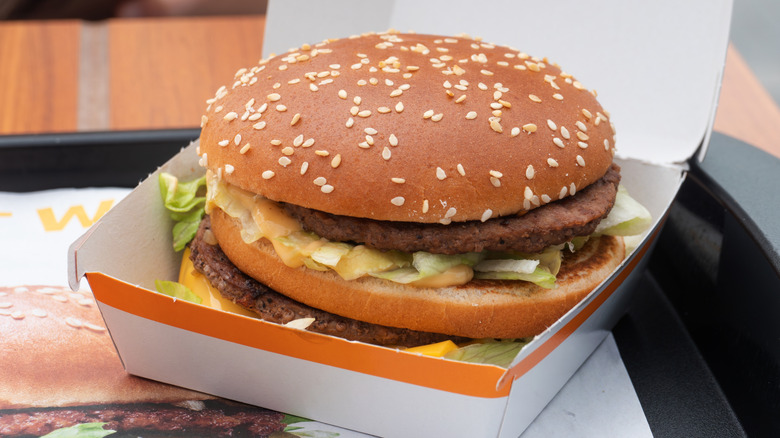
Two all-beef patties, special sauce, lettuce, cheese, pickles, onions, on a sesame seed bun; Many people know the fast food menu item this refers to without hearing the name at all. But as iconic as the Big Mac is since its 1967 introduction at a Pennsylvania McDonald's, it hasn't stayed exactly the same over those decades. In fact, the truth about McDonald's Big Mac sauce is that it's seen some big changes since its introduction.
What exactly is that sauce, anyway? It's officially called Big Mac sauce, but it's often simply referred to as special sauce, and that's the name that made it into the recognizable jingle. According to McDonald's, the sauce includes the basic components of mayonnaise (eggs, oil, vinegar) along with sugar, relish, and spices. The exact recipe isn't public, but you can make a copycat Big Mac sauce version at home.
The taste of the Big Mac sauce hasn't changed much since the 1960s, but the ingredients (and way of making it) have. Originally, it was probably a mix of ketchup, mayo, and Thousand Island dressing, but now, it's made with ingredients that make up those condiments rather than mixing together premade versions. Over time, the sauce has been standardized nationally, renamed, changed, and freed of artificial ingredients. Here's the tasty story of one of America's favorite condiments.
2 sauce recipes merged in 1972
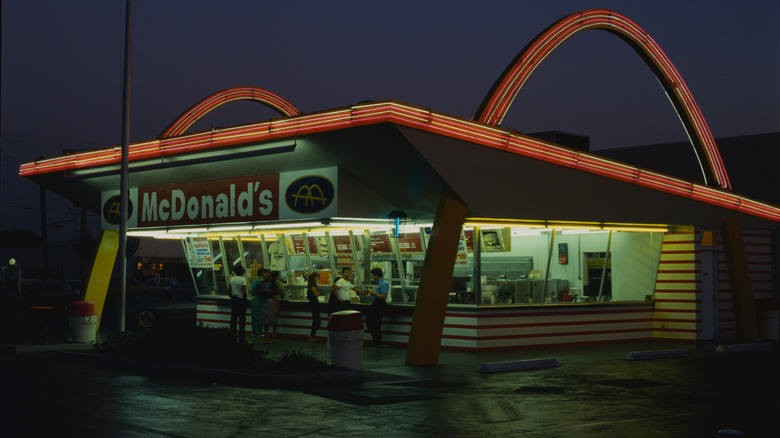
You can thank Jim Delligatti, owner of a Uniontown, Pennsylvania, McDonald's for the Big Mac. Because it resulted from his experimentation in his own restaurant rather than a corporate test kitchen, he and his cooks were only allowed to use ingredients they already had on hand. Delligatti's recipe went national in 1968, but McDonald's tested two different formulas for the Big Mac sauce over the next several years. Fortunately, or unfortunately, for the fast food chain, both sauces proved to be a hit with customers. How could McDonald's corporate executives choose one if both were doing well? They decided to go back to the drawing board and develop an entirely new recipe that combined elements of each in order to satisfy the customers who liked both.
This new concoction was dubbed Big Mac Sauce Recipe "72." By combining the two sauce recipes, McDonald's was also able to ensure consistency, so that no matter where in the United States a customer was, they'd have the same Big Mac taste. And as is the McDonald's way, all of these sauce recipes were (and remain) secret to those outside the company.
1974 brought the nickname 'special sauce'
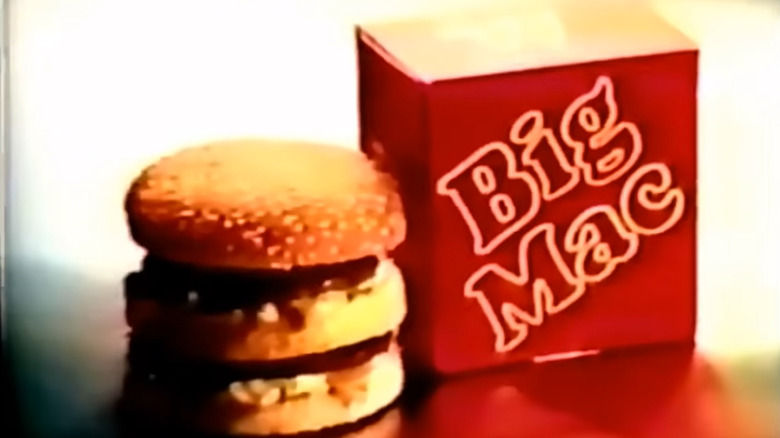
As the recipes were secret, the original nickname of the Big Mac sauce is no surprise: secret sauce. That's how McDonald's introduced the condiment in a national launch advertisement in 1968 (via YouTube). The now-famous jingle didn't exist when the burger was introduced, and the ad described the burger simply, with "our own secret sauce." As a nickname, "secret sauce" didn't last long in the official McDonald's vocabulary. In 1974, McDonald's introduced the famous jingle, officially bringing "special sauce" into national usage. It's not clear why the name changed for the new jingle, but McDonald's has always officially referred to the condiment as Big Mac sauce.
Even prior to the jingle, McDonald's experimented with using "special sauce" instead of "secret sauce" in descriptions. An ad the chain developed for college print newspapers originally listed these ingredients as the header, including "special sauce." Composer Mark Vieha — known for his work on the soundtrack of "Teen Wolf" (1985) — added music to the slogan for the 1974 commercial.
A new sauce recipe debuted in 1991
McDonald's never drastically changed the sauce recipe, so the sauce you taste today likely tastes very similar to Jim Delligatti's original. But in 1991, the chain made some minor adjustments and stayed that way until 2004. What, exactly, were those tweaks? McDonald's itself never publicly revealed what changed or why. An archived ingredient list from 2000, though, provides some insight into that 1991 formula. This retooled recipe had the same basic ingredients with slight modifications. It included pickles instead of sweet relish; mustard flour instead of mustard seed; and a small change in seasonings with turmeric missing from the old recipe.
These ingredient swaps were minor, but some felt they significantly worsened the Big Mac experience. There could be a logical reason for that. It seems McDonald's may have reformulated the sauce just to save money by switching to cheaper ingredients. Regardless, the modifications didn't last, and the sauce was changed again 13 years after the 1991 formula was introduced.
In 2004, the 1972 special sauce formula came back
Fred Turner served as McDonald's chairman and CEO for a decade starting in 1977 and served in various positions subsequently. In 2004, he was named honorary chairman of the company and worked with new CEO Jim Skinner on the chain's Food Improvement Team. Turner's best suggestion to improve the offerings: Return to the past. "It's time to make a hamburger the way we used to make a hamburger," he said at the time (via Chicago Tribune).
His advice extended to Big Mac making, too. Turner advised the chain to return to its prior 1972 formula for the Big Mac sauce because he felt the new one tasted cheap. In fact, Turner even worked with the chain's supplier network to bring back the same ingredients to make the same recipe that McDonald's used for decades. There was one difficulty: McDonald's had lost the original Big Mac Sauce '72 recipe. Turner got in touch with a supplier he'd worked with decades earlier as CEO, and that supplier had luckily held onto it. In 2004, McDonald's brought the 1972 recipe back chainwide.
Artificial ingredients were removed in 2018
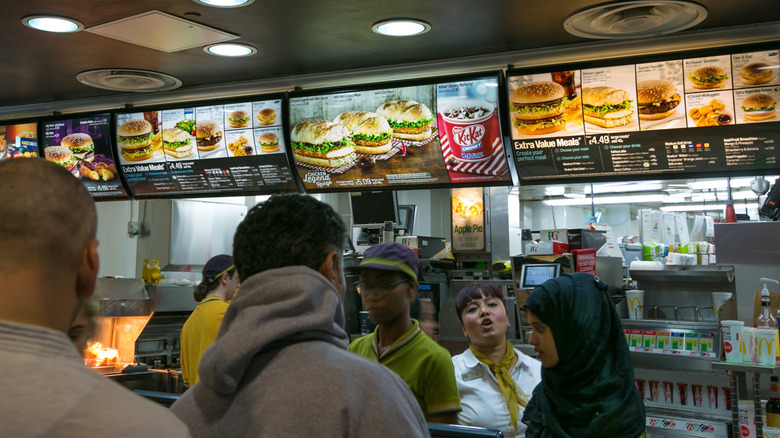
Even though the special sauce recipe today is similar to the Big Mac Sauce '72 formula, it's gotten one more recent modification. In 2018, McDonald's removed a handful of ingredients from its menu, and that included some cuts to the Big Mac sauce ingredient list. Preservatives — potassium sorbate, sodium benzoate, and calcium disodium EDTA — were removed. This was part of a larger push by the fast food giant to purge artificial ingredients from the menu in an effort to appeal to health-conscious consumers. The 2018 change meant all artificial preservatives, flavors, and colors departed from restaurant kitchens.
There's one exception, though, for Big Mac lovers who are looking to eat cleaner ingredients: the pickle. McDonald's pickles contain an artificial preservative. The Big Mac sauce itself, though, includes pickle relish that's preserved with calcium chloride, a naturally occurring salt that's used as a preservative.