

Why Room-Temperature Ingredients Are A Must When Baking Muffins
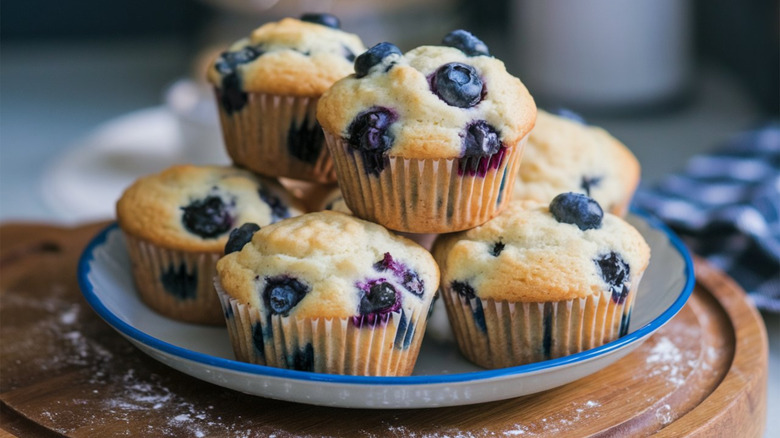
There's an old saying that cooking is an art, but baking is a science. As experienced bakers know, that's as true with yeasted breads and rolls as it is with muffins. A variety of factors require precise control throughout the muffin-making process, from the ratio of ingredients to their room-temperature status. That's because this temperature can have a surprisingly important effect on the chemical reactions that underpin the baking process.
Using ingredients that are still cool from the refrigerator or freezer is among the biggest mistakes people make when baking muffins. Instead, allow them to reach 70 degrees Fahrenheit, the typical standard for "room temperature" (give or take a few degrees). If they're much cooler than that, your final product will suffer.
That's because room-temperature ingredients are far easier to fully mix in a way that traps the tiny air bubbles that create a muffin's structure. A velvety, evenly mixed muffin batter will rise in the ideal way, while a mixture made with too-cold butter will be crumbly and turn out tough after baking. Similarly, still-chilled milk or eggs added to a creamed butter mixture can cause it to seize and curdle.
Exceptions and wait-free alternatives

As with most rules, there are exceptions to the "no cold ingredients" baking standard. Typically, they're hard to miss — recipes will specify to use the components straight out of the fridge or freezer. The reasoning may vary, like keeping butter separate from the rest of a dough mixture so it can create flaky layers and leave air pockets behind as the butter steams off.
One crucial way to avoid the time required to let butter reach the proper temperature is to forget it altogether and use oil instead. Oil, which is typically kept at room temperature already, also contributes a softer texture, more moisture, a more even crumb, and a longer lifespan. Those chasing that real-butter flavor, however, will simply need to wait for the dairy ingredient to reach room temperature.
It's important not to overdo your heating efforts, either. Warm or melted butter doesn't hold the proper amount of air, leading to a greasy, heavy product. So, don't rush it when you're making your next batch of muffins (like these recipes everyone will love). Just give your ingredients a few minutes to naturally reach your kitchen's ambient temperature, and you may be surprised by the improved results.