

What Is The Typical Lifespan Of A Dutch Oven?
We may receive a commission on purchases made from links.
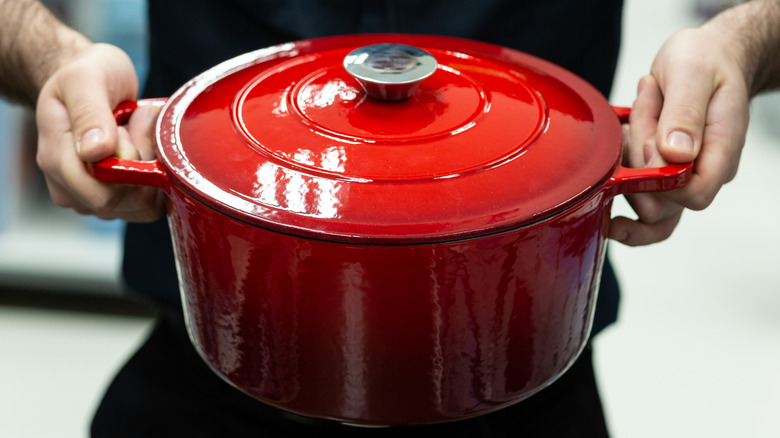
In an era so inundated with smart appliances and multi-use utensils, it is quite refreshing to see that there are plenty of old-school kitchen tools that still outshine modern gadgets. One of the most coveted among them is the Dutch oven. Its versatility in the kitchen is unmatched: You can use it as a vessel to sauté, stew, deep-fry, bake, roast, serve, and even store food in the fridge. A good Dutch oven is equally at home on an elegant dining table as it is on a backcountry camping trip. Most of all, it is incredibly durable, so much so that with the right care and upkeep, a premium cast iron Dutch oven can last you a lifetime.
You may wonder why some high-end brands produce and sell Dutch ovens at such an expensive cost. The quality of the materials and workmanship skills that go into making these top-of-the-line products is at a level where these companies are confident enough to offer lifetime warranties on their Dutch ovens. These premium cookware items make them perfect as heirlooms, which is why there is a well-used and cared-for Dutch oven in many a mother's or grandmother's kitchen. Of course, this does not mean that you can do whatever you want to your Dutch oven. Washing by hand is highly recommended to preserve the enamel coating, even though some newer brands are touted as dishwasher-safe. Regular seasoning is also needed for Dutch ovens made with unenameled cast iron.
Dutch oven recommendations
Which Dutch oven is the one for you? Well, that depends on how much effort you are willing to put into its maintenance, the aesthetics you prefer, and overall cost. Enameled cast iron Dutch ovens do not need to be seasoned, and legacy brands like Le Creuset and Staub have higher-quality enamel coatings that are less prone to chipping than cheaper brands. If you are fine with spending a few extra minutes to season your cookware, consider purchasing a cast iron Dutch oven without enamel, like ones produced by Victoria or the classic campfire model by Lodge. Is cast iron too heavy for you? There are alternatives made of aluminum, like this ceramic-coated Dutch oven by Caraway.
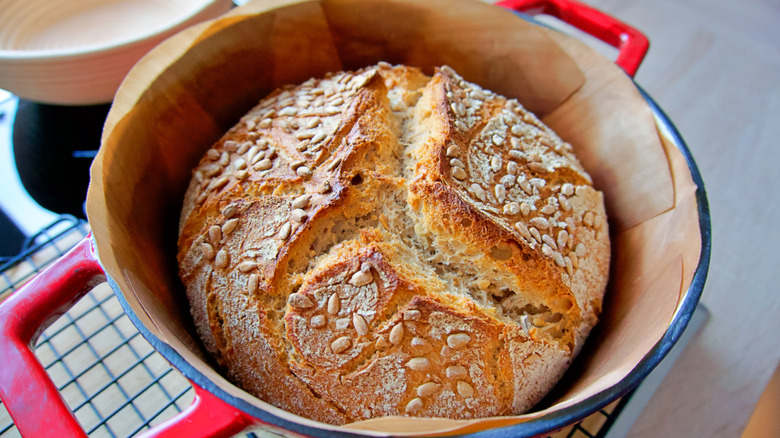
Once you have your very own Dutch oven, what are the foods you should (and should not!) cook in this versatile pot? An obvious first move is to make a hearty stew. Something meaty that will benefit from a good sear and also a long braise is ideal, like an Irish stew loaded with lamb and potatoes. To really put the hardiness of the Dutch oven to the test, you could use it to deep-fry a batch of crispy fried chicken. And of course, if you are a baker, a Dutch oven is perfect for the heat retention sourdough loaves require. From there, the world (or Dutch oven) is your oyster!