

10 Slow Cooker Tips For Richer, More Flavorful Meals
We may receive a commission on purchases made from links.
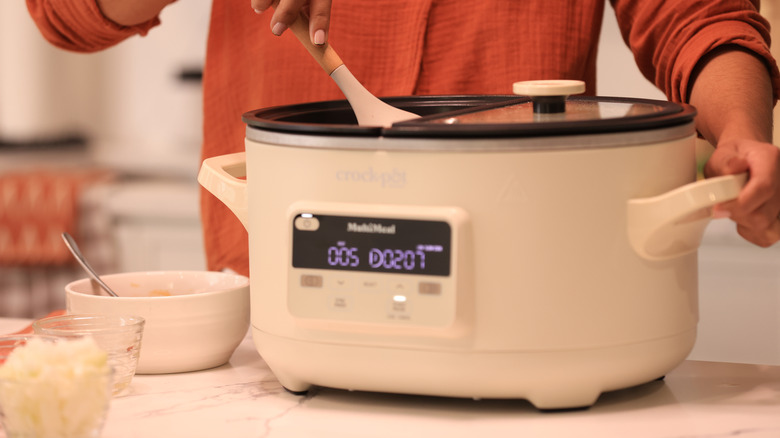
Slow cookers are one of the more popular pieces of kitchen equipment, helping home cooks create comfort meals with that stick-to-your ribs quality that most people relish. In fact, if you're like most busy home cooks without a lot of time for meal prep during the week, you've likely turned to your slow cooker a time or two to make your life a little easier. Not only does it allow the flexibility for your family to eat at different times if your schedules don't align, but when used properly, slow cookers can reward you with a rich, flavorful meal without much effort in the preparation process.
Yet, not every slow cooked meal turns out as expected. Sometimes if you add too much liquid, neglect to season your food, or pick the wrong ingredients, your meal can turn out dry and tasteless rather than offering those rich, robust flavors you were expecting. And nothing is more disappointing — and makes you want to grab takeout faster — than taking a bite of a dry roast or a water-logged stew.
That's why we consulted with experts on how to make your slow cooker meals as rich and flavorful as possible. Below you'll find tips and tricks from Stephanie O'Dea, New York Times best-selling author of the "Make it Fast, Cook it Slow" cookbooks and founder of A Year of Slow Cooking, and Sarah Olson, a slow cooker expert, recipe creator, and author of "The Magical Slow Cooker."
1. Use less liquid than you think you need
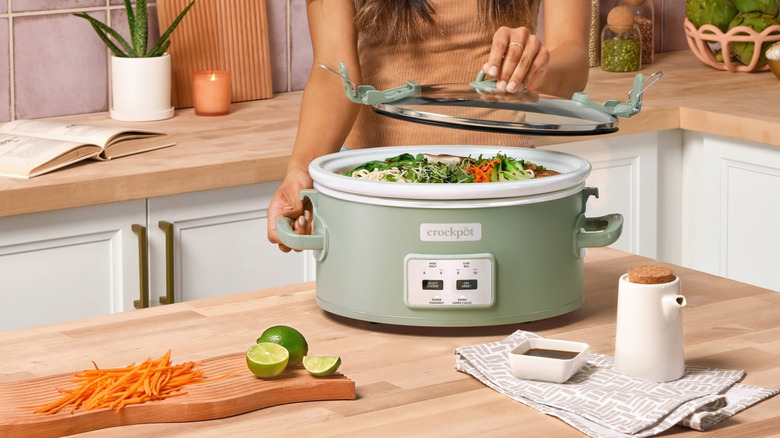
Slow cookers are designed to cook slowly and moisten the food inside the crock by trapping heat and leaving little room for evaporation. Instead, the steam rises and then condenses back into water and drips onto your food. The end result is a dish that is moist and tender. And, if you're using tough cuts of meat like beef brisket or pork shoulder, the connective tissue will break down and form a tasty gelatin that flavors your dish as well. But things can go wrong if you add too much liquid, according to Stephanie O'Dea.
"If you are drowning your meat in a ton of water or bland-tasting broth, your meat will be water-logged and tasteless," says O'Dea. "Instead, use the least amount of liquid necessary — only about ½ cup of liquid per pound of meat — and liberally use seasoning, the same way you would when cooking in the oven or over the stove."
Also, keep in mind that the condensation process doesn't require much supplemental liquid to achieve its goal. But, if you lift the lid frequently while using your slow cooker, you will lose heat and moisture. It also disrupts the condensation process and could cause your dish to need more time to cook.
2. Skip water and use broth, condensed soup, or even beer
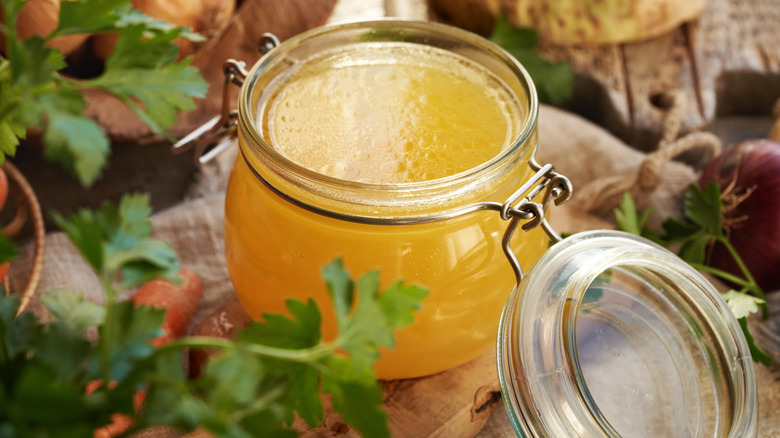
When using your slow cooker, your recipe will likely call for a very small amount of liquid. But which type of liquid you choose could potentially make or break your dish. In fact, Sarah Olson says she almost always recommends skipping water altogether and using broth, condensed soup, or even beer. "Water can dilute the flavors and leave your dish tasting bland," she explains.
In fact, that's the beauty of a slow cooker — it creates all the water your dish will ever need. There's no need to add more to the mixture. But, this doesn't mean you should skip liquids completely. After all, choosing the right ones can enhance the flavor profile you're going for and in some cases even elevate your slow cooker meal and make it more craveable.
Olson recommends, "Use broth, butter, Italian dressing, beer, or another flavorful liquid instead," and advises, "Keep the lid on while cooking, as this helps keep the dish moist."
3. Season your food liberally
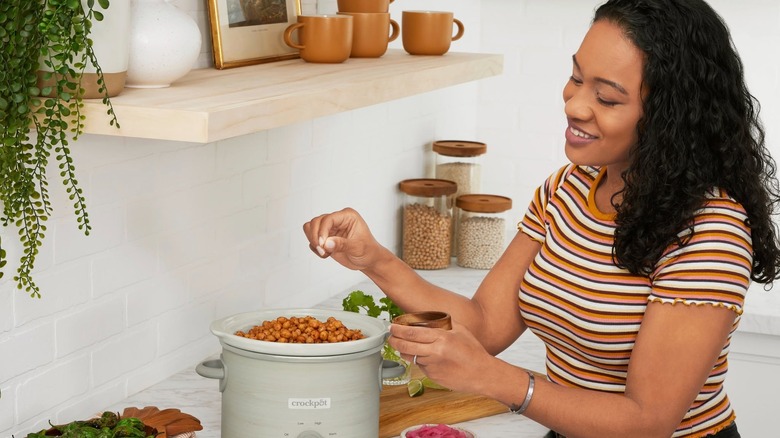
There's no doubt that learning how to properly season food is somewhat of an art form — and it takes practice. When done properly you can put forth a dish that tastes both delicious and harmonious, especially if there's a good balance of saltiness, savoriness, and acidity. But, unfortunately, many people underseason their food for fear of overpowering the dish or making it bitter or inedible. However, Stephanie O'Dea encourages those new to slow cooking to remember that the process takes a long time, allowsing meats and vegetables to break down and soak in the cooking liquid and added spices and seasonings.
"Liberally use the seasonings — [and] don't skimp," she says. "My best advice would be to follow a tried-and-true recipe first ... before experimenting on your own. Start with recipes that are somewhat 'foolproof' and lend themselves to crockpot cooking such as beans, pot roast, soups, stews, and ragouts." Also, don't be afraid to taste and adjust the seasonings before serving your dish, adds Sarah Olson. "Depending on how much meat and vegetables you use, you may need a little extra salt, pepper, or other seasonings beyond what the recipe originally calls for."
You can also use seasonings, herbs, and sauces to layer in umami flavors. Olson suggests, "My favorite way to build umami in slow cooker recipes is with Worcestershire sauce. It goes great in most meat recipes [like] beef, chicken, chili, and more, and is a secret ingredient that adds a rich background of flavor."
4. Add richness by using full fat dairy
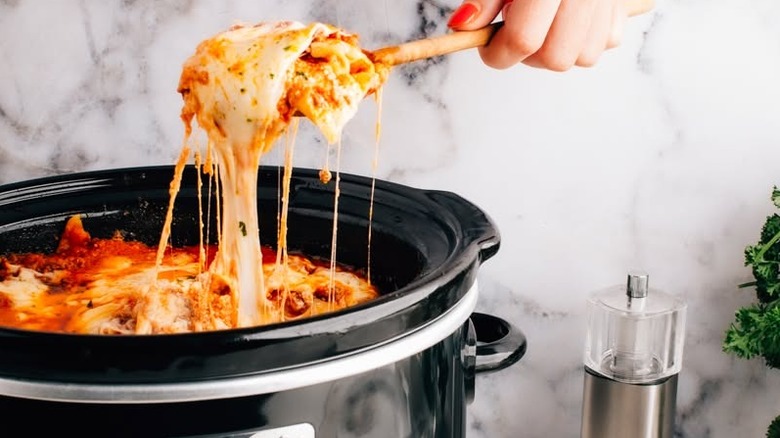
When your goal is to create depth of flavor, you need to add ingredients that will do the heavy lifting for you. Sometimes nothing says flavor or richness better than full fat dairy. For this reason, Sarah Olson suggests using full fat dairy such as cream cheese or heavy cream. There's a wonderful unctiousness that's imparted to a dish when it's cheesy and creamy. And it's a great way to add a flavor boost to your dish.
That said, use caution and a light hand when adding full fat dairy to a slow cooker. In fact, most experts suggest waiting until the final 15 to 30 minutes of cooking before adding dairy in — and then making sure to simply stir the dish until it's heated through. Keep in mind, too, that milk, cream, and sour cream can break down during long cook times. So, if you're adapting a recipe that calls for milk or dairy consider using condensed soups as a substitute or try adding your dairy at the end as Olson recommends.
5. Be careful not to undercook your food
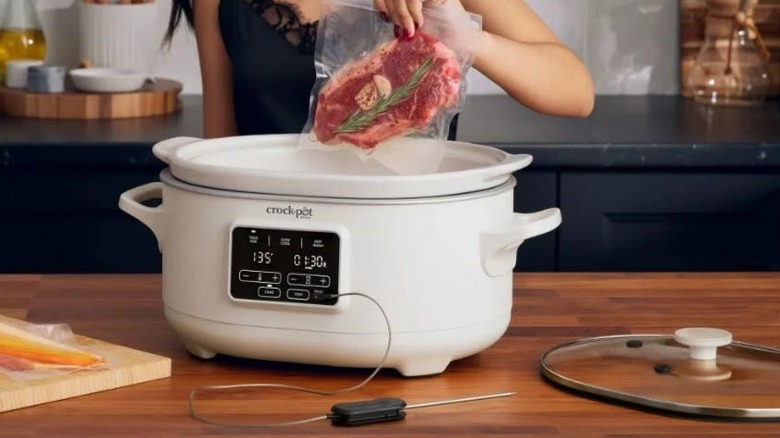
One of the biggest mistakes with slow cooking that both Stephanie O'Dea and Sarah Olson mention is the assumption that meat that comes out dry and tasteless is overcooked. But usually, it's the opposite. Your meat isn't overcooked, it's likely undercooked, Olson says.
"A pot roast can take up to nine hours on low to become tender," she says. "If you check it at seven hours, it's probably still going to be tough because it hasn't had enough time to become tender enough to shred. The same goes for most meats in the slow cooker. You don't need to cook them just until they reach a safe temperature; it's okay to let them cook longer so they become fork-tender."
Likewise, Stephanie O'Dea notes that if you have a tough piece of meat that still seems somewhat dry or tough after slow cooking, it's likely a sign of undercooking. If you're pressed for time and your meat is still undercooked, she suggested taking it out, cutting it into a few pieces, and plopping it back into the pot. Also, make sure that your slow cooker is well sealed so that the valuable moisture it creates isn't escaping and causing the meat to dry out, says O'Dea.
"If you do not see beaded up condensation on the lid, you can remedy this by placing down a sheet of foil, and then putting the lid back on," she says.
6. Consider what will work well in a slow cooker and skip the rest
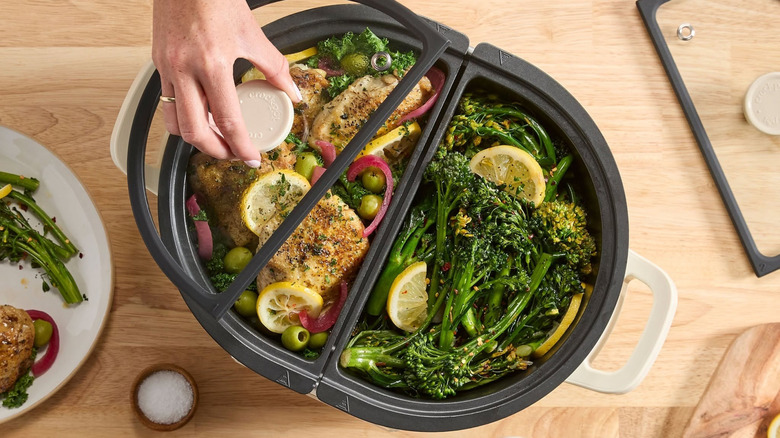
While it's typically a pretty versatile kitchen tool, there are some foods that you should never cook in a slow cooker. Though there are workarounds that allow you to still use your slow cooker for some of these foods like pasta and flaky fish, there are some foods that might be worth skipping, too.
"I have tried everything," says Stephanie O'Dea. "[But] during my one-year challenge [a year spent using the Crock Pot every day] I did have quite a few flops. Bacon-wrapped scallops were a disaster. Hard boiling eggs overnight was horrific."
Some other foods that may not fare so well or may need to be added at the last minute include delicate vegetables like asparagus or peas, which can turn to mush when cooked for long periods, and thin cuts of meat, which lack marbling and can become dry. Meanwhile, skin-on poultry would benefit from a different cooking method like roasting or frying, otherwise the skin will be rubbery rather than crispy. Instead, focus on ingredients that perform well in a slow cooker.
"Chuck roast is my favorite because the marbling helps prevent it from drying out," says Sarah Olson. "Chicken thighs are also moister than chicken breasts. I always recommend not adding pasta or rice directly to the slow cooker to cook. The slow cooker doesn't get hot enough fast enough to cook them properly, so they end up mushy."
7. Have a plan for what you're making
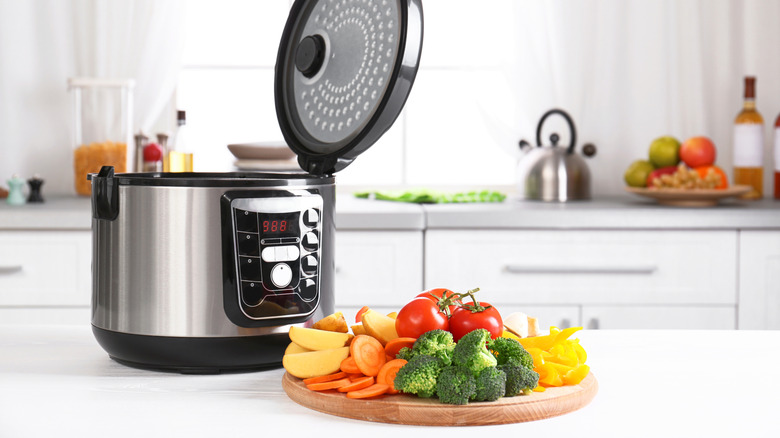
Too many times, people will just throw a bunch of ingredients into the crockpot and hope it produces something delicious. But this method almost never works according to Stephanie O'Dea. Until you get good at putting together ingredients and flavors, it's important to follow a recipe — or at least have a logical plan for what you're making.
"The biggest mistake is not following a recipe when you are learning the particular nuances of your own machine, and not understanding flavor profiles," says O'Dea. "Once you know how to cook a favorite meal, sauce, or stew on the stovetop or in the oven, it's very easy to translate into the slow cooker. What you can't do is toss a bunch of things into the pot that don't make sense together and hope it will turn out. It won't."
On the flip side, O'Dea notes that with slow cooking you have much more time to correct your mistakes. For instance, taste your dish to see if the seasoning is right or if it's missing something, like salt or a little acid. Then, she says tweak it so it matches your taste preferences.
8. Learn how to thicken your sauces
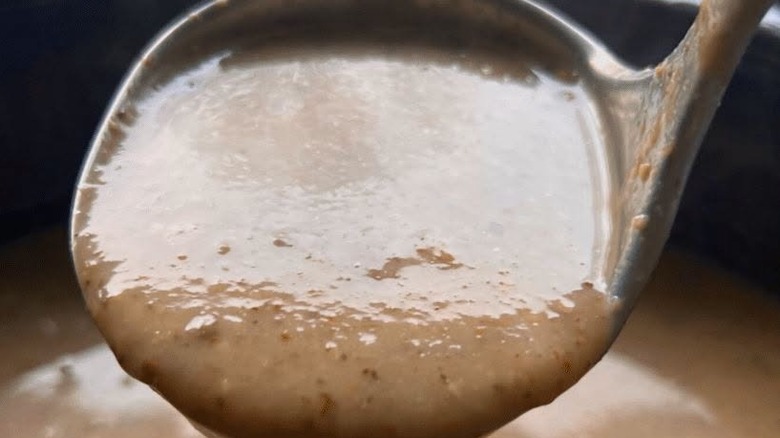
If you're someone who inevitably wonders why their sauce or gravy is so thin when their dish has finished cooking, then you likely need to learn how to thicken your sauce or add less liquid at the beginning. After all, you have to allow for the fact that the moisture in the slow cooker, combined with the juices from what you're cooking, are going to create more liquid than you might imagine and potentially thin out your sauce.
"You can also create a thick, flavorful sauce by whisking together 2 tablespoons of cornstarch and 2 tablespoons of water and stirring it into the final dish," suggests Sarah Olson. Other options for creating a sauce include adding a block of cream cheese or mixing together about ½ cup heavy cream with 2 tablespoons of flour, she says.
Stephanie O'Dea agrees that adding a cornstarch slurry near the end of the cooking time can help you create the sauce you're looking for. "Sometimes, the easiest way to thicken a broth is to merely take the lid off during the last hour of cooking to allow some of the moisture to dissipate. Again, I'd suggest following a tried-and-true recipe before you begin experimenting."
9. Add an element of texture to your meals
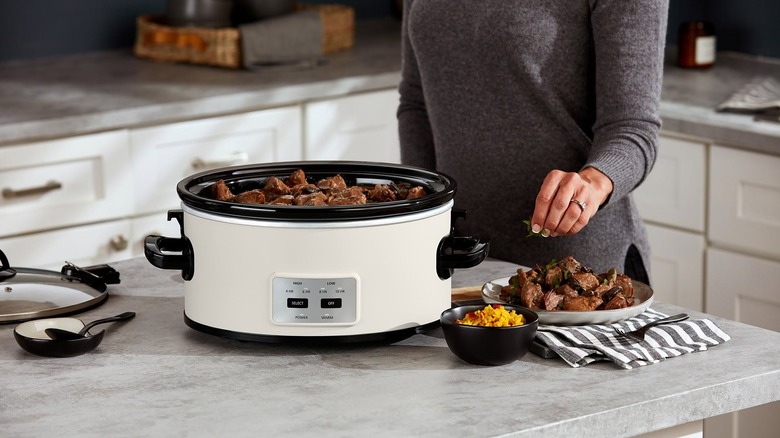
Never underestimate the power of adding texture to your meals before serving them. In fact, food science researchers have found that texture — like crunchiness or chewiness — influences how your brain processes food and helps create a more satisfying and flavorful experience.
"When I am serving a slow cooker meal, there needs to be an element of texture added," says Sarah Olson. "Be sure to toast your buns or grill your tortillas and add fresh or crunchy toppings."
Slow cooker recipes can be mushy, she says. But, you can fix that one-dimensional texture with how you serve them. To make a dish richer and less boring, Olson suggested adding some cheese at the end, topping it with flavorful sauce like BBQ sauce or ranch, or including a fresh garnish to make the dish stand out instead of just serving it straight from the slow cooker.
As for browning your meat before putting it in the slow cooker in order to add texture, both Olson and O'Dea usually skip this step. "I hate cooking before I cook," says O'Dea. While browning your meats ahead of time will provide a bit of color and texture to the meal, she says it's not necessary. And, why dirty more dishes than what's absolutely necessary for a normal, weeknight meal?
10. Have fun and experiment
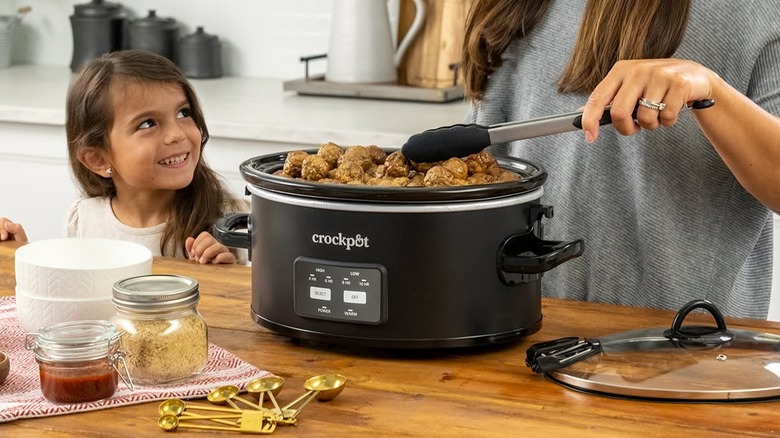
Part of the joy of cooking is experimenting and creating something new — and a slow cooker lends itself well to that goal. In fact, there are endless ways it can be leveraged for meals and entertainment. Use it to create hearty soups and chilis in the fall or savory dips for your Super Bowl party. You can also put it to good use on Taco Tuesday to prep your carnitas or shredded chicken; and don't forget to lean on it during the holidays when your oven is already earmarked for countless side dishes and your roasted turkey or delicious prime rib.
But no matter what you do or how you decide to utilize it in your kitchen, have fun with your slow cooker, get creative, and experiment. You might be surprised by what you can create when you give yourself the freedom to have fun and play around a bit, says Stephanie O'Dea.
"Look up your favorite takeout recipes and then find the corresponding recipe for the crockpot on websites like ayearofslowcooking.com," she says. "You will save a ton of time, money, and added calories when you learn to make restaurant-quality meals at home. I look at the crockpot [or] slow cooker as an Easy Bake Oven for grown-ups."