

What's The Difference Between Irish Whiskey And Scotch?

The world of whiskey is a vast one, from bourbons of the American South to refined Japanese whisky popular in Asian bars. However, there are two styles that can often overlap in the minds of some novice whiskey drinkers: Irish whiskey and Scotch whisky. Despite their similarities, these varieties also have critical differences those seeking to broaden their knowledge of spirits should understand. The primary distinctions between Irish whiskey and Scotch are their origins, the number of times they're distilled, and certain aspects of the ingredients and aging barrels that are used.
Still, to truly grasp what sets Irish whiskey apart from Scotch whisky, it's critical to recognize the many similarities the two share. All whiskeys, including Irish and Scotch varieties, are distilled spirits made from a fermented grain mash. They're aged in wooden barrels to impart additional flavors while simultaneously letting present ones develop and mature. This aging period must last at least three years for both styles. Irish whiskey and Scotch whisky have long, rich histories dating back centuries, making them prized parts of their respective country's cultures. They're also both required to be distilled to at least 40% ABV by industry standards and law. Finally, they're known for their purity, with the only additive allowed being caramel coloring.
However, beyond these broad similarities, there are important differences too, some of which are apparent from the first sniff or sip. Others require a more careful look at the ingredients and processes behind them.
From the Emerald Isle, a lighter, more flexible whiskey
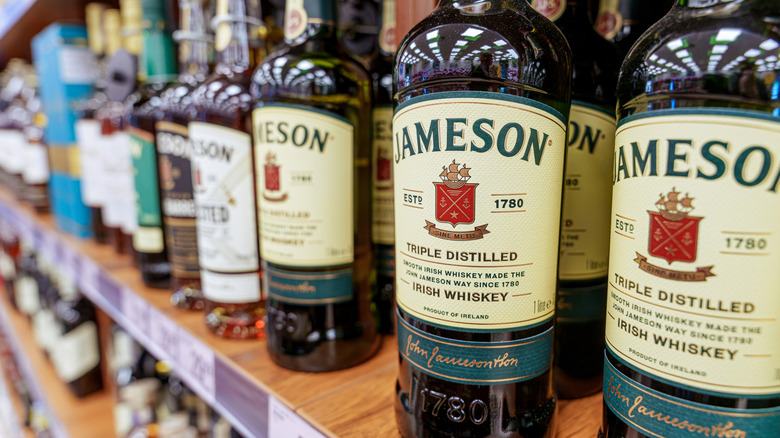
The first and most obvious distinguishing factor about Irish whiskey is it must be distilled in Ireland. Most commonly, Irish whiskeys are also triple-distilled, a process that removes heavier flavor and aroma notes and heightens the presence of lighter, fruitier ones. Any combination of cereal grains can be used to produce Irish whiskey, unlike other types that have more specific required grain bills. This makes the smoothness of triple-distilling the most defining characteristic of Irish whiskey, rather than a specific ingredient or flavor profile, setting it apart from Scotch.
Generally speaking, Irish whiskey is seen as the more flexible of these two styles, with fewer hard requirements. For example, there are no defined rules about the types of barrels it must be aged in, resulting in companies using everything from fresh oak barrels to used wine and spirit casks and exotic wood.
Jameson is, by far, the world's best-known and highest-selling Irish whiskey. However, there is plenty of Irish whiskey to try that isn't Jameson; other notable distilleries and brands producing the spirit include Green Spot, Teeling, Bushmills, Midleton, Redbreast, and Dunville's.
Tighter rules and bolder flavors for unique Scotch whisky
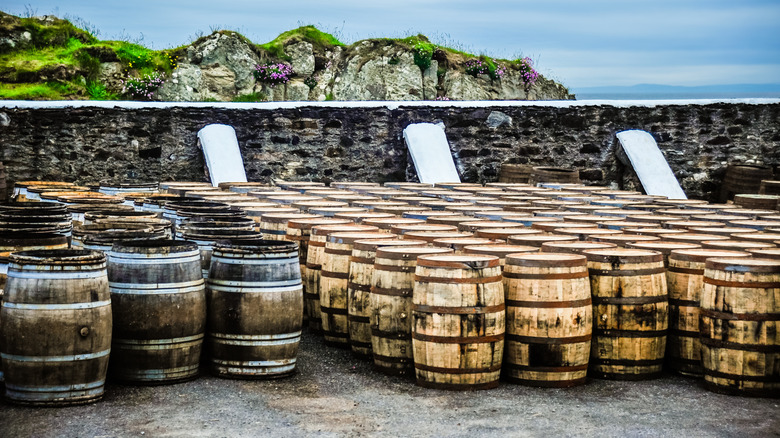
In many ways, Scotch presents a stricter set of rules and requirements than Irish whiskey. Scotch whisky must be produced and aged in Scotland. Unlike the more varied ingredients of Irish whiskey, single malt Scotch whisky is solely made from malted barley, and all varieties must contain the grain. It's distilled just two times, with single malts required to use a traditional copper pot still. Afterward, the barrels used to age it must be made of oak. The result is a fuller, heavier flavor. Traditionally, some regions of Scotland have also incorporated peat into the process, burning the plant material to smoke the barley and imbue the rich, immediately recognizable flavor many drinkers associate with Scotch.
Johnnie Walker, a familiar name among drinkers, is the world's largest producer of Scotch by a roughly two-to-one margin over competitor Ballantine's. However, Scotland exports a truly ridiculous amount of Scotch overall, totaling nearly $7.15 billion in 2025.
There are many different types of whiskey, each with qualities that make them unique. And it's worth noting that, outside of a few factors and their places of origin, there can be quite a bit of overlap between Irish whiskey and Scotch whisky. However, those passionate about their spirits should keep these distinctions in mind to develop a more sophisticated understanding of the alcohol sitting on your home bar.