

5 Disadvantages Of Using An Air Fryer
We may receive a commission on purchases made from links.
Air fryers have practically become a kitchen necessity. A CNET survey in early 2026 found that nearly three-quarters of American adults either own an air fryer or planned to buy one within a year. Early versions of the appliance date back to the 1940s, when the first air fryer was invented, but the device has seen immense popularity since its launch in 2010. Air fryers promise crispy food without fire or oil, which seems to be the answer to many home cooks' needs, but have they actually delivered on that promise in the years since their mainstream debut? And if not, what are the drawbacks?
Mostly, they have delivered. Air fryers are essentially high-powered convection ovens. They work quickly, with their high-speed fans circulating hot air around the fryer basket. Also, air fryers use less energy than toaster ovens. The countertop wonder's popularity, though, does come with some downsides — though most either only apply to some models or can be overcome by adjusting cooking techniques. The biggest disadvantages to cooking with an air fryer include potential contamination from plastic or PFAS, burn risk, an increase in cholesterol in certain types of food, low cooking capacity, and the possibility of drying out food. To increase your air fryer cooking success rate, here's what you need to know before firing up the preheat cycle.
Plastic or PFAS could leach into the food
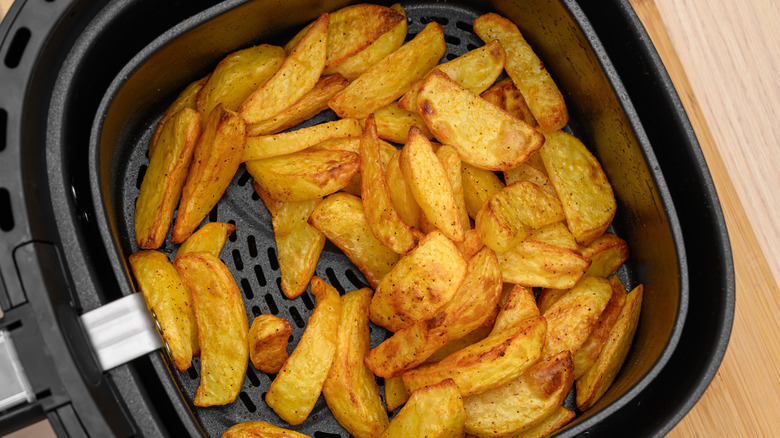
The air fryer baskets you put the food in are most often made from metal with a nonstick surface. Like nonstick pans, the coating is either Teflon or another material that may contain PFAS, or forever chemicals. When heated below 500 degrees Fahrenheit, there are relatively low health risks involved, but higher temperatures in an air fryer might cause the basket's chemicals to leach into the food.
Plastic air fryer parts may pose similar risks. Even if the temperature isn't high enough to melt the plastic, it's possible that toxins within it could contaminate the food. Most air fryers are manufactured with a safeguard against this: preventing the interior from getting hot enough to leach microplastics into the food, but keep an eye out for damage that causes pieces of nonstick coating or plastic to make their way into your meal.
If you'd prefer to avoid this risk entirely, you can do that too. Many air fryers are made with baskets that aren't plastic or coated with PFAS materials. Glass air fryers have become more popular, but some still have nonstick parts, like racks for the food. So far, there's no evidence that cooking in a glass air fryer presents any risk of chemicals leaching into food. They're relatively new, so less research has been conducted, but there isn't an immediate reason to be concerned.
Some parts come with a burn risk
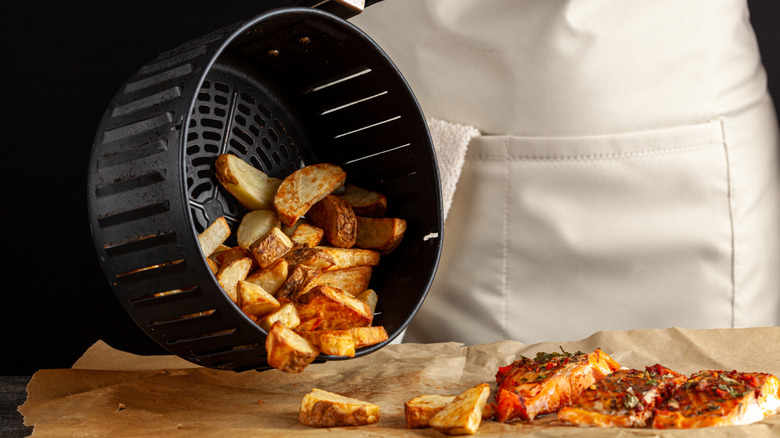
Generally, air fryers are not dangerous when used properly. The greatest risk of injury is a burn from a very hot component such as the fryer basket and the vent fan (usually at the back of the device), which get the hottest. These parts can reach upwards of 500 degrees Fahrenheit and tend to retain their heat, so avoid touching them even after you've finished cooking.
If you use any other dishes in the air fryer, such as a tempered glass bowl or a baking dish (types of glass that can go in an air fryer), those will also come out very hot. The cooking area is small enough that they'll be closer to the fryer's heat source than they would be in an oven — in fact, consider air frying closer to using the broiler in a regular oven. Again, with proper precautions, there's minimal danger here, but avoid touching very hot surfaces once cooking is done.
The exterior of the basket becomes hot during cooking, too, and can take as much as an hour to cool down. To keep your fingers away from the hottest parts, use the handles provided and remove food from the basket with utensils rather than your hands. In other words, treat the air fryer more like an oven than a microwave — you could touch a microwave tray that just finished cooking with minimal chance of injury, but you wouldn't do the same with an oven rack.
Air frying fish might increase disease risk
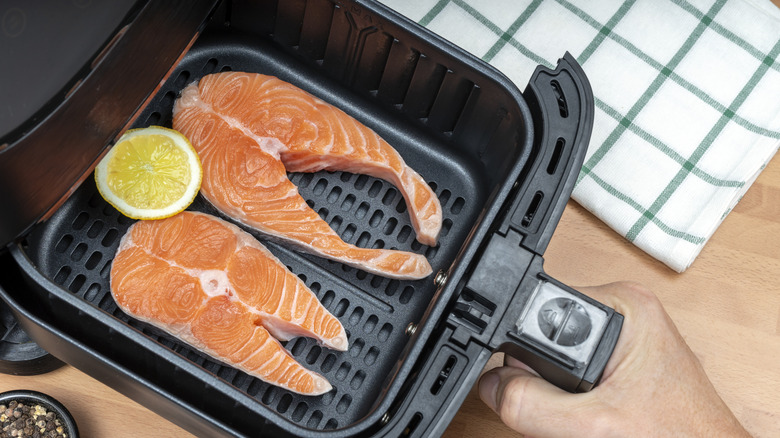
Generally, air fryers are much healthier than standard oil-based frying methods, but there's one very specific, surprising issue with fish in air fryers. A 2017 study published in the Journal of Food Science (via the National Institutes of Health) found that air fryers reduce the presence of healthy polyunsaturated fatty acids in fish while significantly increasing their content of cholesterol oxidation products (COPs), which have been linked to chronic heart disease and other medical conditions.
These COPs that form in air-fried fish are the result of cooking it at high temperatures. Similar oxidation happens with the cholesterol in meat for a variety of reasons, including exposure to light and air. Cholesterol oxidizes across all cooking methods — but it's particularly noticeable in fish due to its polyunsaturated fat content being higher than other types of animal protein. Does this mean fish is one of the ingredients you should never put in the air fryer?
The good news is fish can still be cooked in the air fryer without notable health impacts. The 2017 study found that you can starkly reduce the amount of cholesterol oxidation products by adding herbs to the air fryer basket. That study used parsley and chives, which are natural antioxidants and will not only reduce COPs but also impart flavor to your fish fillet.
It takes a lot of counter space for small cooking capacity
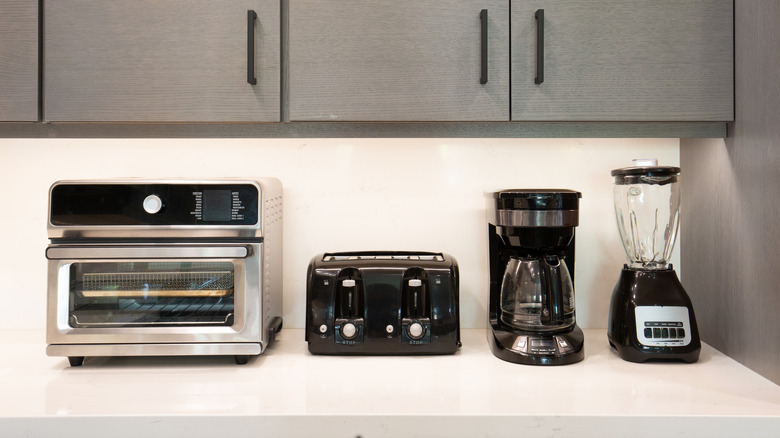
The small cooking area of an air fryer is one of its key benefits, yet it can be a drawback at the same time. The appliance can heat up in just a few minutes and cooks food quickly, too, all while getting a meal ready in less time than a regular oven and using much less electricity. That small size also presents limitations on how you use it.
Air fryers might be ideal for someone living alone and looking to make one serving at a time. For a large family, it's unlikely that you'll be able to fit enough servings in the fryer basket to cook for everyone at once. Another inconvenience that might be a total dealbreaker for certain living arrangements is that it takes up precious countertop space, highlighting the fact that everything an air fryer does can be done with another household appliance.
You can find some models that are both air fryers and toaster ovens. These larger machines also take up their share of counter space, but make up for it by combining two devices in one (and tend to have larger cooking capacities). That said, many air fryer-toaster ovens aren't as effective as standalone versions of either appliance, so it's not a perfect solution to the issue. Small countertop ovens and convection ovens can offer a similar approach, though they'll take longer to heat and cook than an air fryer.
It'll dry out some foods too quickly
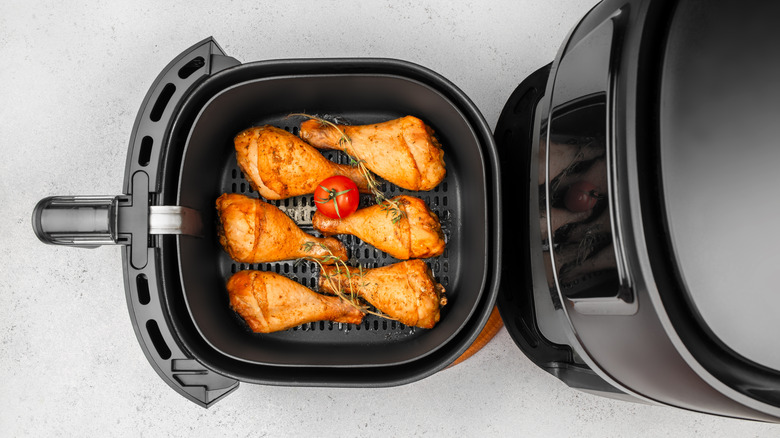
An electric oven conducts heat by generating atomic friction between an electrical current and high-resistance metal wire. That heating element is turned off and on automatically to maintain the oven's preset temperature. An air fryer works a little differently. A fan pushes hot air into the cooking area, and the continuous movement makes for even cooking and crispy edges, but when the hot air comes into contact with lean foods, they may dry out quickly.
Boneless, low-fat meats like pork chops, pork tenderloin, or chicken breast are not good candidates for air frying. The hot air causes moisture in the meat to evaporate rapidly, leaving it dry or rubbery. The same isn't true for breaded cuts, though, as the breading adds a layer of insulation and will crisp up while the interior stays moist.
You can avoid the risk of drying out air-fried food by adding fat to items that don't naturally contain much of it (though that somewhat negates the lower-fat benefit of using the air fryer in the first place). Alternatively, you can brine lean foods like chicken in a saltwater solution for an hour or two before air frying to keep the interior moist, just remember not to put water or other liquids directly in the air fryer.