

Classic American Beers, Ranked Worst To Best
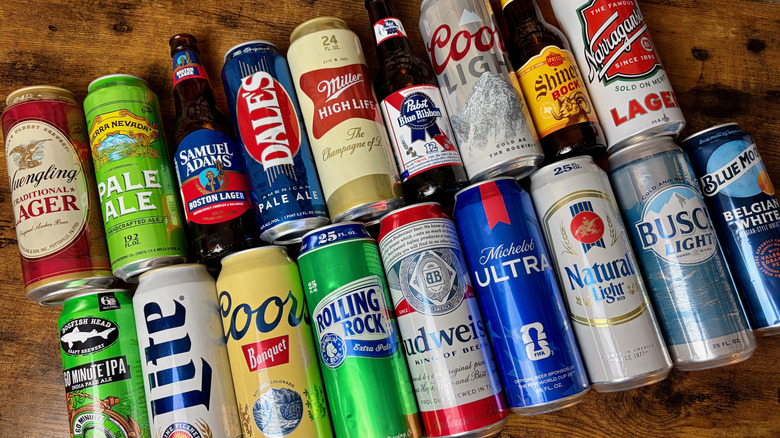
It's an incredible time to be a beer-lover in the U.S., with countless imports, mainstream beer brands, craft breweries, and more styles of beer than one can even count. But we wanted to take a look specifically at classic American beers — the ones that have stood the test of time, and are still going strong today. From the very oldest American brewery to the more recent pioneers in American beer-making, we narrowed it down to 18 brews that have helped shape the landscape of classic American beer.
You'll likely recognize most, if not all of the beers on this list. But when was the last time you actually tasted them? Most are readily available wherever you buy beer, and some are worth seeking out, even if they aren't stocked at your usual place. We've done the hard work of tasting them all, so you can choose which ones are worth revisiting. Here's how classic American beers rank, from worst to best.
18. Rolling Rock
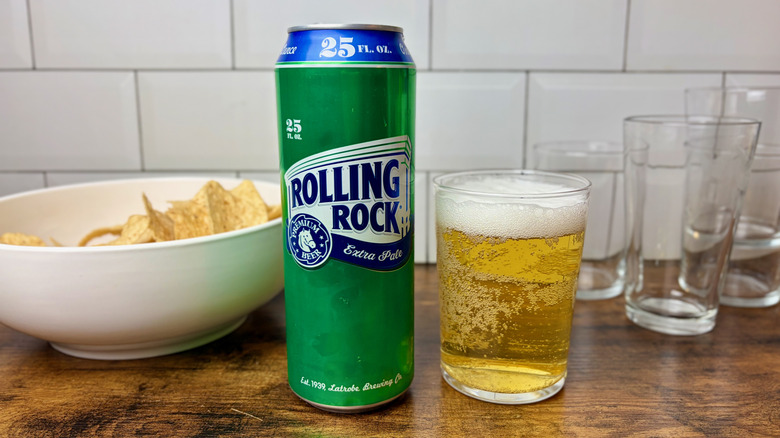
Depending on where in the country you're located, Rolling Rock may not be one of the easiest beers on this list to find. Created in 1939 by the Latrobe Brewery in Latrobe, Pennsylvania (about 40 miles east of Pittsburgh), the Extra Pale Ale is a staple at Steelers tailgates and beer distributors across the state, and the surrounding Northeast states. The company was first sold to InBev Labatt U.S.A. in 1989, before being acquired by Anheuser-Busch in 2006.
Maybe it was the green color of the can playing tricks on me, but the taste of the Extra Pale Ale tasted a touch grassy, and a little sweeter than some of the other beers similar to it. Among our tasters, Rolling Rock ranked either last or next-to-last, alternating with Busch Light. A 12-ounce glass of Rolling Rock has 130 calories, 9.8 grams of carbohydrates, and 1.3 grams of protein, and alcohol by volume (ABV) of 4.4%.
17. Busch Light
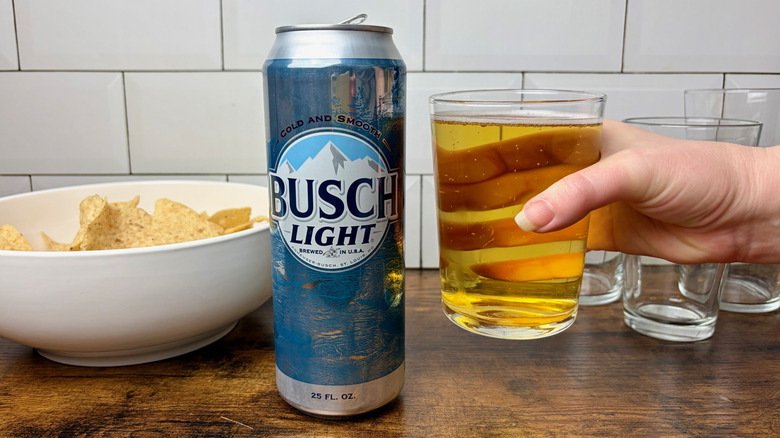
While opinions were mixed on whether Busch Light or Rolling Rock should be at the bottom of this particular ranking, we all agreed on one thing: there just isn't anything going on with this beer. Despite its yellow lager color, its flavor is so mild that it's practically beer-flavored carbonated water. The descriptor on the can claims that the beer is "cold and smooth" — which assumes you've adequately chilled your beer — and true to its word, it's so smooth that even beer haters will probably be fine with it.
With that said, Busch Light is the most popular beer in the Busch lineup. As of 2025, it's the second fastest-growing beer in the U.S., so it's clear that opinions are very subjective on this one. A 12-ounce can of Busch Light has 95 calories, 3.2 grams of carbohydrates, 0.7 grams of protein, and has an ABV of 4.1%.
16. Michelob ULTRA
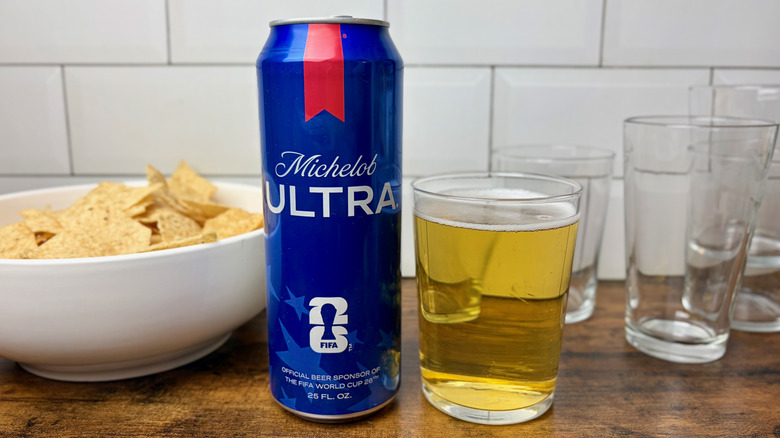
Even though Michelob ULTRA has only been around for 24 years (a drop in the bucket for some classic American breweries), it's managed to quickly climb the ranks to become the number one selling beer in the U.S. in 2025. Marketed as a "Superior Light Beer" targeting those with active lifestyles as a more health-conscious option, it's a fixture at nearly every major sporting event, including the 2026 FIFA World Cup, where it was the official beer sponsor.
So light, it tastes mostly like the aluminum can that it's packaged in, it's not hard to believe that Michelob ULTRA might mostly just be carbonated water with a few drops of beer for flavoring. On the upside, it's easy to imagine that you're actually hydrating yourself while drinking this particular light beer. A 12-ounce serving has 95 calories and a low 2.6 grams of carbohydrates, with an ABV of 4.2%.
15. Budweiser
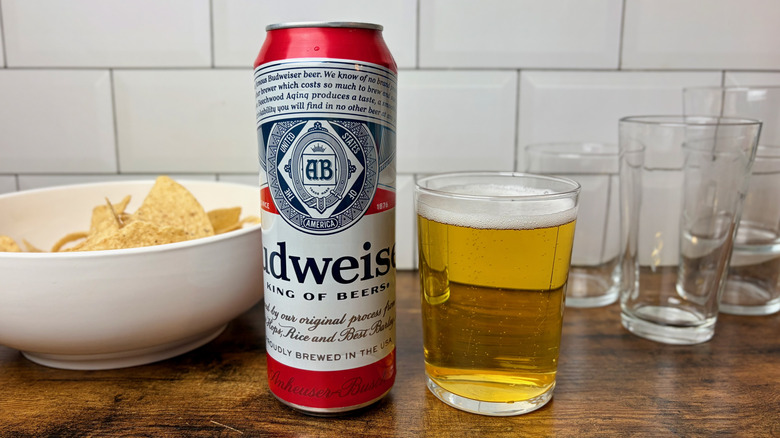
Budweiser might be one of the most well-known of the classic American beers, even if it's not currently the most popular or best-selling beer on this list. Given that Budweiser began production in St. Louis in 1876, the year of centennial anniversary of the U.S., it's been part of the country's zeitgeist for over 150 years. Described as a medium-bodied, crisp American-style lager, it's the lawful neutral of classic American beers.
The King of Beers is not very complex, a bit on the sweet side and not too bitter, and with just enough flavor and color to make you feel like you're actually drinking something. It's easy enough to enjoy, even if most of what you're tasting is American nostalgia. A 12-ounce bottle of Budweiser has 145 calories, 10.6 grams of carbohydrates, 1.3 grams of protein, and an ABV of 5%.
14. Coors Banquet
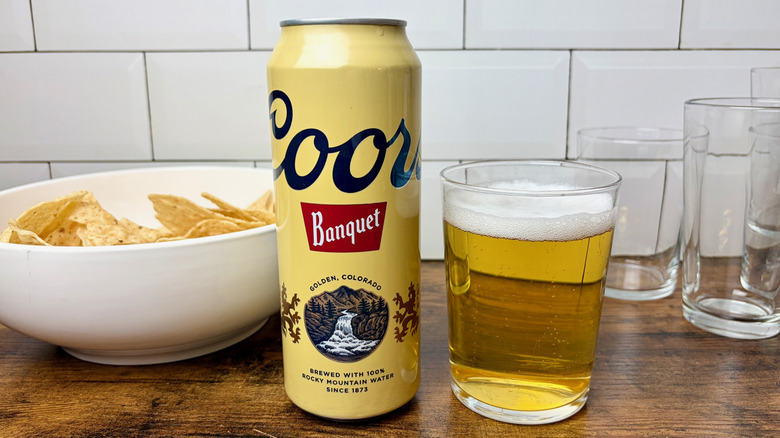
Coors Banquet is the first classic American beer in this ranking that isn't owned by Anheuser-Busch InBev — which is actually headquartered in Leuven, Belgium — but instead by Molson Coors Beverage Company, which is a North American company. To this day, Coors Banquet beer is still produced in Golden, Colorado, where the brewery sits on the banks of the Clear Creek, from which it sources its "100% Rocky Mountain Water."
Now, I can't really tell that it's made with fresh Rocky Mountain water, but the flavor of Coors Banquet is definitely a notch up from the sea of lighter beers on this list so far, and when enjoyed ice cold, it's not hard to imagine the cool rivers of the Rocky Mountains, even if it's just good marketing. One 12-ounce can of Coors Banquet has 147 calories, 11.7 grams of carbohydrates, 1 gram of protein and an ABV of 5%.
13. Coors Light
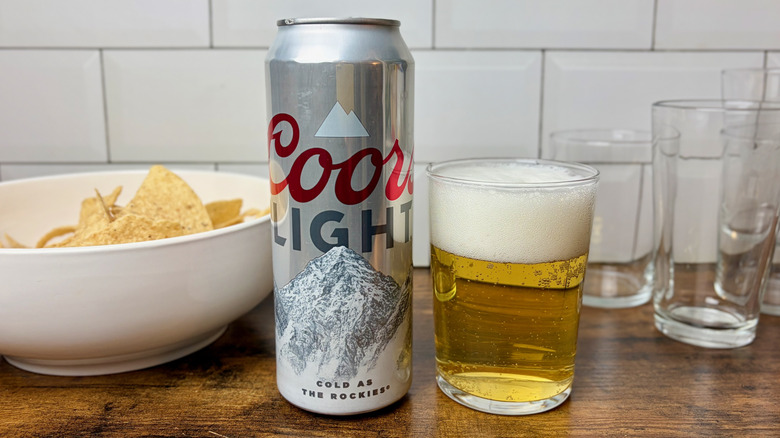
When it comes to the Coors family of beers, Banquet might currently be seeing renewed growth and popularity, but Coors Light is still the most popular and widely available of the two beers. Our tasters were divided on which of the two was more pleasing to drink. While the slightly stronger malty flavor to the Coors Banquet is my personal preference, Coors Light is undoubtedly a crisper, lighter version that only sacrifices a fraction of the flavor in the name of fewer calories. As one reviewer wrote on HomebrewTalk.com, "Banquet is not bad but Coors Light is like making love in a canoe."
A 12-ounce can of Coors Light has a 4.2% ABV, with 102 calories, 5 grams of carbohydrates, and less than a gram of protein. It's recommended that Coors Light should be chilled to near-freezing before serving, or when the mountains on the front of the can famously turn blue.
12. Natural Light
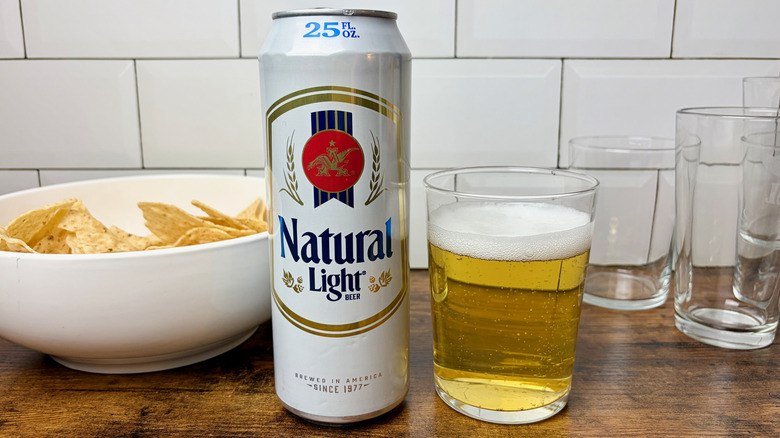
This will likely be one of the most controversial picks in this lineup, and I'll admit that I'm just as surprised by it as you might be. Whether you call it "Natty Light" or "Shore Champagne" if you're from Maryland, it's widely known that Natural Light doesn't have the best reputation among classic American-style light lagers. Having not had a Natural Light since college (20-some odd years ago) I was immediately surprised by the smooth, light, malty flavor that holds its own among more popular light beers. Created in 1977 as Anheuser-Busch's first reduced-calorie light beer, it's managed to hold on for almost 50 years, regardless of what people have said about it over the years.
Like Coors Light, Natural Light has a 4.2% ABV, along with 95 calories, 3.5 grams of carbohydrates, and 0.7 grams of protein. If it's been a while since you've given Natural Light a try, consider revisiting it and see for yourself.
11. Miller Lite
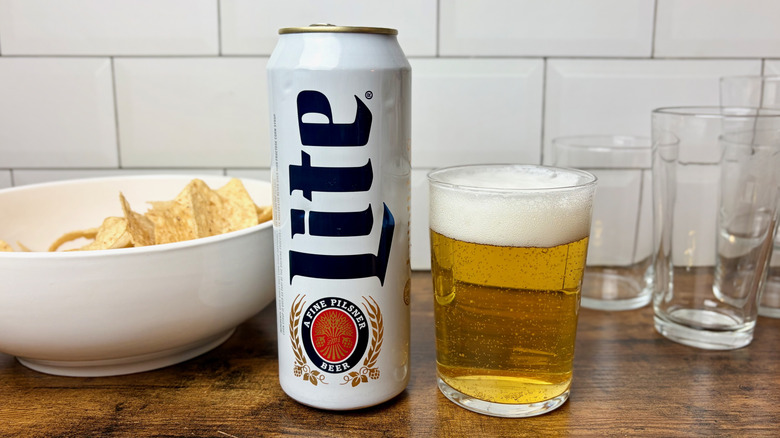
Hitting the market in 1975, two years before Natural Light, and Bud Light (which wasn't introduced until 1982), Miller Lite is the self-proclaimed "Original Light Beer." The Miller Brewing Company was founded in 1855 in Milwaukee, Wisconsin, so its first foray into light beer came with more than 120 years of brewing experience to perfect it. And perhaps, that's why Miller Lite actually tastes like beer, instead of a watered-down version of the original. The pilsner-style beer has a delicate balance of malt and hops that are generally more well-rounded than previous light beers.
While perhaps not as popular as Michelob Ultra, Bud and Coors Light, Miller Light is just as satisfying, without needing to be served at an icy cold temperature to enjoy. A 12-ounce can of Miller Lite has 96 calories, 3.2 grams of carbohydrates, less than one gram of protein, and an ABV of 4.2%.
10. Narragansett Lager
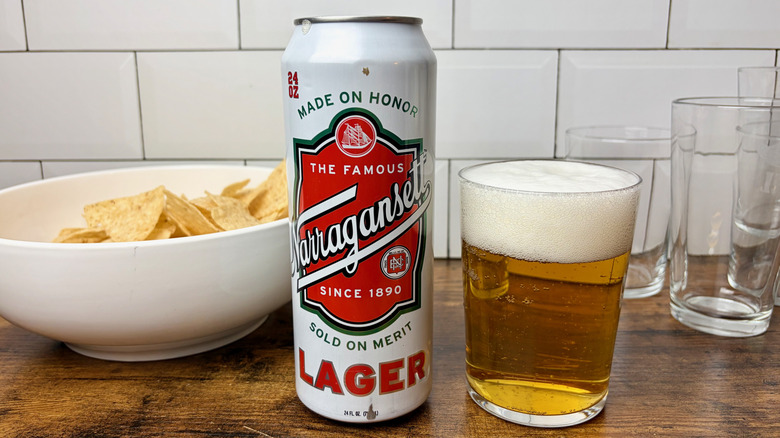
Narragansett Lager is one of those quintessential New England beers, hailing from Providence, Rhode Island where the Narragansett Brewing Company was founded by German immigrants in 1890. What you might not know, is that the brand was sold in 1975, and in the early 1980s, went under entirely. Luckily, Narragansett was revived in 2005 by a group of local investors, and it remains independently owned since its revival.
You'll notice that Narragansett Lager has a more noticeable hoppiness to it than most of the beers on this list so far. Although, at 12 IBUs (International Bitterness Units), it's still considered very mild—especially when compared to an American India Pale Ale with 55-70 IBUs. The color of a Narragansett Lager is a little richer than most of the light beers we've covered so far, and has an ABV of 5%.
9. Miller High Life
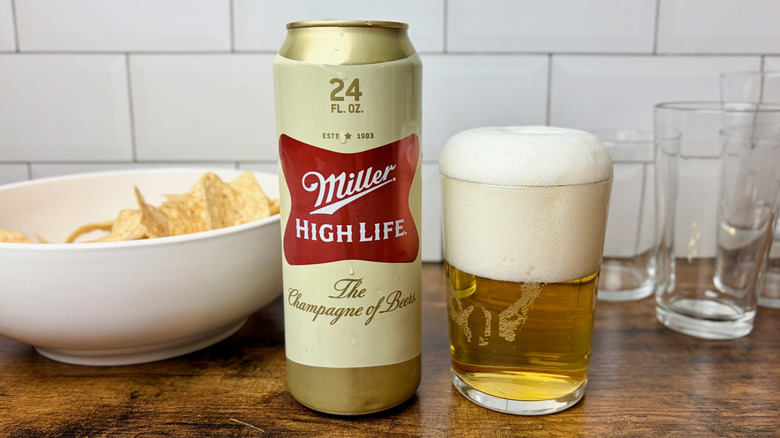
Call it nostalgia, but the taste of Miller High Life holds a special place in American beer-making history. First created in 1903, specifically for bottling (as opposed to being served in a keg at a bar), "The Champagne of Bottled Beer" was presented in clear glass bottles. To avoid spoiled beer, unique light-stable Galena hops were developed specifically for use in Miller High Life—and are now also used in the brewing of Miller Lite.
Like Champagne, Miller High Life is exceptionally bubbly, with a foamy head that has a surprising amount of stability and volume. It's crisp and light, with a subtle amount of sweetness and gentle hoppiness. If you were to compare High Life with Budweiser and Coors Banquet beer, there's a good chance you'd be able to pick it out based on looks alone. Miller High Life has a 4.6% ABV and 141 calories per 12-ounce serving.
8. Blue Moon Belgian White
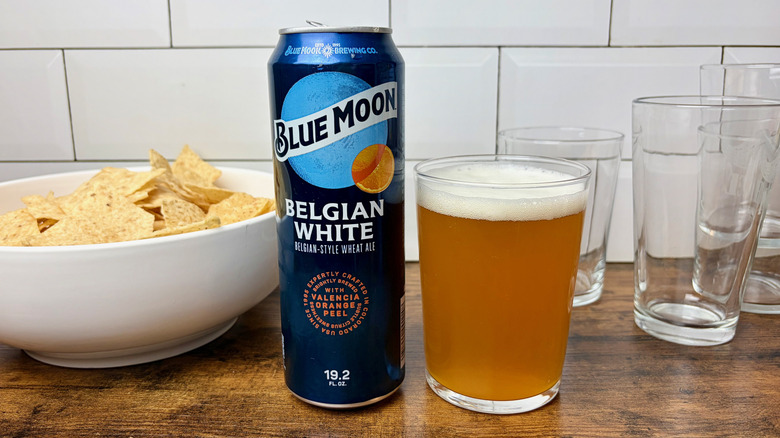
As far as classic American Beers go, Blue Moon is a relative newcomer to this lineup. Given that it's a Belgian White, instead of the lagers and pilsners we've covered, you might not realize just how American it actually is. Originally created by the Sandlot Brewery, located inside of Coor's Field baseball stadium in Denver in 1995, the Belgian-style white beer is brewed with wheat and Valencia orange peels, and tastes notably sweeter, with much less overall bitterness than you'd expect from a traditional Belgian white — specifically to appeal to American drinkers.
While some consider it a craft beer, others note that Blue Moon has always been owned and produced by Coors Brewing Company (now Molson Coors), even with its more humble baseball stadium basement origins. A 12-ounce bottle of Blue Moon has 168 calories, 14.1 grams of carbohydrates, and 1.9 grams of protein, with a 5.4% ABV.
7. Pabst Blue Ribbon
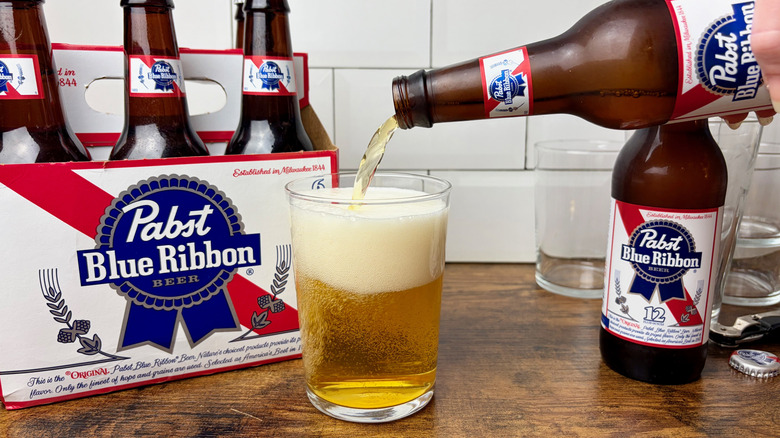
So many classic American beers have a similar origin story, with German immigrants arriving in the Midwest, and opening a brewery, and Pabst Brewing Company is no exception to that. Pabst claims that it was established in Milwaukee in 1844 — although that actually refers to when the original Best and Company family brewery was established, which would later split into the two companies we know today as Pabst and Miller Brewing Companies.
Regardless of when Pabst actually originated, there's no arguing that the light and crisp Pabst Blue Ribbon is still an incredibly popular classic American beer. It might look like a contemporary light beer, but it's got more body and more flavor, without feeling as filling as a heavier beer. A 12-ounce serving of Pabst Blue Ribbon has 144 calories, and a 4.74% ABV.
6. Dale's Pale Ale
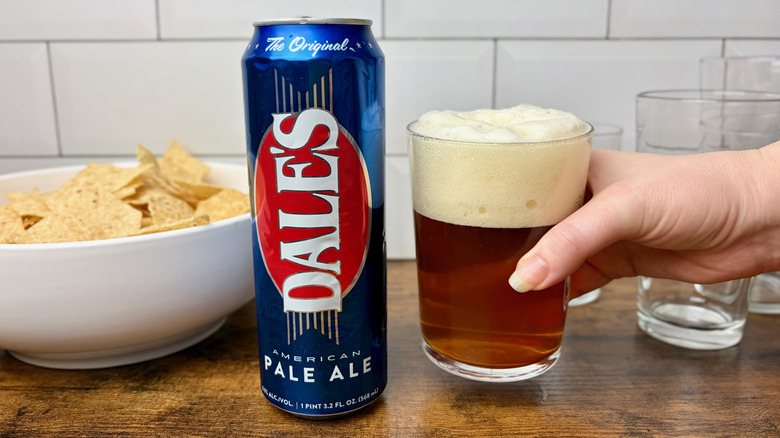
What started as Oskar Blues bar in Lyons, Colorado quickly developed into a craft brewery when its founder and avid home-brewer, Dale Katechis, decided to create a canned (not bottled) microbrew in 2002. The aptly named Dale's Pale Ale could brave the wilds of Colorado, even where glass bottles weren't allowed.
While it might be categorized as a pale ale, Dale's is noticeably darker, hoppier, and a touch "danker" than many of the lighter pale ales on the market. With that said, it's not challengingly bitter, and has a touch of citrusy sweetness to round out the beer's complexity.
Interestingly, Oskar Blues Brewery is owned by the Monster Beverage Company as of 2022 — yes, the energy drink brand — although it is still brewed at its original location in Longmont, Colorado and second brewing location in Brevard, North Carolina. A 12-ounce can has an ABV of 6.5%.
5. Dogfish Head 60 Minute IPA
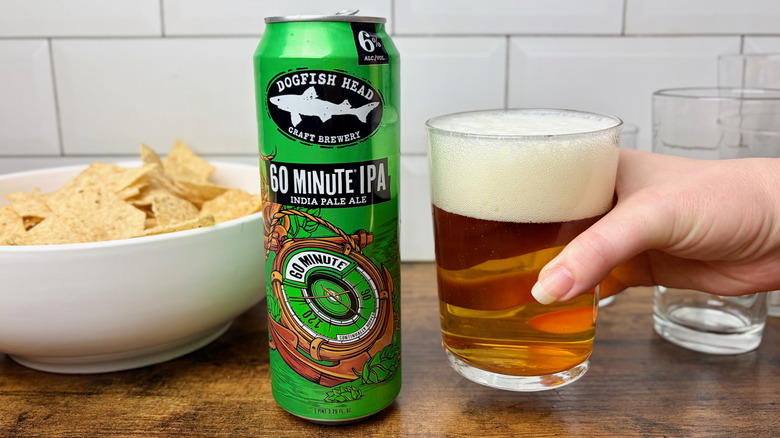
Dogfish Head Brewings & Eats opened in Delaware in 1995, serving up housemade beer and wood-grilled foods to diners. The beer-making portion of the business, predictably, took on a life of its own, especially with the creation of Dogfish Head's 90 Minute IPA in 2001, which first employed the technique of adding hops at continuous intervals during the 90-minute brewing process. The 60 Minute IPA followed in 2003, using the same technique, and quickly became Dogfish Head's best-selling beer.
One taste, and it's no surprise why this IPA launched a thousand other American IPAs. It's exceptionally hoppy and bitter, with an IBU of 60, but still rich in malty sweetness for balance, and light enough in texture to enjoy several of, in one sitting. Dogfish Head 60 Minute IPA has an ABV of 6% and is also available in 90 Minute, 75 Minute, 30 Minute Light, and occasionally 120 Minute varieties.
4. Samuel Adams Boston Lager
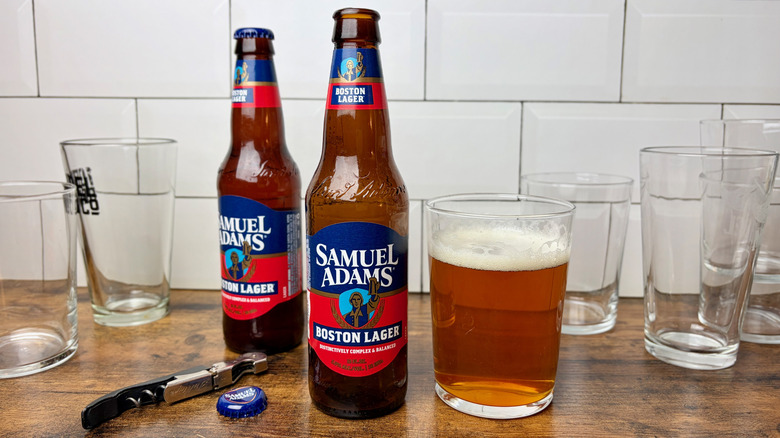
Given how iconic Samuel Adams Boston Lager is, I was surprised to learn that it has only been around since 1984. Using his great-great-grandfather's lager recipe, Jim Koch founded the Boston Beer Company and developed Samuel Adams Boston Lager in his home kitchen. By 1985, it was named the Best Beer in America at the Great American Beer Festival, and everything else is history.
It's likely that you know what a Boston Lager tastes like, even if you're a casual beer drinker. But if not, the deep amber-colored beer tastes more toasted and warmly yeasty than many of the other beers on this list. The sweetness and bitterness are balanced and subtle, boosting some of the warm, spicy, and malty notes of the beer. Inextricably tied to the revolutionary history of Boston itself, Samuel Adams Boston Lager is one of those classic American beers that has few rivals. Boston Lager has an ABV of 5% and 30 IBUs.
3. Shiner Bock
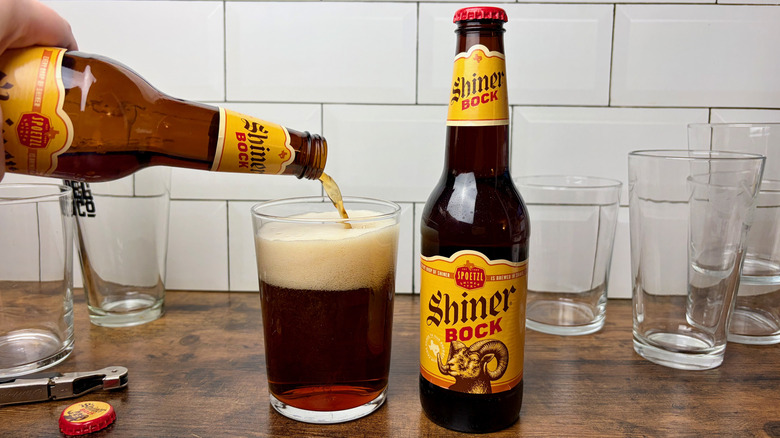
Depending on where you are in the country, you may or may not be familiar with Shiner Bock, produced by Spoetzel Brewery in Shiner, Texas. First brewed in 1913, Shiner Bock was only available seasonally, until 1973, when its popularity grew across Texas. A Bock is fundamentally a lager, although this German-style beer is made either primarily or entirely with barley malt.
Shiner Bock blends both barley malt and hops to achieve its smooth, delicately sweet, toasted, and deep malted flavor, with just enough bright hoppiness to keep things interesting. While it's darker in color than Sam Adam's Boston Lager, it's lighter on the palate, making it easier to enjoy for a wider audience of beer drinkers. A 12-ounce bottle has 141 calories, with 12.4 grams of carbohydrates, a 4.4% ABV, and 13 IBUs.
2. Sierra Nevada Pale Ale
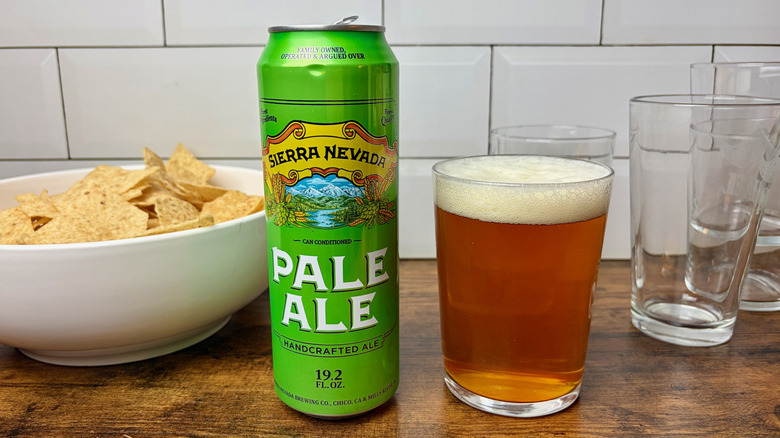
When Sierra Nevada Brewing Co. was founded in 1980, there wasn't nearly as much diversity in the world of American beers as there is now. On a mission to change that, the first five barrels of beer produced at Sierra Nevada were stouts, but it was the brewery's Pale Ale that shot the brewery to fame.
Unlike the German and Belgian-inspired brews that make up the vast majority of classic American beers, Sierra Nevada's Pale Ale is an English-Style Pale Ale that has a character all its own. Lighter and brighter than Dale's Pale Ale, Sierra Nevada's version shines with crisp pine notes, and is anchored with toasty malt flavors to round out the beer as a whole. Endlessly easy to drink, Sierra Nevada Pale Ale has 175 calories, 14.3 grams of carbohydrates, 1.9 grams of protein per 12-ounce serving. It's got an ABV of 5.6% and 38 IBUs.
1. Yuengling
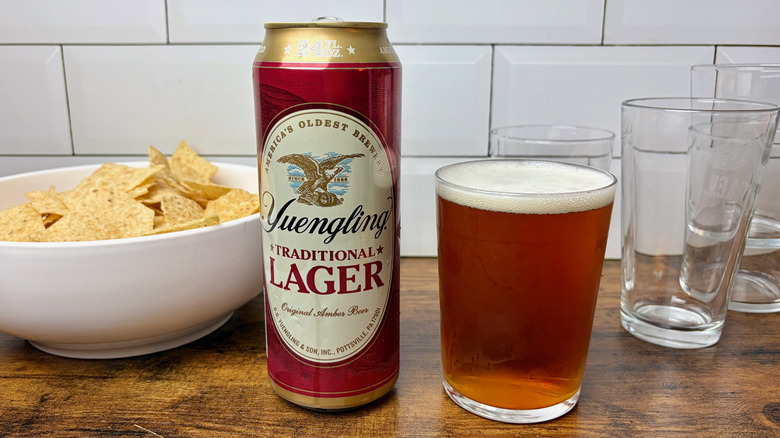
Not only does Yuengling hold the title of America's oldest brewery, but it's still family-owned and operated by the fifth and sixth generations of the Yuengling family — an almost unbelievable achievement on its own, among classic American beer companies. Although Yuengling was founded in 1829 in Pottsville, Pennsylvania, the Traditional Lager as we know it today wasn't permanently added to the lineup until 1987. In an effort to revitalize the business, the Original Amber Beer was released, and catapulted the brewery to regional and national fame within a matter of years.
The Traditional Lager has a toasted amber color, but is clear, light, and balanced, with minimal bitterness. Not especially complex, but with far more flavor than you'll find in a bottle of Budweiser, Coors Banquet, or Miller High Life, Yuengling's Traditional Lager is the best of the classic American Beers. A bottle of Traditional Lager has 141 calories, 12 grams of carbohydrates, an ABV of 4.5% and a mild 12 IBUs.
Methodology
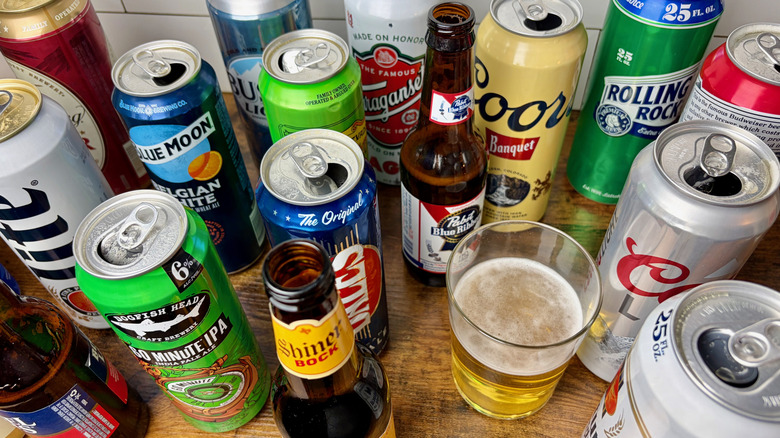
No one style of beer realistically defines classic American beers, and it goes without saying that there are far more than 18 American beers and breweries that are worthy of recognition. To qualify, all beers must have originated in, and are still produced in, the U.S. From there, we considered the most popular and current highest-selling beers in America, across all styles. The longevity of a particular brand was given heavy consideration, but not at the expense of genuine flavor. Beers that helped pioneer certain styles in the American market were also added. Most craft beers, while beloved, cover far too many niches and local markets to cover here.
Each of the 18 beers was first sampled side-by-side, by myself and two other brave tasters (in quite possibly one of the world's largest beer flights). Rankings were made individually, then merged through compromise to create the ultimate list you see here.