

What's The Difference Between A Garage-Ready And Standard Refrigerator?
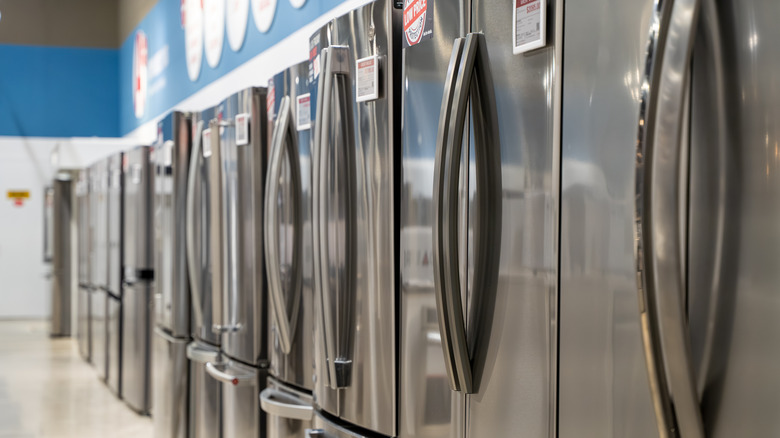
In 2021, around 35 million U.S. households reported owning a second refrigerator, while 6 million have more than two. In the years since, that number has surely risen. It is a common sight in many suburban households to have an extra fridge or freezer in the garage or basement, ready to store all sorts of surplus food from frozen meats to holiday meal prep. A second packed fridge can also symbolize a cultural love for food preservation, like jars of kimchi or containers of homemade broth, not to mention an innate need to provide as much food as possible to family and guests alike.
While an extra fridge is undoubtedly useful, be mindful of where you put it. In the U.S., seasonal temperature changes can range from under -20 degrees Fahrenheit to over 100 degrees Fahrenheit in some states. Not all standard fridges can operate optimally year-round, especially if it's in an uninsulated garage. This is when garage-ready fridges become necessary, as they are built specifically to handle wide temperature fluctuations. What sets them apart from standard refrigerators is the robust compressors, specialized sensors, and insulation that keep garage-ready refrigerators running efficiently, no matter what the thermostat says.
What makes a fridge garage-ready?

How do garage-ready refrigerators handle such a wide range of temperatures throughout the year? It comes down to several features that are now customary to this genre, with the most notable being its extra-efficient compressor. The compressor's job in a fridge is to keep the coolant cycling throughout the appliance. When it comes to extreme external temperatures, it needs to do so in such a way that the coolant can be pressurized into either liquid or gas as necessary to keep the internal temperature as stable as possible, and it does so in tandem with specialized sensors made specifically for garage-ready fridges.
For example, in winter, food in the freezer can potentially thaw, as the cold weather may affect the sensor's perception of the temperature, so a garage-ready fridge's compressor will continue to run to keep your food frozen. On the flip side, in hot weather, the compressors in standard fridges may work overtime. In this case, the specialized insulation of garage-ready refrigerators is necessary to make sure there are no leaks at the fridge doors. Without this insulation, your energy bills are likely to go up, and the components of your standard fridge tend to be overworked. That is bad news for foods that you should be refrigerating, like eggs and cheese.
When should you choose a standard fridge instead?

Now that we've extolled the virtues of a garage-ready refrigerator, what are the reasons for purchasing a standard fridge? Well, the answer lies mostly in the cost. Garage-ready fridges tend to cost more upfront than standard versions, likely due to their specialty components. If the fridge is going in your house, or in a properly insulated and climate-controlled space, then a standard one should work just fine for your needs.
With either option, the best time of year to buy a fridge is often in the summer, so if possible, time your purchases accordingly, or consider Costco, which generally has refrigerators for a relatively decent deal throughout the year.
What if you only really have space for the one fridge? Again, chances are you will house it indoors, so a standard fridge is the way to go. And if you run out of fridge space during winter, take advantage of the colder weather by essentially using the ambient temperature as your fridge and store surplus food outdoors, protected in a lidded cooler.