

4 Cuts Of Steak You'll Want To Marinate Before Grilling
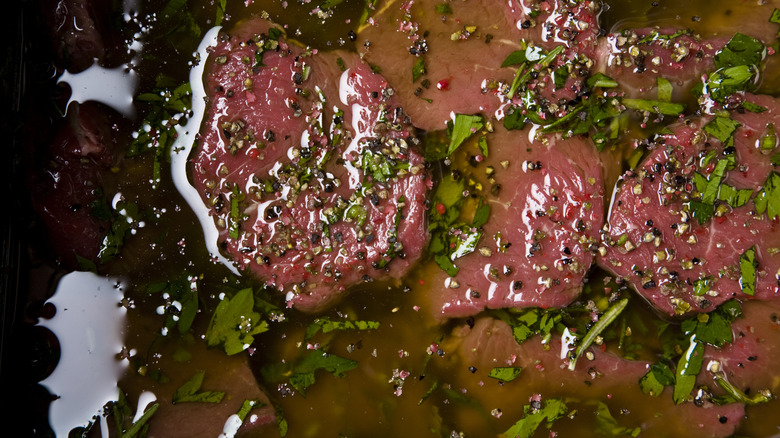
To marinate or not to marinate? That is the question many beef lovers ponder when deciding how to prepare a steak, but the cut of meat matters when deciding. Here's a good rule: Expensive cuts like filet mignon shouldn't really be marinated, as it masks the natural tenderness and buttery flavor of the high-end cut. Cheaper, tougher, and leaner cuts do well in a marinade, though.
In a discussion of when and why to marinate a cut of meat, first it's important to be clear on what the process actually does. Most marinade ingredients are all about flavor, and with the exception of salt, mostly sit on the outside of the meat and never truly soak into the interior of the steak. Your marinade ingredients add seasoning to the surface but can also help with crust formation and browning.
Conventional wisdom says a tough piece of meat requires an acidic marinade to soften the proteins in the steak. That's not entirely true. Instead, acid in marinades can cause the proteins to firm up or become mush and won't soak in far enough to affect anything other than the surface. Tougher pieces of meat tend to have less fat — meaning they have less flavor and moisture — and that's where a marinade helps. It's particularly useful for cuts like flank, skirt, flap, and top round steak.
Flank steak
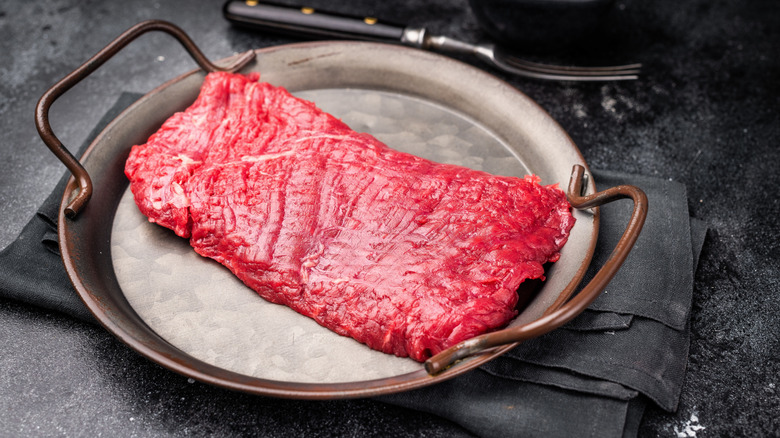
Flank steak comes from the cow's abdominal muscles. It's a long, flat cut, most often cooked whole or sliced thin. Flank steaks are deeply flavored but contain almost no fat. For that reason, a marinade can help prevent the steak from losing moisture as it cooks.
A great flank steak marinade should include aromatics like garlic, a balance of saltiness (often from something like soy sauce), some sweetness, and acid. While the acid won't fully tenderize the meat, it may begin to break down the outermost parts of the steak if left too long. Marinating up to around 24 hours is appropriate, but beyond that, the acidity of the liquid can begin to make the surface of the steak mushy rather than tender.
Before grilling your marinated flank steak, lightly dry it with a paper towel. This is a necessary preventative measure: Oil-heavy marinades dripping into fire can cause flare-ups that leave a burnt taste on your meat, while too much water from the marinade can render the steak soggy. It'll retain enough moisture to stay flavorful without drying out but little enough so the exterior can appropriately brown and sear to create that delicious crust. Flank steaks should be cooked to medium for maximum tenderness.
Skirt steak
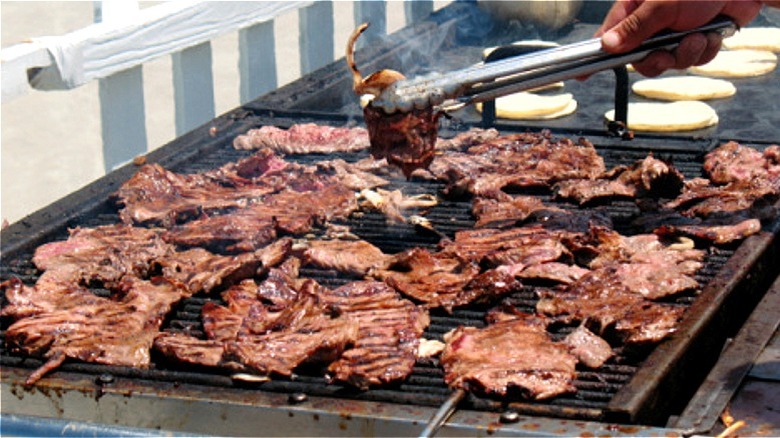
Skirt steak is a long, thin cut from near the cow's ribs, often as thin as ½ inch. Because it's a muscle that's heavily used by the animal, it's tough with not much fat (though more than its similar counterpart, the flank steak). It needs help with moisture and can benefit from a deeper flavor provided by a marinade. Because it's so thin, the surface area is high compared to the actual volume of meat, and since marinades work best on the surface, that's an ideal characteristic for marination.
Skirt steak also has another unique trait that makes it well-suited to marinating. The surface itself is rough and tends to have plenty of hills and valleys that hold onto the seasonings. Its muscle fibers are also looser than other cuts of meat, allowing space for the marinade to penetrate better than other cuts.
Grilling is the ideal cooking method for skirt steak. The thinness of the steak means it needs to cook at a high temperature for a short amount of time for the perfect combination of a browned exterior with a medium or medium-rare interior. Preheat the grill at high heat and be prepared to cook the skirt steak for no more than a few minutes on each side.
Sirloin flap steak
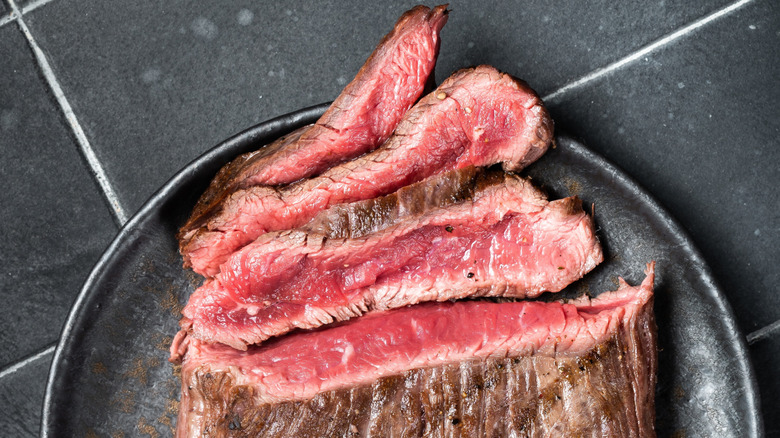
Flap meat is also called sirloin tip in some areas and faux hanger in others, as well as bavette. And while it comes from the sirloin primal, it's not exactly sirloin steak (there are a variety of cuts that come from the top and bottom sirloin). It tends to be similar to skirt steak, though it's often much less expensive. It's a larger cut, often weighing in at three to four pounds. Its flat shape means it has a good surface area to volume ratio, making it a prime candidate for marination.
A key characteristic of sirloin flap steak is its craggy edges. The rough texture of the exterior lends itself well to marinating because those nooks and crannies hold onto flavorful ingredients during cooking and help retain moisture. Because of its thin shape, flap steak is easily overcooked and prone to drying out, so the extra moisture from a marinade makes the meat more forgiving as you cook it.
A marinade of herbs and aromatics complements the natural flavors of the flap steak well, and it'll respond to sitting in the marinade from an hour to overnight. A quick sear on a hot grill turns flap meat into a perfect carne asada — a classic dish to make with flap steak.
Top round steak
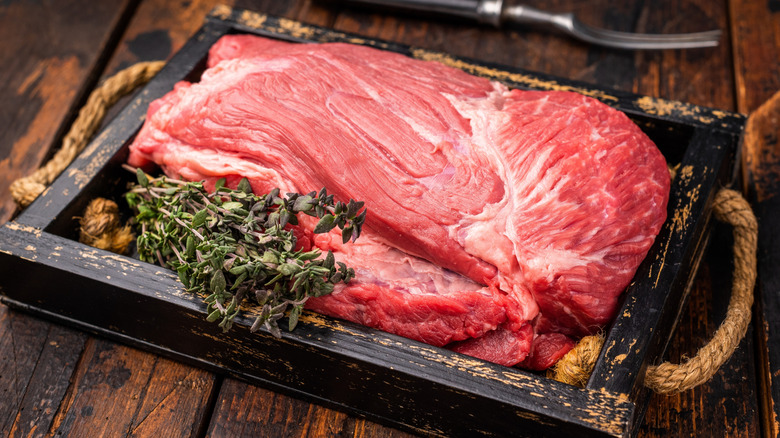
Many cuts of meat that respond well to grilling are long, thin steaks like flank or skirt. Top round steak is very different. It's a thick-cut, lean steak sliced from the round primal of the animal (near the cow's hind legs), often called London broil. Top round steaks are generally more tender than bottom round, which comes from a lower point on the animal, but are still generally tough and fairly neutral in flavor. So they benefit well from a marinade.
Top round steak has almost no intramuscular fat, the component that helps preserve moisture and flavor when it's cooked. So when assembling a marinade for this cut, you'll want to reach for strongly flavored ingredients, like vinegar, soy sauce, Worcestershire sauce, and ketchup. That'll keep the meat from being bland once it's done grilling.
Because this is a thicker cut, it responds differently to a marinade, as well as cooking. It needs longer to sit in the marinade before grilling — 24 hours is ideal — and might need a bit more time to get it tender and fully cooked (such as broiling briefly before grilling).