

Why Do English Muffins Have Little Holes In Them?

For many people, English muffins are a breakfast standby. But even people who look at them on regular bases may not understand certain features of the food, particularly their characteristic little holes throughout the interior. Known as the nooks and crannies, they represent the most defining and unique aspect of English muffins. It turns out this feature results from the nature of the dough and cooking process used to create them.
First, it's important to recognize the dough used to make English muffins is yeasted like many other breads, but is typically substantially softer and wetter. This moist, stretchy dough develops pockets of air as the yeast rises and reacts, creating a more open, irregular crumb. Meanwhile, the high amount of water in the dough turns to steam during the cooking process, further creating and expanding the air pockets.
The second crucial aspect is the cooking process English muffins undergo. Instead of being baked, they're dry-toasted on a griddle or in a skillet. That creates the contrast between their relatively crispy and browned exterior and the soft, stretchy interior. However, this has to be done carefully, for longer periods over low heat, to avoid burning the outside before the inside has fully cooked.
A crucial part of English muffins worth protecting
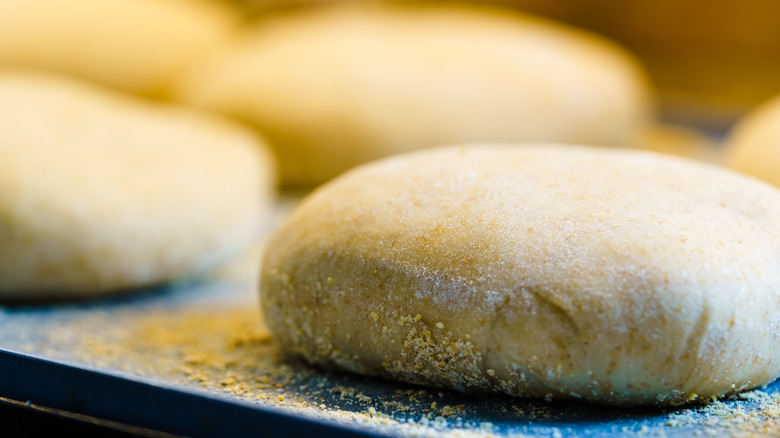
Although they might seem relatively minor, these nooks and crannies are among the most vital and defining parts of what makes English muffins such a beloved breakfast treat. They make it easier for spreads and other toppings to cling to the bread, whether it's a smear of butter or jam, a melting slice of cheese, or running egg yolk in a breakfast sandwich. For this reason, it's important to preserve the nooks and crannies when halving English muffins. If your go-to method involves slicing the store-bought versions with a knife, then you have splitting them the wrong way. They're designed to be separated with a fork or your hands, as a knife can flatten and remove these precious pieces of texture.
Folks interested in creating pockets of goodness in their own kitchens can try our recipe for homemade English muffins. However, those who don't feel like whipping up a batch (whether it's out of concern over the cooking process or a desire to avoid the lengthy rising time) can find plenty of English muffins with high-quality ingredients at the store. These include longtime producers like Thomas', health-focused ones from Food For Life, and even gluten-free versions from Canyon Bakehouse.