

Experts Are Cautious Of Pricey Bourbon If It Lacks This One Thing

If you ask experts, there are some key details to look for, as well as some major red flags to avoid when buying bourbon. Particularly when shopping for a higher-end bottle, it's important to consider whether an age statement is included, and to be cautious about what it means if one isn't.
For those who aren't familiar with the particulars of this spirit, a single bottle can contain multiple bourbons that were allowed to mature for different amounts of time. Age statements specify how long the youngest one in the blend was aged. In the United States, federal regulations mandate them for whiskey that's bottled before it reaches 4 years old. Beyond this age, they're optional, but are still often included by distillers who want to promote the lengthy amount of time they've allowed their products to mellow and develop. This is among the reasons that a missing age statement on a high-priced bottle can raise experts' eyebrows.
"A lack of an age statement is not automatically a reason to avoid a bourbon," according to Chris Walster, whisky connoisseur from The Cask Connoisseur. "However, I would be more cautious when a bottle commands a very high price without providing much information about its age, source, proof, barrel selection, or why it deserves that premium."
Age statements are just the start
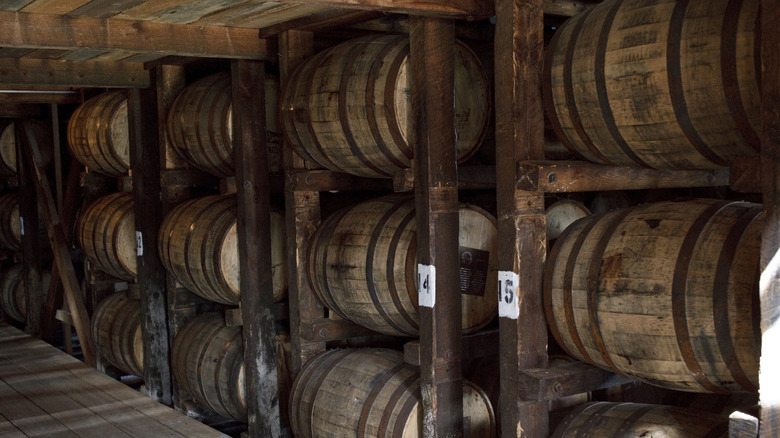
It's critical to remember that the process for picking a good bourbon involves more than just looking for age statements and picking the oldest one. Young whiskies aren't inherently worse; they typically have a brighter, sharper profile with more of a bite . This can be more appealing to some palates and in some cocktails. However, longer aging is often desired because it mellows the alcohol, better extracts additional flavors from the barrel, and creates a more desirable mouthfeel.
Trying to find top-tier bottles simply by equating quality with price is a risky strategy, too. The most expensive bourbons in the world routinely sell in the four or even five figures for a single bottle. So a hasty, un-researched purchase could turn out to be an expensive regret. On the flip side, clues that a pricey bourbon might be worth its cost include a label that is heavy on details of the production process and ingredients.
You should also look for indications that the brand has a real legacy of making quality bourbon (and isn't a new distiller masquerading as a historic one). The absence of outlandish packaging or bottle shapes is another good sign. Still, age statements can be among the most quickly apparent clues for those sizing up an unfamiliar bottle.