

Why Do Some Beer Cans Have Dots On The Bottom?
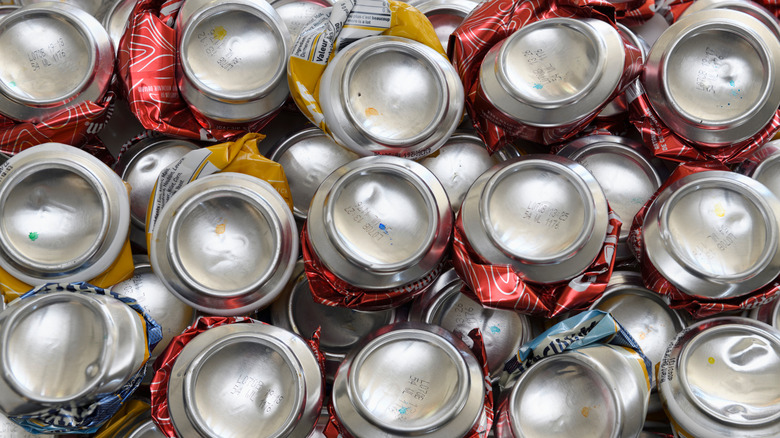
Walking into the liquor store's beer fridge can be daunting. From tried-and-true international lagers to experimental India pale ales, there are many different types of beer to consider when choosing a brew to take home. But as customers inspect six-packs, one detail can prove puzzling: small ink dots on the bottom of cans, varying in color and size. On forums and Reddit threads, beer lovers have posited that the dots could suggest anything from poison to government tracking. But the true story is more in line with a manufacturing handbook than a science fiction movie. Each dot is machine-painted onto the can during production as part of a clever efficiency strategy.
On the production line, a machine paints a colored dot on the bottom of each can just before the vessel enters what's known as an internal coating machine. This device sprays a protective layer on the inside of each beer can to keep the aluminum from reacting with the beverage, shielding the metal from corrosion and the beer from degraded flavor and quality. A single internal coating machine can spray up to 400 cans per minute, and mass-production facilities typically operate several coating machines simultaneously to keep production moving. This is where those dots come in: Each color corresponds to a particular coating machine. If an inspector discovers a faulty coating, they can flip the can over and identify the machine that sprayed it. Workers can then address the issue without shutting down the entire line.
How beer cans are produced today
Humans have been drinking beer for up to 13,000 years, but canned beer didn't hit the market until 1935. The American Can Company spent years developing a container that could preserve beer, permanently changing the packaging industry once it reached shelves. Lighter to ship, easier to store, and longer lasting than bottles, cans were embraced by consumers and breweries alike.
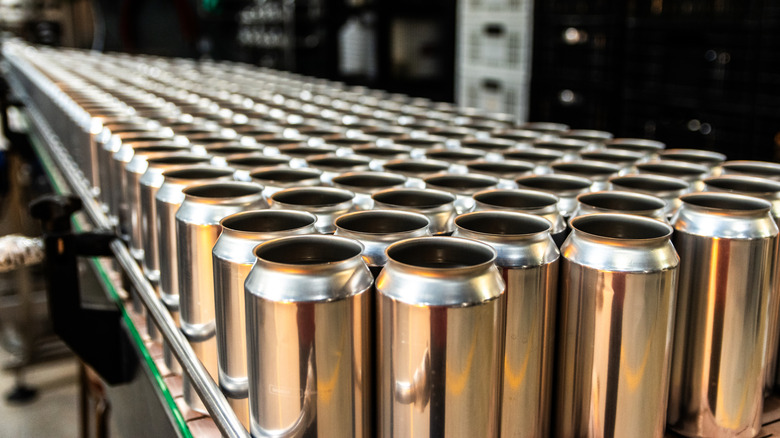
According to a 2026 report by the Beer Institute, aluminum cans now make up a whopping 63.4% of American beer packaging. Meeting that demand begins at factories, where massive coils of aluminum are cut, stretched, and trimmed into empty vessels. These are then washed and decorated to the buyer's exact specifications. Next, they get their fabled colored dots just before passing through one of the internal coating machines. The cans are then inspected, stacked on pallets, and shipped to the facilities that will fill them.
At the brewery, another production line takes over. Some of the world's fastest beer-canning lines crank out up to 120,000 units per hour. Empty cans are loaded onto the line, where they're rinsed to remove any dust or debris. They're then filled with carbon dioxide to purge oxygen, which can cause beer to spoil more quickly. Precision filling machines measure beer into each container before the lid is placed and sealed. The filled cans are then inspected and packed into boxes or six-pack carriers — the same packages consumers will eventually browse at the store.