

The Hands-Down Best Soy Sauce On Grocery Shelves
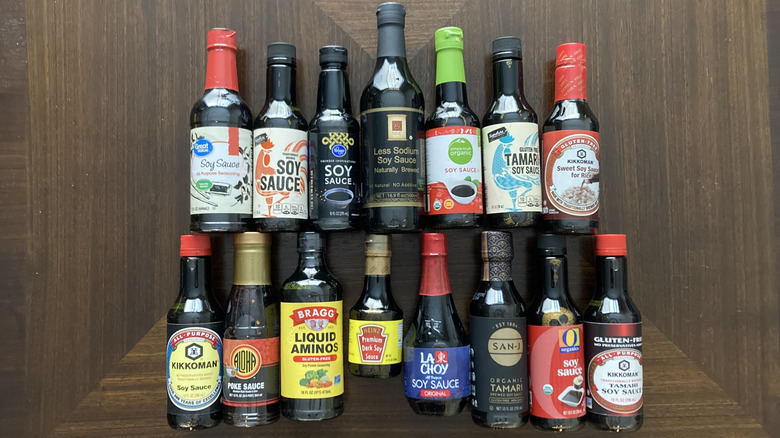
You might think all soy sauces taste the same, but the reality is a lot more intriguing. Despite soy sauce's minimal ingredients — soybeans, wheat, and salt – this condiment can vary widely when it comes to quality and how it's made. Our taste tester sampled more than a dozen popular soy sauce brands found at his local grocery stores, pairing them with brown rice to get the full impact of flavor. The winner? A brand that has been around for more than 100 years, La Choy. Its soy sauce launched in 1965 and has been a household staple since.
Surprisingly, there were some serious soy sauce duds. Several of the lowest-ranking sauces were watery and practically flavorless, while others brought unpleasant tangy or fishy flavors to the table. Even some recognizable brands, like Heinz and Kikkoman, failed to make much of an impression in our taste test. La Choy, on the other hand, earned the distinction of being the hands-down best soy sauce on grocery shelves. According to our reviewer, the sauce's smoky aroma and flavor complemented the brown rice rather than overpowering it.
According to the Japan Soy Sauce Association (via The Japan Times), a good soy sauce features the right color, flavor, and aroma. And these features typically come from long-term fermentation of the soybeans. Brands like Heinz and Kikkoman use this traditional brewing method, but La Choy is not fermented at all; it's made with hydrolyzed soy protein using a chemical hydrolysis process instead.
La Choy, though not traditionally made, leads the pack
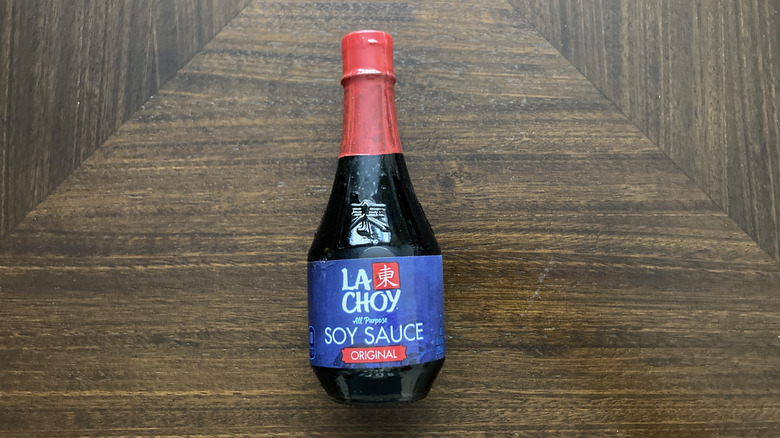
While the fermentation process is seen as the ideal way to extract the bold, complex flavors that create a tasty soy sauce, chemical hydrolysis breaks down soy protein much faster, making it an obvious choice for commercially made soy sauce brands. The result is somewhat the same — amino acids are combined and heated with sugars (in La Choy's case, corn syrup and dextrose). This activates the Maillard reaction, creating the deep color, flavor, and aroma coveted for soy sauce.
Despite the lack of fermentation, La Choy succeeds at making a soy sauce great for both Asian and non-Asian dishes, like these soy sauce recipes promising an umami boost, which include everything from Korean fried chicken to Kung Pao tofu, and a variety of condiments where soy sauce is an ingredient. A splash of soy sauce can also add a savory boost to soups, dressings, veggies, and even sweets (apparently, soy sauce on ice cream is a thing).
Now that you know La Choy is the hands-down best soy sauce on grocery shelves, remember soy sauce is notoriously high in sodium, so you don't need to drown your meal in it for a flavor boost. La Choy features 1,120 milligrams of sodium and costs $2 to $3 for a 10-ounce bottle. Compare that to Heinz and Kikkoman, which feature 2,500 milligrams and 960 milligrams of sodium, respectively. While Kikkoman has less sodium, the bottle is only five ounces and costs a couple dollars more, making La Choy a great value as well.