

What Does Subway Do With Leftover Food?
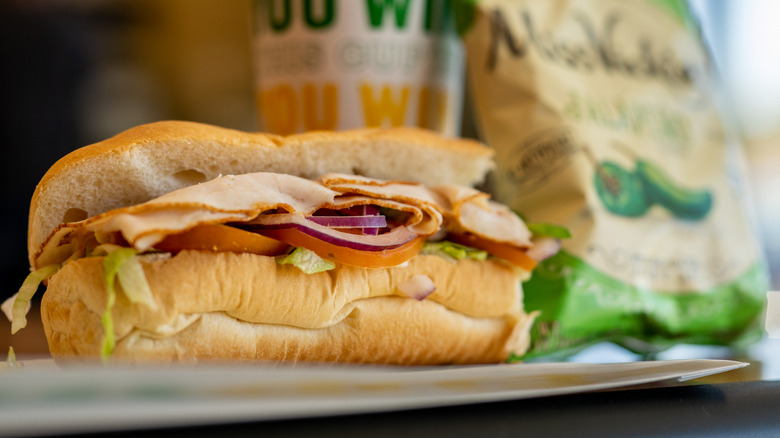
According to the USDA, over 30% of the food produced in the country goes to waste. At the same time, Feeding America reports that one in five American children experiences food insecurity. This disparity points to a glaring problem: The food needed to feed all Americans is there, but too much of it ends up in the trash. The restaurant industry is a major food-waste contributor, leading some consumers to wonder how their favorite burger joint or take-out chain might be exacerbating the problem. Subway, the customizable sub sandwich franchise, is no exception.
When it comes to intentionally reducing or repurposing leftover food, the fast food chain is doing very little compared to its peers. Subway does have an official mandate regarding climate and conservation, but the section on waste only states that its restaurants must follow any local waste management rules. Employees have taken to Reddit, exposing instances in which they were required to throw out batches of uneaten cookies or (as discussed in a separate Reddit thread) dispose of prepared foods like meatballs or sliced avocado at the end of the day. While some commenters wrote that they take matters into their own hands by giving uneaten products to people in need, the fact remains that the Subway corporation doesn't have an official plan for tackling the food-waste dilemma.
How customers can help reduce Subway's food waste
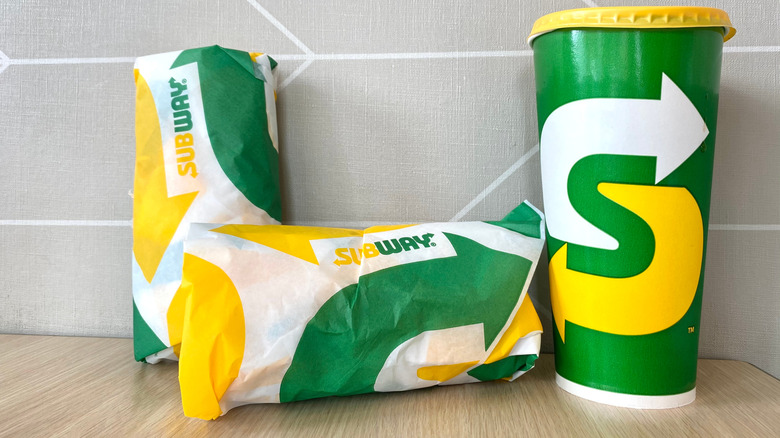
Subway's company structure might partially explain its food-waste problem. Since Subway is a franchise, its restaurants are owned and operated by thousands of franchisees, who purchase the right to use the company's name and business model. Under this framework, decisions about donating surplus ingredients, allowing employees to take food home, or partnering with composting programs may vary by location. Some owners have taken waste particularly seriously. Subway reports that some restaurants in San Francisco and Seattle have committed to composting all food waste. Corporate does offer its franchisees compost and recycling bins, but restaurants are not required to utilize them.
Although Subway fans have little control over back-of-house waste, they can help limit what gets thrown away in the dining room. A 2026 Georgetown University study found that food left behind by customers accounts for 70% of restaurant food waste, yet only 20% of the businesses surveyed tracked the food that diners tossed out.
One great thing about Subway's build-it-yourself model is that it gives customers a unique level of control over portion size. If you're not feeling super hungry on your next Subway run, consider opting for a 6-inch over a foot-long, declining unwanted toppings, or skipping chips or cookies if you're not sure you want them. If you do overestimate your appetite, taking the remainder home to eat later ensures your sandwich has a better destination than the trash.
What other fast food chains are doing better
The decentralization inherent to the franchise model doesn't prevent corporations from setting stronger food-waste standards or organizing chain-wide food recovery programs. For example, under Chick-fil-A's Shared Table initiative, over 2,700 of the chicken chain's 3,000-plus locations package unused food at the end of each day to donate to local nonprofits. Chick-fil-A estimates that these donated ingredients, which organizations use to make dishes like stir-frys and casseroles, have created over 50 million meals since the program's 2012 launch. In a Reddit thread asking what Chick-fil-A does with leftover food, one employee replied, "The only thing that my store throws away daily is the fries. The chicken, soup, and mac and cheese are all donated to a local food pantry."
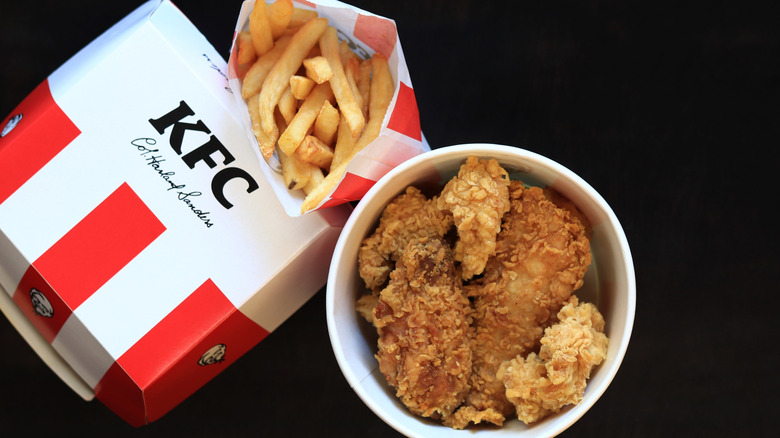
Another chicken-slinging franchise, KFC, operates a similar initiative called Harvest. Since 1999, KFC has collaborated with Food Donation Connection to link participating restaurants with food banks in their area, resulting in roughly 95 million donated meals. These examples don't just illustrate how corporate leadership can create the infrastructure for practical food-donation programs — they demonstrate that franchise owners are often willing to participate. By comparison, Subway's lack of a company-wide food recovery program appears to be a corporate choice rather than an unavoidable consequence of its business model.