

The 5 Biggest Disadvantages Of Using A Toaster Oven
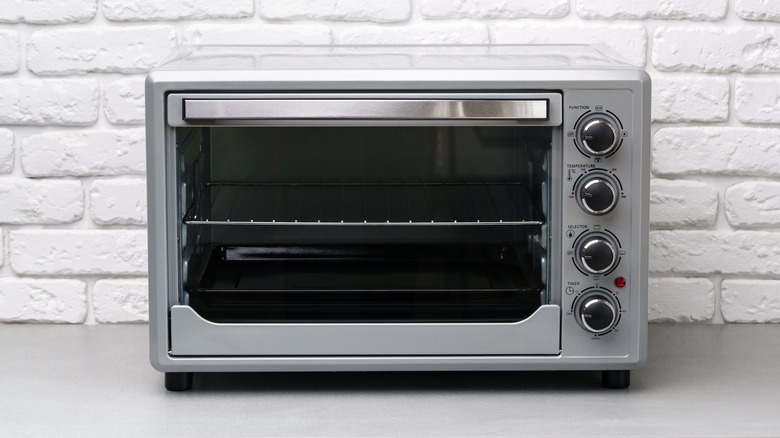
With air fryers and multi-cookers becoming increasingly common in our kitchens, smaller appliances may be vying for real estate on your kitchen counters. What about that darling of midcentury kitchens, the toaster oven? Is it still a worthy appliance for the modern kitchen? There are all sorts of mistakes people make with their toaster ovens, from loading too much food inside to not cleaning them enough, but there are also disadvantages that have less to do with human error and more to do with their form and function.
What are these disadvantages exactly? For starters, a toaster oven is small by design, which limits what you can prepare in it. Conversely, it takes up precious counter space, especially if you already have a full-sized oven or own numerous other countertop appliances. Toaster ovens don't always heat food evenly, a task other appliances perform with ease. Their small size makes thorough cleaning awkward — which might be why so many of us put off this chore. Potential safety hazards also abound. The glass door can get quite hot to the touch, and it is all too easy to come into contact with the heating elements. Now, let's explore these points one by one.
Toaster ovens have a small capacity
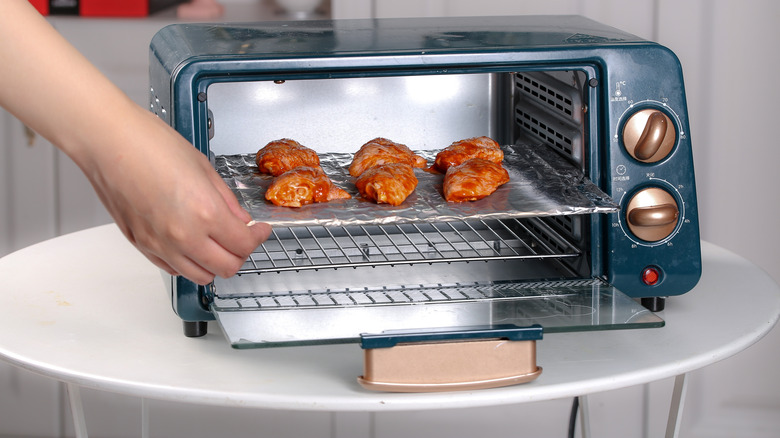
A toaster oven is petite by design, as it is meant to live on your kitchen counter. Its capacity is often measured in cubic feet, though marketing materials may translate this to how many slices of bread can be toasted at once. The smallest toaster ovens are about 0.3 cubic feet and able to toast one or two slices of bread at a time. Extra-large toaster ovens measure in at around 1 cubic foot, with double racks that can toast up to eight slices of bread at a time. For comparison, a standard full-sized oven capacity ranges between 2 and 5 cubic feet.
Without a toaster oven, you can still toast bread in a pan on the stovetop or using your oven's broiler setting. On the other hand, without a full-sized oven, roasting a whole chicken is out of the question — unless you have an extra-large toaster oven. And even then, the chances of it cooking unevenly are high (more on this later). Toaster ovens have their place in smaller homes and kitchenettes, but other appliances can do the same jobs, especially if you are an air fryer enthusiast and already have a full-sized oven.
It's yet another appliance taking up counter space
Toaster ovens are touted as multitaskers ... just like full-sized ovens, air fryers, and microwave ovens. Houses are no longer being built at the same stately sizes they used to be, and the kitchen is where this lack of room can feel the most apparent. Counter space is typically given to your favorite small appliances, yet a designated prep surface for cooking or baking is also needed. You could, of course, put away appliances when they are not in use, but how many of us remember to (or care to) take out a stored toaster oven every time we want to warm something up?
The toaster oven excels at very particular tasks, chiefly toasting bread or bagels with toppings on them, such as melted cheese and the like. You cannot pull off simple yet tasty recipes like condensed milk toast in a slot toaster. A toaster oven can also revive the crispy texture of previously fried or roasted food, whereas microwave reheating may make it soggy. But when counter space is limited, you may end up opting for the microwave, which can cook a larger variety of food. Or just reheat leftovers on the stovetop and allocate the space to a coffee maker instead.
Toaster ovens heat food unevenly
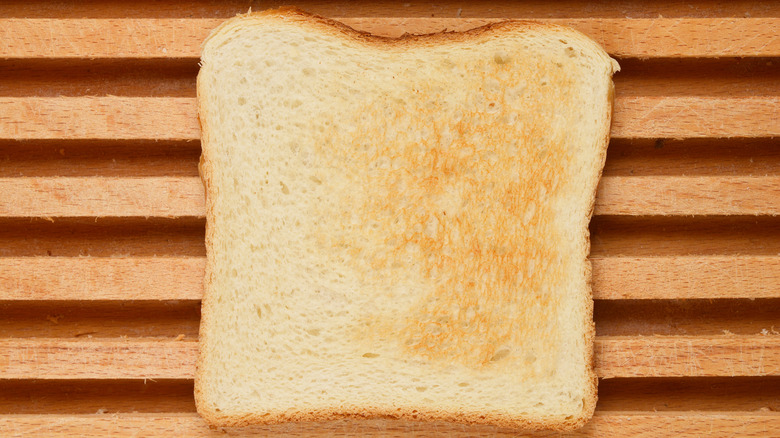
Due to their small size, toaster ovens heat up quickly. The uninsulated doors also cause this heat to escape quickly when opened. Not all toaster ovens allow for granular temperature settings, and some do not have the option to only turn on the top or bottom heating elements. For these reasons, they may heat and cook food unevenly. You need to keep a close eye on food being heated in the toaster oven, which can be inconvenient when you need to multitask in the kitchen (and who among us does not?) Air fryers and full-sized ovens do a much better job of cooking food evenly, and unlike toaster ovens, you can walk away for a moment and still get a better result.
The proximity between the heating elements and racks in a toaster oven makes low-and-slow cooking impossible. There are plenty of foods you should never put in a toaster oven, and in many instances, the vessel containing the food is the problem. You can also forget about preparing baked goods that will rise significantly in the toaster oven, as they will burn once they reach the heating elements.
Cleaning a toaster oven can be hard
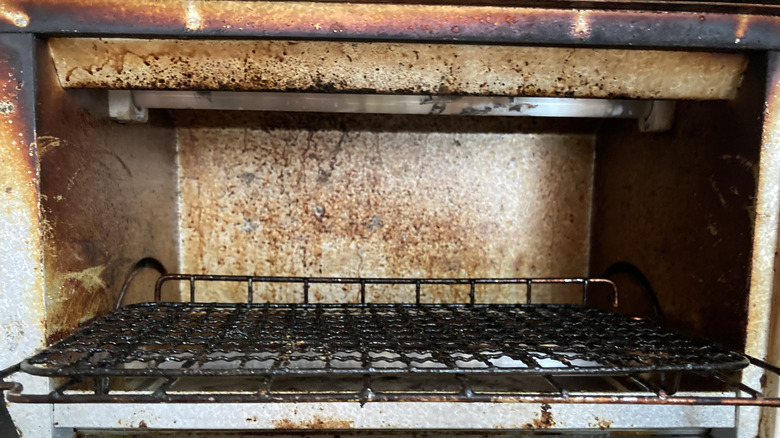
As a place where food is prepared, kitchens should be suitably sanitary for everyday food preparation. Yet in certain parts of the kitchen, such as inside appliances, it's easy to neglect the buildup of crumbs, stains, and even mold. There are kitchen cleaning hacks that make some of these jobs easier, but getting a toaster oven to look brand new again is quite an undertaking. Although the trays and racks are removable, its small size makes it awkward to maneuver around its components while cleaning. Full-sized ovens can be a pain to clean as well, but their larger size means you can really get in there to scrub and reach the corners (or put it into self-cleaning mode).
Even slot toasters can be easier to clean because it often only involves shaking out crumbs. Removing crumbs from a toaster oven isn't hard either, but the grease spatter and food stains that accompany them become more baked on with every use. If all you really need a toaster for is to quickly toast bread, bagels, or waffles in the morning, a slot toaster is much simpler to clean and maintain.
Toaster ovens present safety hazards
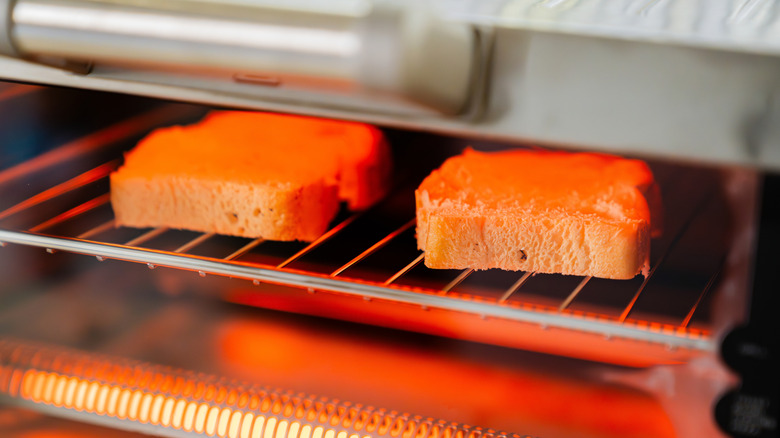
Toaster ovens can be more of a safety hazard than other small kitchen appliances. This manifests in several ways: through its glass doors, its exposed heating elements, and the accumulation of crumbs over time. While full-sized oven doors are also made of glass, they are often double-glazed. This helps keep the inside of the oven hot and the outer surface of the door much cooler to the touch, making it generally safer for anyone occupying the kitchen. Unless you spring for a higher-end model, toaster ovens often have a single layer of glass, which can injure curious and careless fingers.
What's more, because of its small inner chamber, it is far too easy to accidentally touch the heating elements of a toaster oven when moving food in and out. Toaster ovens run on electricity and can cause electrocutions when touched during operation or when using metal equipment. And those crumbs that many people neglect to clean out of their toaster ovens? They can ignite, causing fires that could spread to kitchen cabinets and throughout the house, resulting in serious property damage.