

5 Advantages Of Drip Coffeemakers
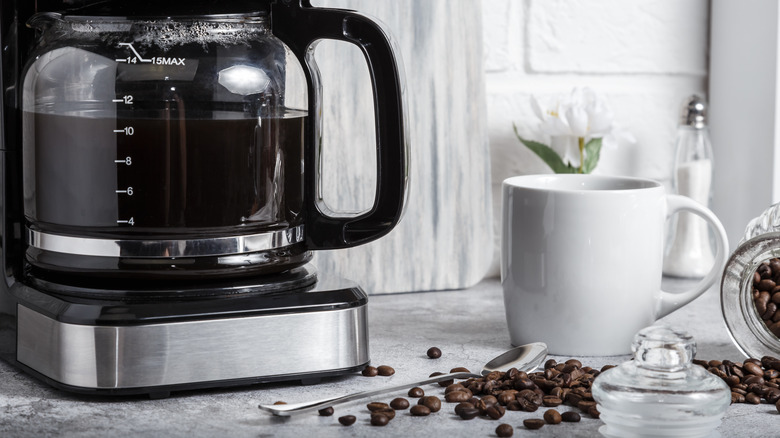
In a world of innovative coffee-making methods like pour-over, French press, and long-steeped cold brew, old-fashioned drip coffee is sometimes forgotten. It's the style that many coffee lovers likely tried first, and it remains highly popular and easily available. That's for good reason, too. Drip coffeemakers offer a variety of advantages, like ease of operation, consistency, the ability to brew large batches and hold their temperature, and simple cleanup and maintenance.
To be sure, the drip coffeemaker category covers a wide range of appliances with varying sizes, features, filter styles, and prices. What they share is a basic mechanical process in which hot water slowly drips over coffee grounds, taking on their flavor as it runs downward past the filter and into the pot. Regardless of whether you pick a budget option, invest in a luxury brand, or opt for Consumer Reports' highest-rated drip coffeemaker, they all share the aforementioned advantages.
Drip coffeemakers are simple to use
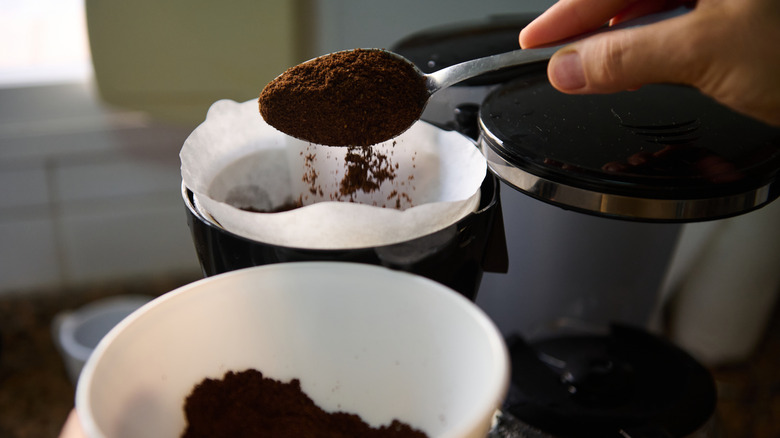
Sophisticated coffee-making methods like pour-over or the French press certainly appeal to experienced fans of this beverage, but they require some knowledge or finesse that newer coffee drinkers may not have. On the other hand, longtime drinkers and novices alike can enjoy the simplicity and operational ease of most drip coffeemakers.
All that's required is measuring out the proper amount of coffee grounds and water, then adding them to the machine appropriately. Typical models often start with the push of a button (or two). Meanwhile, more feature-heavy versions can do a lot more with a few more pushes, from dialing in the strength of the brew to pre-programming timers to have a pot ready when you wake up.
Once you've started the machine, the process is almost entirely hands-off. After a relatively brief five- to 10-minute brew cycle, most machines stop automatically.
Coffee from drip machines is consistent
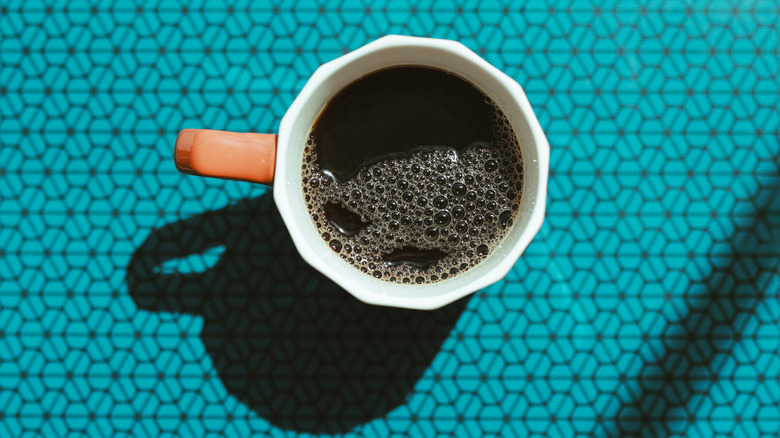
We've noted the two major factors that determine what you'll get out of a pot of drip coffee: the amount of coffee grounds and water, combined at the ideal ratio (usually 1:18). All other aspects, from the water's temperature to the brew time, are generally left for the machine to handle, though some models offer user customization.
On a practical level, this means it's extraordinarily easy to create consistent coffee day after day, pot after pot. It also allows different people to create very similar results using the same machine — another element of consistency. For those who know exactly the way they like their coffee and don't want to worry about overly strong or weak cups, this is a serious advantage. Alternative methods can leave drinkers with uneven results, whether that's variable pour speed for pour-over or inconsistent water temperatures added to a French press.
Batch brewing is easy with drip coffeemakers
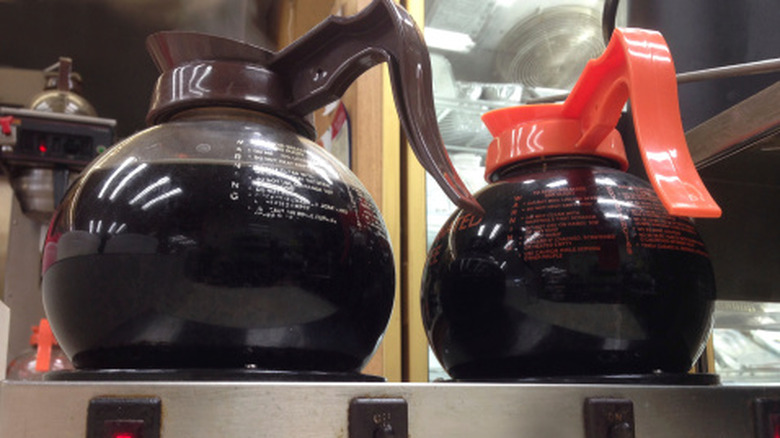
Those who are simply enjoying a relaxing morning by themselves can take the time to pull a shot of espresso on their home machine or to heat and carefully pour water over grounds for pour-over. However, those who need a lot of coffee pretty quickly undoubtedly appreciate the capabilities of drip coffeemakers.
Capacity varies by model, usually ranging from about 4 cups for small, personal versions to 12 or more for larger or commercial appliances. This makes it ideal for larger families, gatherings, offices, restaurants, and other settings where large quantities are poured at once. It's especially convenient because the brewing time doesn't scale linearly with the number of cups needed. For example, brewing 12 cups only takes a little longer than brewing six or eight, and it's certainly far quicker than making 12 cups individually.
Drip coffeemakers keep coffee hot for when you need it
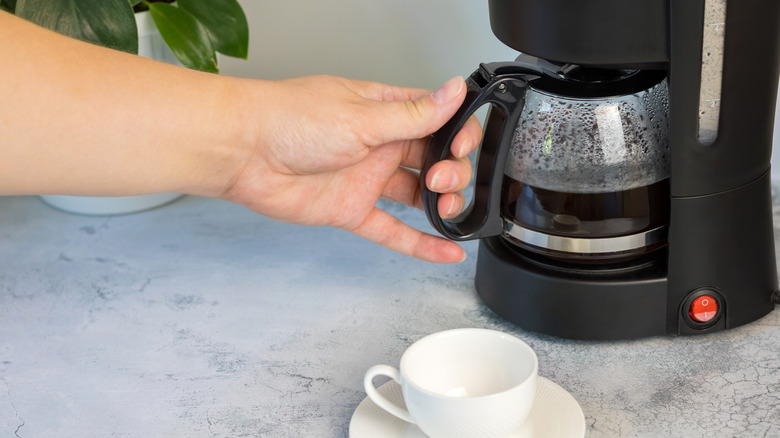
A fresh cup of coffee is arguably the best possible way to enjoy this beverage. However, brewing a fresh one each time isn't always feasible, and drip coffeemakers help keep extra cups hot and ready for when you need them. Typical kettle heating plates warm up as the coffee brews and hold their temperature as long as the machine is running. Rather than your coffee rapidly cooling as it would in your cup, it stays piping hot for when you go back for a refill.
This feature also presents less of a downside than it did in the past. Most modern machines are equipped to automatically turn off the heating element after a certain amount of time, saving energy and preventing potentially unsafe situations. But those who care about their coffee's quality shouldn't leave it in the carafe for hours, anyway. The combination of heat and oxidation quickly starts to degrade the coffee, especially past the hour mark, at which point the water's evaporation has significantly affected the flavor.
Easy cleanup and maintenance
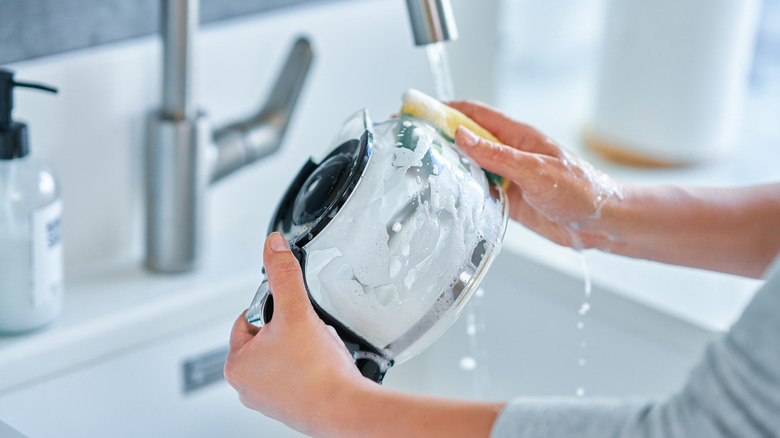
Certain coffee methods may be appealing until you reach the cleanup stage. This can be particularly true for methods like the French press, where the grounds touch nearly every surface, or espresso machines with numerous parts. These can require painstaking, detailed cleaning to remove all traces of the coffee and its grounds. Drip coffeemakers share none of these problems.
On a daily basis, the process is relatively simple: Just wash out the carafe with soapy water and dispose of the filter and used grounds. With a suitable filter, few grounds should make it into the pot itself, making cleaning pretty straightforward. More involved (but less frequent) deep-cleans are fairly hands-off: All you have to do is run a mixture of water and white vinegar through the machine to remove built-up residue and deposits, then flush with a few cycles of clean water to remove any lingering taste or smell.
For those who prize unusual or exotic coffee preparations that put your standard cup of joe to shame, the drip coffeemaker may seem a little boring or standard. But it's become the standard in many places for a reason: consistency, ease of use and cleaning, batch capacity, and the ability to keep coffee hot.