

5 Gadgets You Would've Found In 1960s Kitchens
We may receive a commission on purchases made from links.
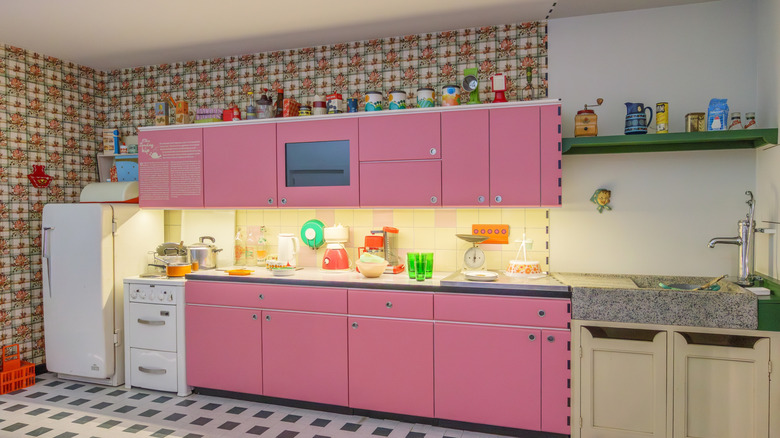
Before viral hacks and 20-second recipe videos, home kitchens had a different kind of magic. Kitchens in the 1960s were all about colorful appliances, clever contraptions, and gadgets that helped make cooking and baking a little easier and hosting a lot more fun. From cheery mixers to built-in appliances and futuristic tabletop accessories, humble kitchen tools received a stylish, midcentury makeover.
The era was all about quirky Space Age designs, bright pastel colors, and statement-making layouts. Back then, no modern kitchen was complete without a Lazy Susan, an atomic starburst clock, and avocado green, harvest gold, or aqua color schemes as far as the eye could see. Brands like Pyrex and KitchenAid also made a name for themselves in the era of home entertaining.
Today, many of these gadgets look delightfully retro and are even coming back into style. They also offer a fascinating glimpse into how people cooked, entertained, and embraced new technology decades ago. Take a nostalgic trip back to the era with these five popular kitchen gadgets that prove the 1960s kitchen was anything but boring.
Kitchen wall phones
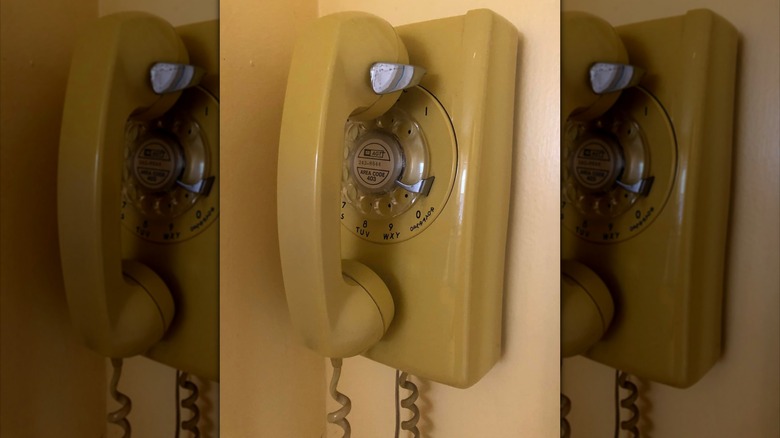
Before smartphones were in everyone's pocket, landline telephones were practically part of a kitchen's decor. Mounted on nearly every kitchen wall in the '60s, these phones with their rotary dials, chunky receivers, and long coiled cords were a lifeline to the outside world. These models saved precious counter space, came in an array of colors, and made it possible to talk to your friend and whip up the latest Betty Crocker recipe at the same time.
That extra-long cord also came in handy for kids and teens wanting to move their phone conversation to another room. "My mom hated it," there were six kids in my family ... and that 20-foot cord was always across the kitchen," recalled one commenter in a 1960s Memories Facebook group. While it may seem delightfully retro, and definitely still exists in some kitchens, a rotary phone mounted to the wall during that era it was as commonplace as a refrigerator or a Jell-O mold.
Colorful KitchenAid mixers
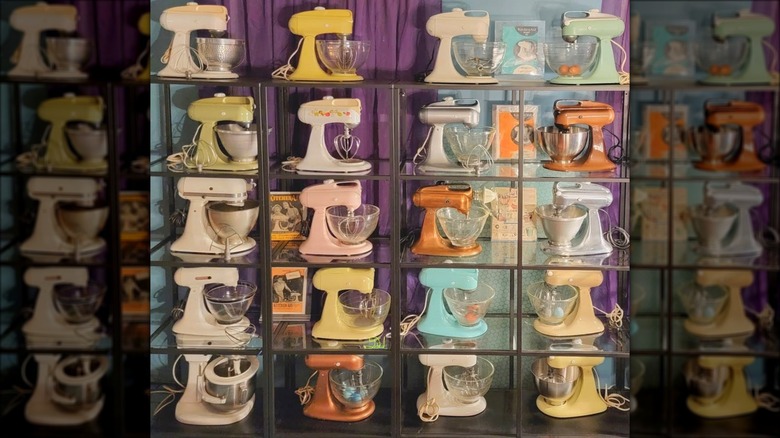
Once KitchenAid introduced its colorful line of stand mixers in 1955, they became a fixture in many American households. These heavy-duty mixers were designed to be seen and make a statement. Cheerful shades like petal pink, pastel yellow, and island green brought midcentury personality to kitchen countertops. Before that, white was the only option. The late, great Julia Child was a longtime fan of the colorful KitchenAid and was famous for her cobalt blue one, which is now in the Smithsonian.
These retro KitchenAids were made to last for generations, and vintage color models are prized possessions for collectors, with some fetching $400 on second-market sites. Some thrift store hunters have even been able to track them down for far less, but knowing the true age of a used KitchenAid mixer requires authenticating the 5-digit serial number. Other owners of '60s-era models inherited them. "My grandmother's 1960s KitchenAid mixer finally died after 63 years of daily use," one Reddit user shared.
Wall ovens
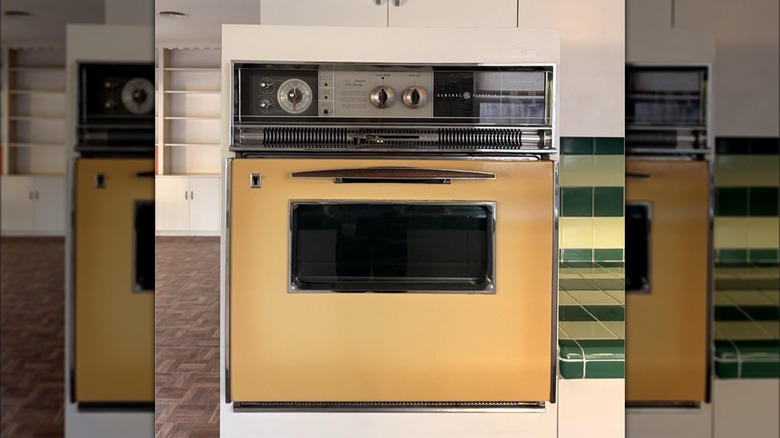
Built-in wall ovens were all the rage in the '60s because they took up less space – and they're still popular in modern kitchens for this reason. The sleek oven design traded traditional freestanding ranges for a more streamlined look that made '60s kitchens feel more futuristic. Those who purchased the era's trendy built-in units expected functionality to accompany style, and these ovens delivered and then some.
Thermador created the first built-in double wall oven in 1956, but the Frigidaire Flair, released in 1962, took the built-in trend to new heights. It had separate burners that rolled out like a drawer and slid back in when you were done cooking, and a double oven situated right above. The Flair is perhaps best-known for being featured on the show "Bewitched."
Wall ovens also captured the era's vibrant, colorful kitchen aesthetic, with bright blues and pastel pinks. Since they were built high into the wall, there was no stooping or bending down required to get your casserole or check if your cake was done. Simpler times.
Fondue sets
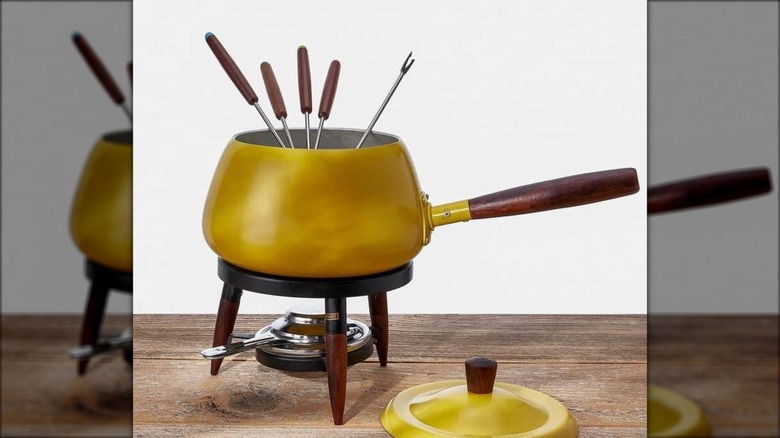
Before eating fondue was a fun way to entertain guests, farmers in 18th-century Switzerland used it to stretch their winter resources. Fast forward to the 1960s, and chocolate fondue became one of the most popular desserts of the era. It was also a time when many were hosting soirees at home, which created commercial demand for personal fondue sets. The shared experience of dipping fruit or cake into molten chocolate was a delightful practice at cocktail parties or romantic dinners. And of course, kids loved this fancy treat.
Harvest gold and avocado green were popular fondue set colors in the 60s. The standard set included an enameled cast iron or ceramic pot that sat on a metal stand, and long, thin forks for dipping. A Sterno burner kept the chocolate or cheese warm, and sets typically came with different-colored fork handles so each guest could keep track of their own. While you may only encounter fondue at weddings or other fancy catered events, you can still entertain at home as they did in the '60s with this classic chocolate fondue recipe.
Pyrex chip and dip sets
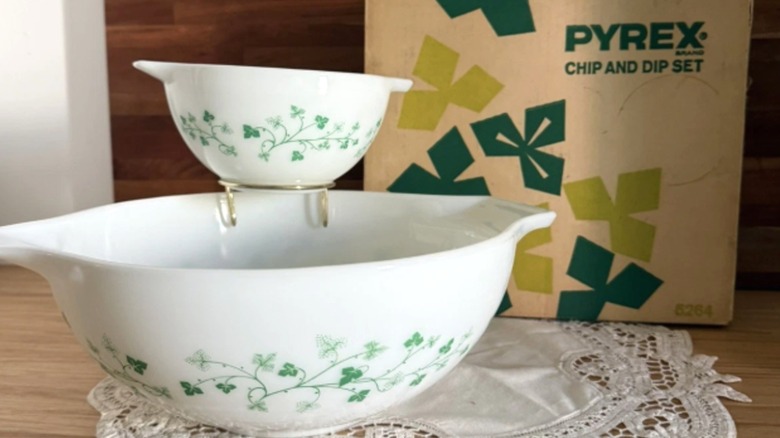
If there was a cocktail party, holiday gathering, or barbecue in the 1960s, chances are a Pyrex chip-and-dip set was nestled somewhere between the cheese ball and grape jelly meatballs. The cookware brand introduced its chip-and-dip sets in the 1950s, as potato chips became a favorite American household snack and home entertaining became more casual. By the 1960s, Pyrex had released several patterns and colors, such as Golden Grapes, Early American, Ivy, and Verde. Each matching set came with a small bowl for the dip, a larger bowl for the chips, and a bracket to attach them for easy, elegant serving — a perfect way for hostesses to bring some extra flair to the humble chip and onion dip combo.
A few of Pyrex's chip-and-dip sets are worth a great deal today, after falling out of fashion in the '80s. The '50s-era Atomic Eyes set recently sold on eBay for $750, and the Ivy set is currently listed for $350. However, you don't have to spend a fortune to acquire one of these nifty classics. Pyrex is one of the most common vintage dishware brands you can find at thrift stores, so don't pass them up when you see one sitting on a dusty shelf. It could be worth more than you think.