

The Mistakes That Make Cauliflower Rice Watery And Mushy
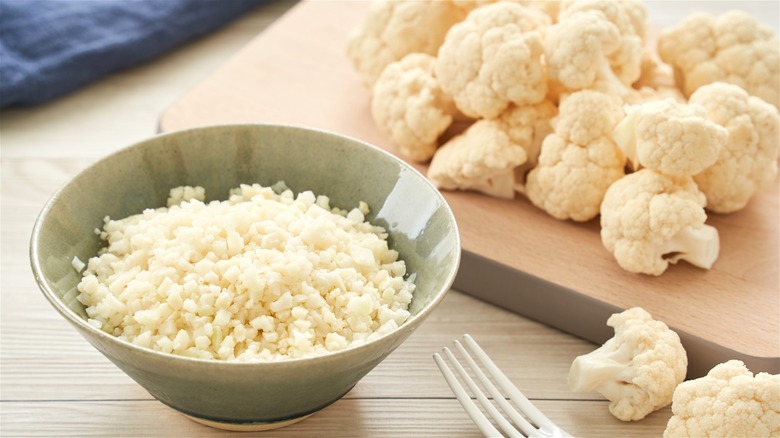
Cauliflower rice is a great option if you want to reduce the carbs in your meals while ramping up your fiber intake. Making it, however, is another story. It's too easy to end up with a dish that's way too watery or inedibly mushy, and it's not exactly cost-effective to keep buying ready-to-eat cauliflower rice (even if it's one of the best Mexican foods at Trader Joe's). So, learning how to make tender cauliflower rice with just the right amount of toothsomeness is worth it.
In most cases, cauliflower rice gets mushy because it's cooked with too much moisture, which can get tricky considering cauliflower is more than 90% water. Getting the texture right revolves around adjusting for all the moisture it releases when it's prepped and cooked, while also understanding the effects heat can have on the cauliflower's structural integrity.
That said, it's pretty easy to ensure your cauliflower rice won't turn into a watery mess. It mostly involves avoiding a few small mistakes when making it, and doing so doesn't require any serious technical skills. If you want your copycat Chipotle cauliflower rice to turn out perfectly, you won't want to get tripped up by any of the faux pas below.
Making the cauliflower grains too small
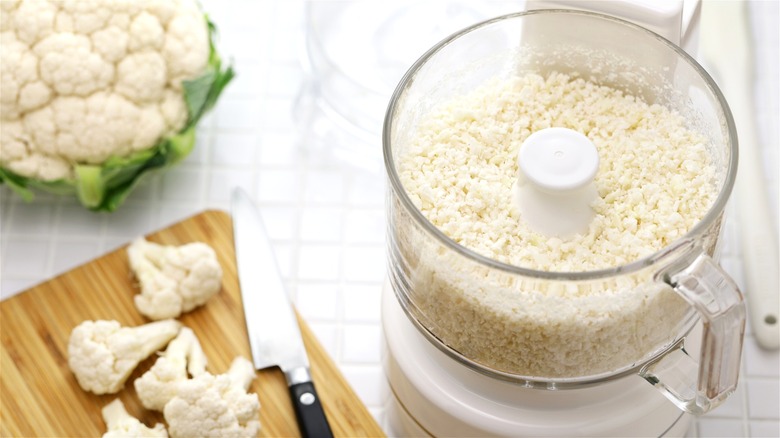
Getting the best texture for cauliflower rice starts with getting the grain size just right. Too-small grains lead to mushy rice. Chopping cauliflower naturally releases its water content, which means the smaller your grains are, the wetter they get. Cooking small cauliflower grains also exposes more of the plant's cells to heat, and your rice will end up even soggier because of how much of the cells' structure has broken down.
For the best texture, aim for grains that are slightly larger than regular rice. You can do this by attaching a grater disc to your food processor and giving the cauliflower a few quick pulses, or by using a box grater. Chopping the cauliflower down to size with a knife works, too, but it requires more effort. Cauliflower is a food that has no business being in a blender. Using a blender to chop it is a guaranteed way to get mushy rice because you could go overboard with it in a matter of seconds — and wind up with something closer to cauliflower mash.
Whichever method you use, try to make the grain sizes as uniform as possible so everything cooks evenly. Frozen pre-riced cauliflower usually has uniform grain sizes (and is a perfectly good option if using fresh veggies isn't a priority). It's an underrated frozen food you should be buying anyway, so it never hurts to keep some stocked.
Forgetting to remove excess moisture from the cauliflower
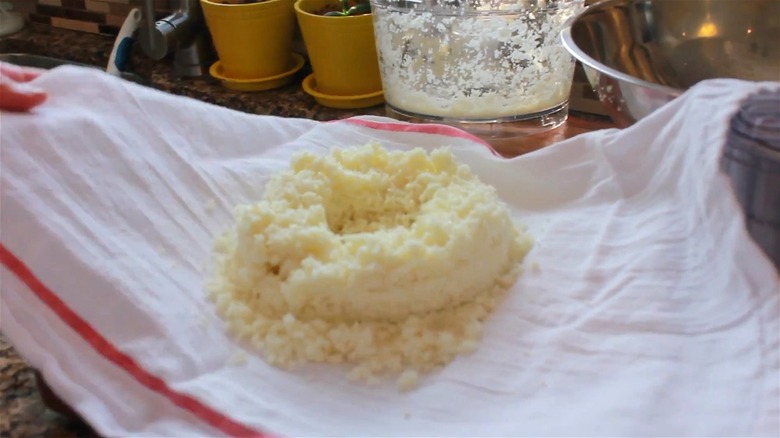
Remember how chopping cauliflower releases water? All that moisture isn't going away unless you do something about it. Cooking cauliflower immediately after ricing it will ruin its texture in the same way tossing freshly grated potato into a sauté pan makes hash browns soggy. You need to dry it out first.
Some cooks recommend drying cauliflower rice by pressing it between two paper towels on the countertop, or by gathering it inside a cotton dish towel and wringing out the moisture. Both techniques work fine in a pinch, but squeezing the grains too much could affect the rice's texture. If you can spare a few extra minutes, place the cauliflower rice in a bowl lined with paper towels, then pat it dry with another paper towel or other food-safe absorbent cloth. This gentler method helps preserve more of the cauliflower rice's "grain" structure.
Using the wrong size pan
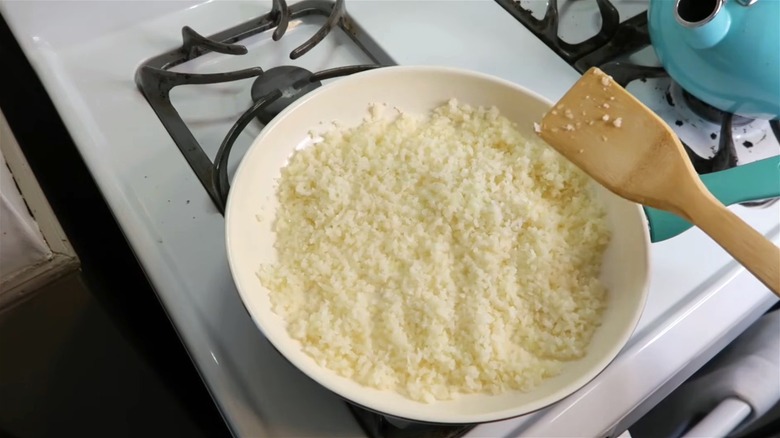
Even after you've dried cauliflower rice, there will still be water inside each grain. As the cauliflower cooks, its cells break down and release some of that remaining moisture. This is where choosing the correct-sized pan comes into play.
The water released is going to become hot, wet steam while you're cooking. If your pan is too small, that steam will get trapped underneath the grains and condense as the dish cools, giving you watery cauliflower rice. Crowding in general is a common mistake everyone makes with cauliflower regardless of the cooking method, because of all the steam it traps. For cauliflower rice, use a pan large enough to keep it in a relatively thin layer so the steam can escape more easily.
If you don't have many options for larger pans, you can mitigate the steam's effects by stirring your cauliflower rice as it cooks. The constant motion creates more openings for the steam to escape, while also giving the wetter grains a proper chance to dry off over the heat.
Cooking with too much oil
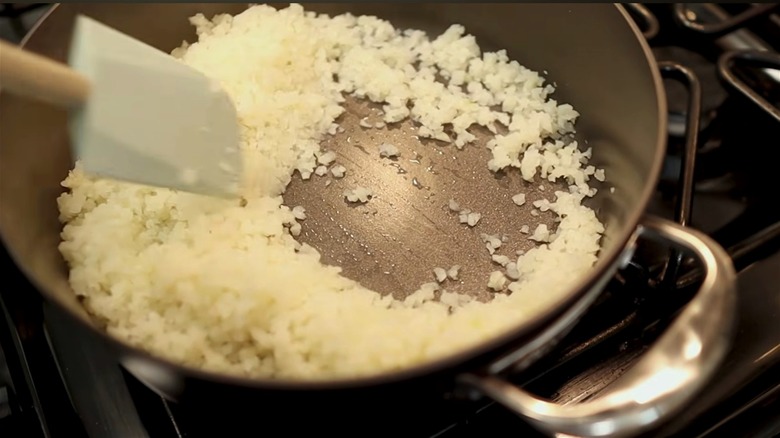
Cauliflower itself isn't the only source of moisture in your pan. The oil you sauté your rice in is pretty wet, too. Even worse, it doesn't evaporate as quickly as water does, so excess oil will soak your cauliflower rice and turn it into a soft, greasy mess.
Alex Guarnaschelli's trick for making perfect cauliflower rice is to use as little oil as possible — or, as she put it in an old Instagram video, cook it in a pan that's close to dry. Guarnaschelli included the additional tip of sautéing it over high heat, which causes any water released by the cauliflower rice to evaporate quickly.
Some folks cook their cauliflower rice without any oil at all, so if you want your pan as dry as possible, this is another option. Keep in mind, however, that oil does add flavor to whatever is cooked in it, so cauliflower rice cooked in a dry pan is likely to be a little blander than if it were cooked with a tiny amount of olive oil.
Overcooking your cauliflower rice
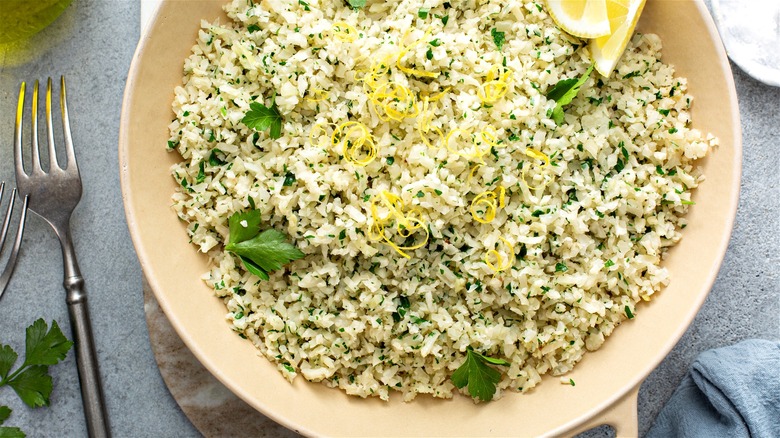
Even if you've followed every prep and cooking tip to the letter, cauliflower rice can still turn into soggy gloop if you overcook it. Again, heat breaks down the cauliflower's cells, weakening the structures that hold your rice grains together. If you let that happen too much and for too long, you'll go from having nicely tenderized cauliflower rice to partially disintegrated cauliflower mush.
Exactly how long you cook it depends on how you want the rice to taste. If you want plain, straightforward cauliflower rice, you can skip the stove altogether and pop it in the microwave – around three to four minutes on high should be enough to tenderize the grains. For some mild caramelization, stick with Alex Guarnaschelli's advice and sauté it on high heat for about two to three minutes with a drop or two of oil. If you want the depth of flavor roasting can provide, spread the grains over a baking sheet and pop it in the oven for about 12 minutes at 400 degrees Fahrenheit.
These cooking methods only apply if you're cooking the cauliflower rice on its own. If you're making something like vegetable fried cauliflower rice, for example, it's better to follow the recipe's recommended cooking temperatures and times, since introducing other ingredients changes the overall texture and composition of the dish.