

6 Things To Bring To A Dinner Party And 5 To Avoid

Dinner parties can seem daunting, whether you're hosting and worrying about everything from dietary requirements to table setting rules, or you're a guest and concerned about making a faux pas. You don't want to show up empty-handed, but you may be worried about bringing the wrong thing. That's why we've cleared things up over what to bring to a dinner party and what not to bring.
As a culinary writer, I'm a bit obsessed with food and cooking, and I regularly host guests at home. But, I wanted to get a broad range of opinions, so I spoke with four experts on the matter: Connie Edwards McGaughy, vegan recipe and lifestyle blogger at The Carrot Underground and author of "How to Host Plant-Based Parties Everyone Will Love;" Veronica Tegen, founder of food and gardening site Ask The Food Geek; Amber Mayfield Hewett, event planner and author of "Your Turn to Host;" and Thérèse Buchanan, recipe developer and food blogger at Tessie's Table. Thanks to their insight, you'll never again have to worry about bringing the wrong thing when you've been invited for dinner.
The term "dinner party" itself can be a sticking point for some, conjuring stiff and formal or heavily curated affairs. But, often a dinner party is just a group of friends gathering over a meal, so it's nothing you need to stress yourself over. Still, you'll feel more relaxed once you know these six things to bring to a dinner party and five to avoid.
Bring: Local honey or preserves

Showing up with a bottle of wine is often the go-to for a dinner party, but unless you know it's welcomed, a different kind of gift is often the way to go. Plus it's much more interesting. Thérèse Buchanan recommends bringing local honey or preserves, saying it's "a thoughtful gift the host can enjoy later."
The other important thing about this kind of gift is that "it doesn't take up refrigerator space or require any attention during dinner," Buchanan adds. Ultimately, you want to bring something that's not going to put additional pressure on the host while they're trying to prepare a meal for a crowd.
Connie Edwards McGaughy recommends bringing "a jar of small-batch locally made preserves or jam." In my opinion, the more local and personal, the better. If you're someone who makes jams and chutneys, a homemade version will likely go down brilliantly. After all, having invited you to a dinner party, the host is someone who appreciates the craft of cooking.
If you don't make this kind of thing yourself, that's okay, but be on the lookout for something hyper-local. For instance, on a local walking route, I came across an honesty stall filled with jams and preserves alongside an allotment. This would make a lovely gift alongside a quick story of where you sourced it. "I especially like locally made products because they can be more interesting and personal than simply choosing the most expensive option," says Buchanan.
Don't bring: A dish to serve with dinner, unless you've been asked to do so

It might seem like a thoughtful thing to bring a dish when someone invites you to dinner. However, unless you've explicitly been asked to, or you're going to a potluck, showing up with an unsolicited dish is a major faux pas. It can end up as anything from a minor annoyance for the host, to a perceived snub because it seems like you didn't trust their cooking. It's okay to ask if you can bring a dish, but take "no" for an answer.
"Likely the host has invested in the menu, the pairings, the presentation," says Amber Mayfield Hewett. "Bringing a dish they did not ask for could be disruptive to their vision for the menu," she adds. If somebody has put together a Sri Lankan feast, for example, they're not going to want to serve your mac and cheese alongside it, no matter how delicious.
Arriving at a dinner party with food nobody asked for can create an awkward situation for the host. "They may have planned a theme, flavors, portions, and timed courses," Connie Edwards McGaughy remarks. "Linens and serving ware may be specifically coordinated and table space may be limited." She adds that the host will have also taken guests' dietary requirements into account, and this is something you may not be aware of.
If you do want to bring something edible, it should clearly not be intended to eat with dinner. "Ultimately, you want to bring something that feels like a gift that the host can set aside instead of feeling pressure to immediately serve," explains Mayfield Hewett.
Bring: A good loaf of bread
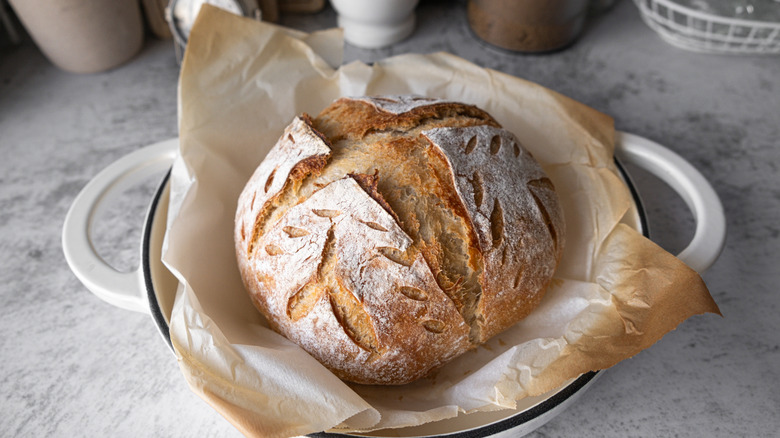
Showing up with a loaf of freshly baked artisan bread is a real treat. The one proviso is to make sure your host knows that you aren't expecting them to serve it with dinner. If they want to, fine, but it can be rude to show up with something that you want them to force into their dinner plans.
"Fresh baked bread is probably the easiest thing to bring to a dinner party that also makes everyone happy," says Veronica Tegen. However, "before you buy a loaf, find out if there are any gluten, seed, or nut allergies so you can buy something that works for everyone," she advises.
We all know that bread tastes better from a bakery, and this is where you should source your loaf. Turning up with supermarket bread isn't exactly celebratory and is honestly just going to seem a bit odd. The only exception to bakery bread is if you bake it yourself. Showing up with freshly baked sourdough or focaccia is going to be a delight for most hosts.
Thérèse Buchanan says she likes bringing bread to a dinner party because it doesn't make any extra work for the host. "Pick one up from a local bakery or, if you enjoy baking, bring homemade bread," she says. "It can be served with dinner if it suits the meal, but there's no pressure to use it that night." Avoid anything that would need time in the oven if it was served with dinner, as time and oven space are likely at a premium.
Don't bring: Dessert, unless requested
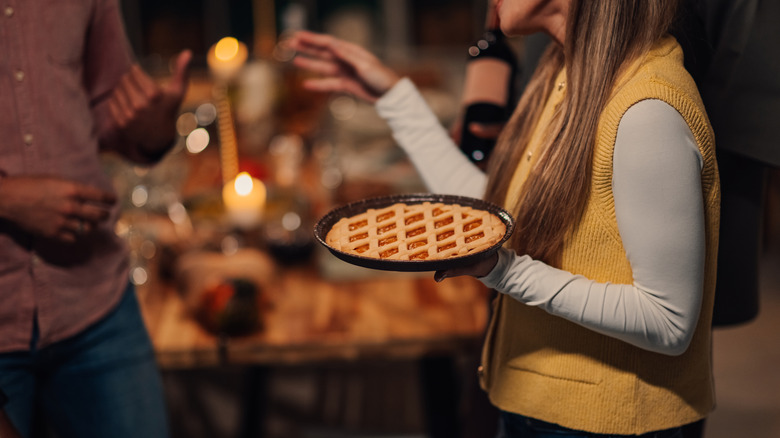
Just like you shouldn't show up with a dish to be served with dinner, you also shouldn't bring dessert, unless you've okayed it with the host. When I host dinner parties, I plan every dish and make sure each course complements the next, so an unexpected dessert would mess that up. For casual dinners with friends, someone might offer to bring a sweet treat to round out the meal, but it's best to avoid doing that without checking in beforehand.
"I wouldn't arrive with a cake or pie unless I'd checked first," says Thérèse Buchanan. "The host may already have spent hours making dessert." Bringing your own could make it seem like you're trying to upstage the host or you don't trust their dessert-making skills. "It puts them in the awkward position of serving both desserts, putting yours away, or changing what they'd planned," notes Buchanan. Even finding refrigerator space for a large dessert could be a pain.
It's always okay to ask your host if they'd like you to bring dessert. It may be appreciated in some cases but, equally, they might enjoy planning and executing the whole meal from start to finish. Still want to bring something sweet? "Choose a small treat that's clearly for the host to enjoy later, such as chocolates or bakery cookies," Buchanan advises.
Bring: Potted plants

Just because you're going to somebody's house to eat, it doesn't mean the gift you bring has to be consumable. A small potted plant can be a thoughtful gift. It avoids your host making the assumption that you're expecting whatever you brought to be served that night and gives them something that they can keep on enjoying for months or years to come (depending on how green their thumbs are).
"If your host has pets, be sure to choose flowers or plants that are non-toxic to animals," advises Connie Edwards McGaughy. She recommends moth orchids: "They bloom for weeks, are easy to care for, require little space, and are safe in homes with dogs and cats." However, there are plenty more pet-safe plants out there. Do your research and be sure to tell your host what plant it is and that you've checked it's pet safe when you hand it over so they have peace of mind.
Just avoid rocking up with an enormous plant. A small pot that could sit on a window sill or mantlepiece is one thing, but a monster that's going to take up half the room is another.
Don't bring: Cut flowers without a vase

Flowers are another classic gift for a dinner party host. Bringing a bouquet initially seems like a pretty safe bet, but it can quickly become an extra chore. So, we recommend that you don't bring flowers, unless you bring them already arranged in a vase.
"Fresh cut flowers can be an inconvenience if your host has to step away from guests in order to find a vase and trim the stems," Connie Edwards McGaughy explains. This can end up taking several minutes of precious time that your host would probably rather be spending in the kitchen or hanging out. "It's better to bring flowers prearranged in a simple vase," she advises.
As with bringing plants, make sure that the flowers are pet friendly if there are any animals in the house, and let it be known, so you don't stress out your host. It's also nice to bring flowers from your garden or a local florist rather than a grocery store bouquet. That little extra effort takes it from a basic gift anyone could pull off while doing their weekly shop to something a bit more personal.
Bring: High-end pantry items
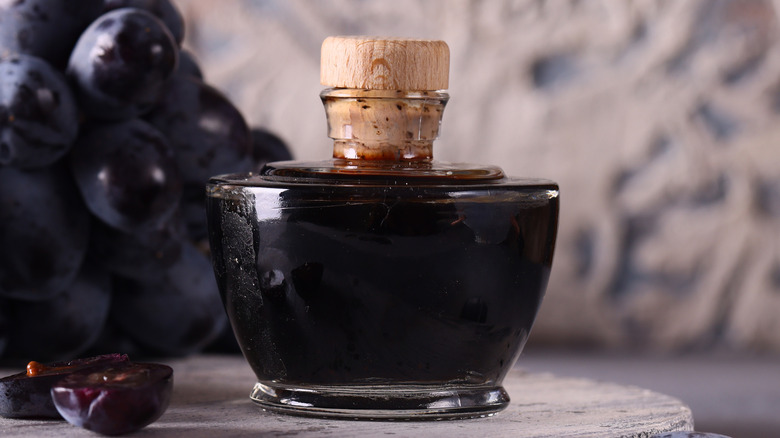
Presumably the person who has invited you over enjoys cooking, so bringing a high-end version of a common pantry item is likely to be a well-received gesture. Unless you know the person well, you can play it safe and still have a range of brilliant options to choose from.
"You can't go wrong with high-quality shelf-stable foods," says Connie Edwards McGaughy. Cooks should always have balsamic vinegar in their pantry, so bringing a nice bottle as a gift is a great idea. Edwards McGaughy also recommends bringing premium olive oil. Handing over a nice bottle of EVOO instead of a bottle of wine is a brilliant choice for any keen cook — a gift that I've given with great success.
Veronica Tegen likes bringing finishing salt and pepper. "Some of my favorite unique options are also conversation starters: balsam fir salt and late harvest peppercorns," she tells us "The host is treating you by making dinner, so I like to bring something that is just as special and there's no pressure to use it during dinner," she adds.
"Choose something you genuinely think they'll use," Thérèse Buchanan advises. If you've been to their house for dinner before, you might have an idea of the types of foods they like to cook. So, if you know they love Japanese food, a fancy aged miso paste is likely to go down better than a bottle of olive oil. Buchanan reiterates that you shouldn't expect them to use it on the night. "It's a gift, not an ingredient you're adding to their menu," she says.
Don't bring: Food or drink that's inappropriate for the host

When you're bringing food or drink, a little bit of knowledge about your host goes a long way. Showing up to their house with something that they can't or won't eat or drink is a mistake you should aim to avoid. If you aren't sure, it's better to ask ahead of time than to show up with the wrong thing.
"It's important to be mindful of your host's food choices so that you don't bring anything that may conflict with their needs and household practices," remarks Connie Edwards McGaughy. For example, "a nice bottle of wine is often a go-to item to bring to a dinner party, but not everyone drinks wine or alcohol," she says. She notes that as a vegan, she appreciates the gesture when someone brings a food gift that she can't eat (like Martha Stewart's "failsafe" host gift), but feels bad that she won't be able to enjoy it.
"I'd avoid bringing anything with nuts, unless you are close to all of the guests and know for certain there are no nut allergies," advises Veronica Tegen. "Nut allergies can be very severe, which puts the host and affected guests on high alert to monitor for cross contamination on cutting boards, knives, and serving spoons," she adds. So, what was meant to be a thoughtful gift can soon turn into a logistical nightmare for the host.
Bring: An after-dinner drink

If your host is serving wine, beer, or cocktails with dinner, they may well have thought about pairing for each course and not want to deviate from that. While there's nothing wrong with bringing wine, if you think it will be well-received, bringing a drink for after dinner can be a safer bet. There's more scope for different types of alcohol, as well as non-alcoholic options, as you don't have to think about whether or not it will go with the meal.
"Bring an after-dinner drink to keep the dinner party going," Veronica Tegen suggests. "Hosts spend so much time on arrival drinks, appetizers, the main course, and dessert that they often don't have the bandwidth for an after dinner drink," she adds. If you want to bring an alcoholic drink, her recommended choices are port, sherry, or an amaro, which is an Italian herbal liqueur, such as Campari or a bottle of Amaro Montenegro. However, if you know you're dining with a more sedate crowd, herbal teas or decaf coffee could work better.
The good thing about bringing tea or coffee is that it doesn't have to be for after dinner. Your host has the option to crack it out after the meal, but if they have another plan for drinks or they actually want people to get on their merry way and go home once the dessert plates are cleared, there's no pressure.
Don't bring: An unexpected guest

Arguably the worst thing you could bring to a dinner party is an unexpected guest. It sounds obvious, but I've seen it happen enough times that it deserves a reminder. If you're the only one invited to a dinner party, don't bring a plus one. If you can't get childcare, don't bring your kid without checking in first.
"If the host is not expecting your extra guest, you will leave them scrambling to find an extra seat and place setting," says Amber Mayfield Hewett. "Ask first or come solo and trust that the host has curated the room with plenty of seat mates that you will enjoy," she adds. And, that really is the key thing that could help you avoid many a faux pas: just ask. Not sure if your partner is invited? Ask. Don't know if it's kid friendly? You guessed it ... ask. You can do so in a way that makes it clear that it's okay if the answer is "no."
It's always better to be sure than to make a mistake that's going to be a problem for your host. And bringing someone extra can be a big one. It's not just about space or manners, they literally might not have enough food to go around. If you don't get a plus one, you might meet some great new people. And, if it's a dealbreaker, you can politely decline the invite.
Bring: A disposable camera

Not everything you bring to a dinner party has to be for the host. Bringing a disposable camera lets you capture moments of the gathering from your perspective and that of other guests. Of course, you can take photos on your phone, but a disposable camera has a certain vibe that a phone just can't replicate.
"Disposable cameras are a nostalgic conversation starter, sure to bring individuals together as they pass the camera around and capture the night, one candid shot at a time," says Amber Mayfield Hewett. "After the party, develop the pictures and send some of your favorites to the host as a thank you gift," she adds. Since hosts are tasked with making sure the party is going smoothly, they might not have the time to capture it, or really sit back and take it all in. "They will treasure seeing the dinner party through their guests' eyes," Mayfield Hewett remarks.
There are many disposable cameras available these days, but you don't have to buy anything fancy. Just a basic camera will capture the best moments without costing you a fortune. And if the snaps have got a grainy patina to them, that just makes them all the more cool and vintage-looking.